
100% Pure vs Pre-Diluted Tea Tree Oil: Which Should You Buy?
Buy the pure bottle plus a carrier oil if you're willing to measure drops; buy a pre-diluted roll-on or blend if you know you won't. The pure bottle is cheaper per use and more flexible. The diluted format costs more per milliliter but removes the one step most people skip: actually measuring the dilution.
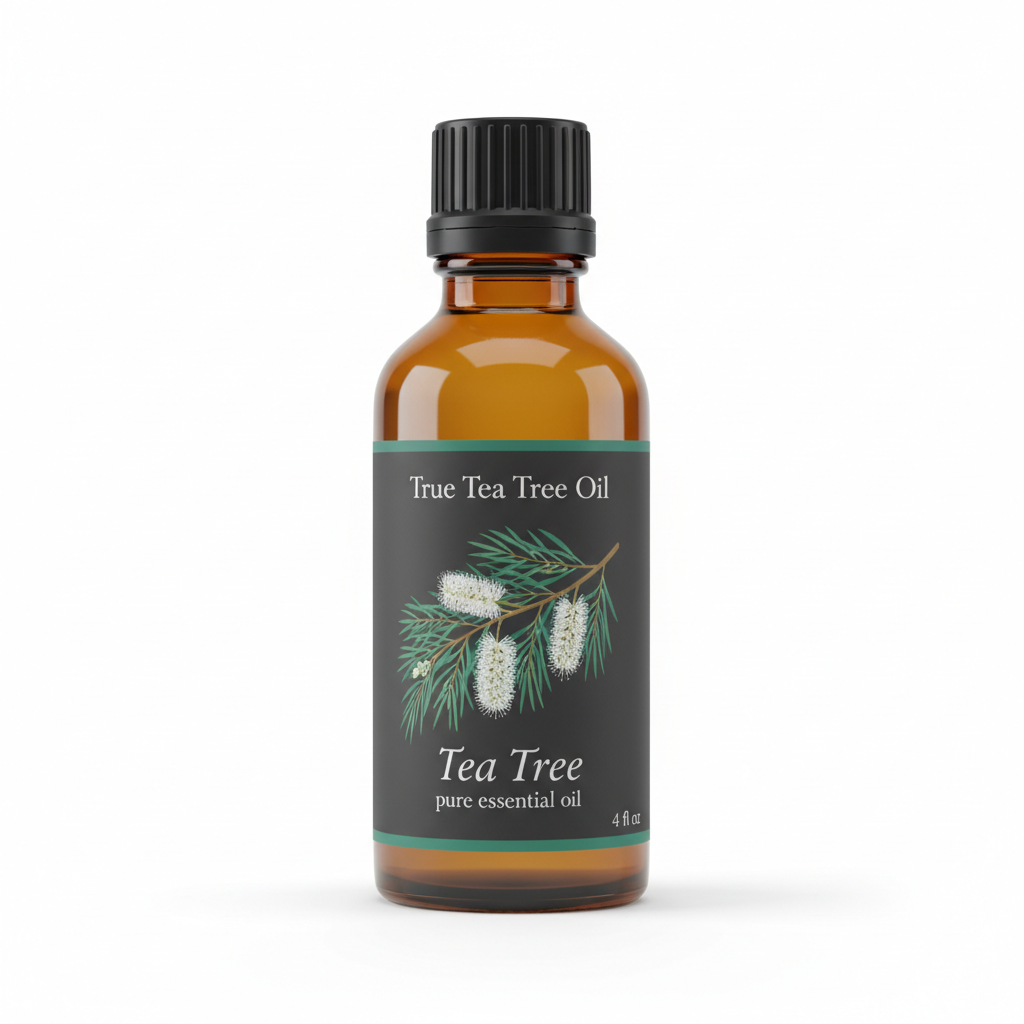
Tea Tree Essential Oil
Our own Tea Tree Essential Oil, in sizes from 0.5 oz to bulk.
From $10.99
Shop Now →The Quick-Answer Table
Before the math and the label-reading, here's the decision in one pass:
| Format | Cost per use | Flexibility | Best for |
|---|---|---|---|
| 100% pure oil + separate carrier | Lowest | Highest, you set the ratio for each use | Anyone making their own blends, washes, or diffuser mixes at home |
| Pre-diluted roll-on | Higher per milliliter, but small-format so total spend is modest | Fixed ratio, grab-and-go | Travel, gym bags, desk drawers, anyone who won't measure |
| Pre-mixed blend (serums, sprays) | Highest | Fixed ratio plus other ingredients | People who want a finished product, not a project |
If you're still unsure which bottle size to start with regardless of format, the bottle size guide walks through that separately.
Why the Pure Bottle Looks Expensive and Isn't
This is the part most buyers get backward. A 10 ml bottle of pure tea tree oil next to a 10 ml roll-on looks like the same product at two different prices. It isn't the same product at all, because the pure bottle is a concentrate and the roll-on is already finished.
Here's the math, using the standard assumption of roughly 20 drops per milliliter for a thin essential oil. A 10 ml bottle holds about 200 drops. At a 2 percent dilution (a common ratio for topical blends, per Essential Oil Safety by Robert Tisserand and Rodney Young), 2 percent of a finished blend by drop count means roughly 1 drop of oil for every 50 drops of total finished product. Run that out and a 10 ml bottle of pure oil stretches to somewhere in the neighborhood of 500 ml of finished, diluted product once you add the carrier.
Five hundred milliliters is a lot of product. It's ten 50 ml bottles, or fifty 10 ml roll-ons. Compare the shelf price of one 10 ml pure bottle against the shelf price of fifty 10 ml roll-ons and the concentrate wins by a wide margin every time. The pure oil isn't the expensive option. It just displays its full price up front instead of spreading it across fifty tiny containers.
The catch is obvious: you have to actually do the math and the mixing. If you'd rather not deal with carrier ratios at all, the dilution and patch-test guide covers the ratios and the safety check in detail before you start.
When Pre-Diluted Genuinely Wins
None of this means pure oil is the right call for everyone. A few situations tip the scale toward a ready-to-use product, and they're worth naming honestly rather than treating the pure bottle as universally superior.
- Travel and gym bags. A sealed roll-on survives a backpack better than a glass dropper bottle and a separate carrier bottle rattling around together.
- Anyone who won't measure. If drop-counting isn't going to happen on a Tuesday night, a fixed-ratio product removes the one step that leads to over-concentration.
- Households that want nothing undiluted on the shelf. If there are kids or pets in the house and the household rule is "no neat oils, period," a pre-diluted format matches that rule without requiring anyone to remember it under pressure. Undiluted essential oils are a known ingestion and skin-contact risk for pets; the ASPCA Animal Poison Control Center and US Poison Control at 1-800-222-1222 are the right contacts if an exposure happens, not a home remedy.
- First-time buyers testing whether they even like the scent. A small pre-diluted product is a low-commitment way to decide before buying a concentrate you may not use up.
In each of these cases, the premium per milliliter is buying something real: a fixed, pre-checked ratio and a format built for how the product will actually be used. That's a fair trade, not a markup to be avoided on principle.
What's Actually Inside a Ready-to-Use Product
Reading the ingredient list on a pre-diluted product tells you more than the front label does. A typical oil-based roll-on is tea tree oil carried in something like fractionated coconut oil, jojoba, or sweet almond oil, the same carriers you'd buy separately to make your own blend. There's often nothing exotic in there, which is part of why the markup on finished oil-based blends is worth questioning if you're buying in volume.
Water-based products (cleansing gels, sprays, finished washes) are a different category entirely. Tea tree oil doesn't dissolve in water on its own, so these formulas need a solubilizer to keep the oil evenly distributed instead of floating to the top. And because water-based formulas support microbial growth in a way a straight oil never will, they also need a preservative system. That's not a quality flaw. It's a requirement of the format. A pure oil in a sealed bottle doesn't carry water, so it doesn't need a preservative at all. If you want to see this trade-off in a real recipe, the DIY face wash tutorial shows exactly where the solubilizer and preservative steps sit in a water-based build.
The Shelf-Life Trade-Off Nobody Mentions on the Label
A sealed bottle of pure tea tree oil, kept cool, dark, and capped tightly, holds up for a reasonably long stretch before oxidation becomes a concern. ISO 4730:2017, the international standard for oil of Melaleuca, terpinen-4-ol type, defines the chemical profile a genuine tea tree oil should match, and a correctly stored oil within that profile degrades slowly.
A diluted blend is a different story, because it ages on two clocks at once. The tea tree oil component oxidizes on its own schedule, and the carrier oil oxidizes on its own, separate schedule, usually faster. Coconut, jojoba, and almond oils all go rancid eventually, and once a carrier turns, the finished blend is done regardless of how fresh the tea tree oil inside it still is. That means a pre-diluted product typically has a shorter practical shelf life than the concentrate it was made from, even though the label dates often look similar. If you're buying a pre-diluted product, smaller is safer: buy an amount you'll use up within a few months, not a large bottle sitting half-used for a year.
Red Flags to Avoid, in Either Format
- No botanical name on the label. A genuine product lists Melaleuca alternifolia somewhere on the packaging. If it only says "tea tree fragrance" or "tea tree scented," it may contain little or no actual oil.
- No batch number or GC/MS reference. Reputable suppliers can point to a batch-specific lab report. If a seller can't produce one on request, that's a reason to look elsewhere.
- A price far below the market range for the bottle size. Genuine Australian-grown tea tree oil has a production cost floor; the Australian Tea Tree Industry Association (ATTIA) represents the growers who set that baseline. A suspiciously cheap "pure" bottle is often cut with a cheaper filler oil.
- Vague or missing carrier information on diluted products. If a roll-on doesn't say what it's diluted in, you can't judge whether the carrier itself suits your skin or your storage conditions.
- No mention of a patch test anywhere on the packaging or product page. Reputable sellers mention it. Its absence isn't proof of a problem, but its presence is a good sign of a seller who takes dilution seriously.
For a deeper walk-through of label language, lab reports, and price benchmarks specifically for the pure concentrate, see how to tell if tea tree oil is pure.
Where to Buy, and What to Check Before You Click Add to Cart
Whichever format you land on, the checkout basics are the same: confirm the botanical name, check for a batch number or lab reference, and compare the price against the bottle size rather than against a different seller's different-sized bottle. A 15 ml bottle at one price and a 30 ml bottle at double that price are the same deal; a 15 ml bottle priced like a 30 ml bottle elsewhere is not.
If you're buying in any real quantity, whether that's several pure bottles to split dilution duty across a household or enough roll-ons to keep one in every bag, the per-unit price usually drops at volume. The bulk sizes and grades guide breaks down what changes (and what doesn't) when you buy larger format sizes instead of single retail bottles. Our own shop page lists current pure-oil bottle sizes if you want to see the concentrate option priced out directly.
The Honest Bottom Line
This isn't a question of which format is better. It's a question of which one matches how you actually behave. If you're the kind of person who will pull out a dropper, count drops, and label a mixing bottle, the pure concentrate is cheaper by a wide margin and lets you adjust the ratio for a face wash one week and a cleaning spray the next. If you know yourself well enough to know that measuring won't happen consistently, or if a roll-on is going to live in a backpack for the next six months, pay the premium for the pre-diluted format and treat it as the cost of removing a step you weren't going to do reliably anyway. Buy the format that matches your discipline about measuring, not the one with the better adjective on the front label.