
How to Patch Test Tea Tree Oil: A 48-Hour Skin Check, Step by Step
Dilute the oil to the strength you intend to use (about 1 to 2 percent, or 6 to 12 drops per ounce of carrier), apply a dime-sized amount to the inner forearm, and reapply to the same spot once or twice a day for two full days. If the spot stays calm, the bottle has cleared the first screen. Any redness, itching, or stinging that lingers past a few minutes means that bottle does not go on your skin.
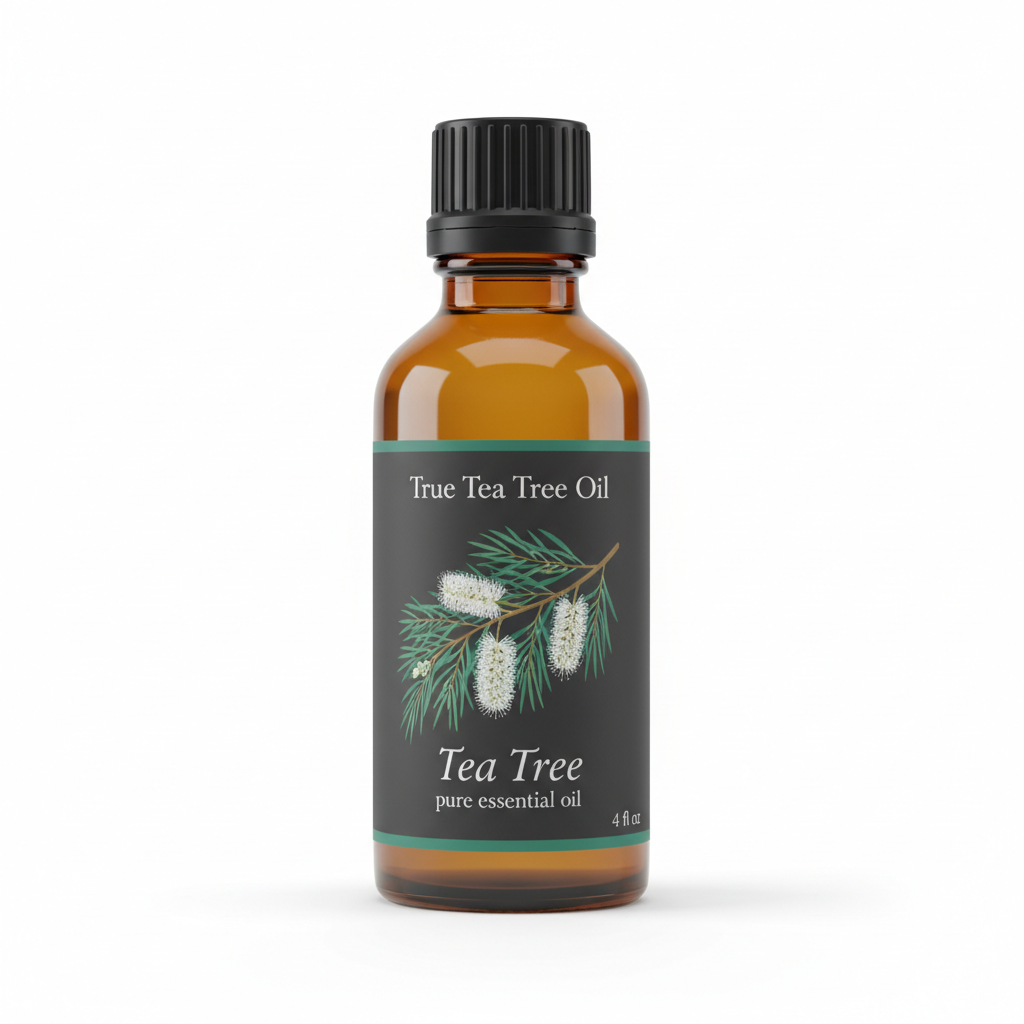
Tea Tree Essential Oil
Our own Tea Tree Essential Oil, in sizes from 0.5 oz to bulk.
From $10.99
Shop Now →Why a Single Sniff Test Isn't Enough
Tea tree oil is a mixture of more than 100 volatile compounds, and the ratio of those compounds shifts bottle to bottle depending on harvest and distillation. ISO 4730:2017, the international standard for oil of Melaleuca, terpinen-4-ol type, sets allowable ranges rather than a single fixed formula, which is exactly why two bottles labeled "100% pure" can still smell and behave a little differently on skin. Individual skin response to that mixture is not uniform either. Robert Tisserand and Rodney Young's reference text Essential Oil Safety treats dilution and pre-use testing as baseline practice for essential oils generally, not an optional extra for people with known sensitivities.
Age matters too. The monoterpenes that sit alongside terpinen-4-ol oxidize on contact with air, and that process speeds up every time the cap comes off and the bottle gets a fresh dose of oxygen. A half-used bottle that has been open for eight months has had more opportunities to oxidize than a bottle opened last week, and the oxidation byproducts are a more plausible source of skin irritation than the fresh oil itself. If you are not sure how old your bottle is or how it has been stored, reviewing the sensible cautions for first-time use before you even open the cap is a reasonable place to start.
What You Need Before You Start
- A bottle of tea tree oil labeled for the INCI name Melaleuca alternifolia leaf oil
- A carrier oil such as jojoba, fractionated coconut, or sweet almond
- A small glass or stainless dish and a clean glass dropper for mixing
- A calendar or phone reminder set 48 hours out
- A small adhesive bandage, if you want to cover the spot between checks (not required)
- Plain carrier oil and a mild soap on hand, in case you need to remove the test application early
Skip the alcohol wipes and the straight oil. The whole point of this test is to check your skin against the same strength you plan to actually use, and getting the dilution ratio right is the step people rush past most often.
The 48-Hour Protocol, Step by Step
- Mix at your real-use strength. Combine 6 to 12 drops of tea tree oil into 1 ounce (30 ml) of carrier oil for a 1 to 2 percent dilution. Testing the oil at full strength and testing the diluted blend you'll actually use are two different questions, and only the second one tells you anything useful about your upcoming routine.
- Pick a spot on the inner forearm. This skin is thinner than skin on the back of the hand and easy to check without craning your neck, but tough enough to tolerate daily reapplication for two days. Avoid skin that is already broken, sunburned, or freshly shaved.
- Apply a small, consistent amount. A dime-sized dab, rubbed in gently, is enough. Note the time somewhere you'll actually see it again.
- Let it air dry uncovered for a few minutes, then go about your day. Covering the spot with a bandage afterward is optional and mostly useful if you want to avoid rubbing it off on a sleeve.
- Check the spot after a few hours, then again before bed. Look for redness, raised texture, warmth, or itching. A faint, fading pink immediately after application that disappears within 15 to 20 minutes is a different signal than redness that is still there at the two-hour mark.
- Reapply to the exact same spot the next morning. One application only tells you how your skin responded once. Essential oil sensitivity can build with repeated contact over the same window, which is the entire reason this is a two-day process and not a ten-minute one.
- Check again that evening, and once more the following morning, for a full 48 hours from your first application. If the spot has stayed calm through every check, the bottle has cleared a reasonable home screen for that dilution.
Reading the Result Honestly
Any redness, itching, or stinging that persists on the test spot, at any point during the 48 hours, means that bottle stays out of your skincare rotation going forward. This isn't a borderline call to argue yourself out of. If the skin tells you no, the answer is no, for that bottle, at that dilution.
If you do see a reaction, remove the residue with a plain carrier oil first, worked in and wiped away, and then wash the area with mild soap and water. Tea tree oil's compounds are lipophilic, meaning they bind to fats rather than water, so water alone will push the oil around the skin rather than lifting it off. An oil-then-soap approach actually clears it.
No persistent reaction over 48 hours is a reasonable, hedged sign that this particular bottle, at this particular dilution, is a plausible candidate for your intended use, such as in a diluted face wash or another leave-on formulation. It is not proof of anything beyond that one bottle and that one strength.
The Mistake We See Recommended Most Often
The single most common piece of bad advice floating around is to skip the forearm step entirely and "just try a little on your face" since that's where the product is headed anyway. Facial skin is thinner, carries more active oil glands and nerve endings per square inch, and sits in constant view, so a reaction there is both more likely and more visible than a reaction on the forearm. Testing on the face first turns a screening step into the actual experiment. Run the forearm test, confirm a quiet 48 hours, and only then move the diluted blend to the face a small area at a time.
A second common shortcut is judging the result from a single application. Skin can tolerate one brief exposure and still react on the third or fourth, which is exactly why this protocol calls for reapplying to the same spot rather than calling it done after hour one.
What a Home Patch Test Can and Cannot Tell You
A quiet 48 hours on your forearm is a screening habit, not a guarantee. It says something about this bottle, at this dilution, on this patch of skin, over two days. It says nothing about a different bottle from a different harvest, a higher concentration, or a formulation that combines tea tree oil with other actives. The Australian Tea Tree Industry Association (ATTIA) notes that tea tree oil quality and composition can vary by batch even within the ISO standard's allowable range, which is one more reason a test on an old bottle doesn't automatically clear a new one.
Sensitivity can also build with repeated exposure over months, not just over the 48-hour window. A bottle that passed its original test and has been used without issue for a year is not permanently exempt from attention. If skin in the area where you apply a tea tree blend starts behaving differently than it used to, that is worth noticing on its own terms, independent of how the original patch test went.
When to Skip the Home Test and Ask a Clinician First
If the skin you'd be testing on is already broken, inflamed, or under a clinician's care for any reason, a home patch test is the wrong first step. Bring the question to that clinician before applying anything, diluted or not. The same goes if you're testing on behalf of a child or anyone whose skin history you don't know well. A qualified healthcare provider can weigh your specific situation in a way a forearm check cannot. For general background on what's known about topical use, how tea tree oil is used in skincare more broadly is worth reading alongside that conversation, not instead of it.
Keep the number for US Poison Control, 1-800-222-1222, somewhere accessible if there are children or pets in the house, since concentrated essential oils are a different risk profile when swallowed than when diluted and applied to skin. If a pet ingests any amount, the ASPCA Animal Poison Control Center is the resource built for that question, not a general search.
Why Two Days Is Worth It
Two days of checking a forearm, a few times a day, is a small cost against the alternative: discovering a reaction on your face, or across a larger area, after committing a whole bottle to your routine. It's the cheapest insurance available in home aromatics, and it scales to zero extra cost if the bottle turns out to be fine. If you're shopping for a fresh bottle to run this test on in the first place, our shop lists current batches with harvest and composition details so you're not testing a complete unknown.