
How to Read Tea Tree Oil Research Without Getting Fooled
Reading tea tree oil research honestly comes down to three checks before trusting any claim: was this tested in a dish or on a person, at what concentration, and how many times has it been repeated. Most marketing citations fail at least one of those checks, which is how the same phrase, "studies show," ends up propping up completely different claims on completely different bottles.
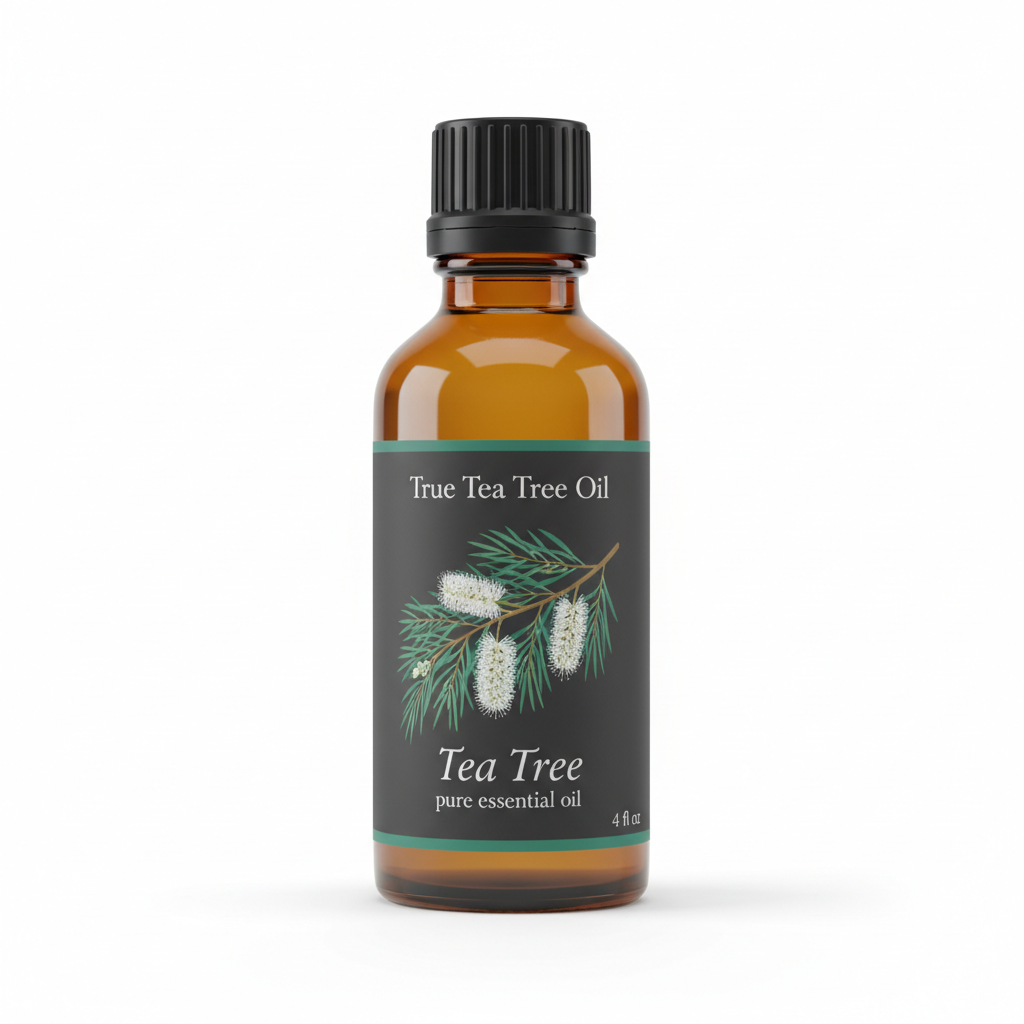
Tea Tree Essential Oil
Our own Tea Tree Essential Oil, in sizes from 0.5 oz to bulk.
From $10.99
Shop Now →None of what follows is a claim about what tea tree oil does for your body. It is a guide to the research itself: how to read a citation, what it actually says, and what a seller is doing when they hand you one. Think of it as a short course in essential oil studies literacy, the kind of thing nobody teaches before they let you loose on a search engine full of abstracts.
Myth: If a Study Exists, the Claim Is Proven
The myth: A citation number or a journal name at the bottom of a product page means the sentence above it is settled science.
The truth: Research suggests a useful way to sort evidence is a ladder, and most essential oil citations sit on its bottom rung. At the bottom: a lab-dish experiment, often run on an isolated compound like terpinen-4-ol pulled out of the oil rather than the whole oil as sold, measured against cells or microorganisms growing in a controlled dish. One rung up: a small human trial, maybe a few dozen people, often without the blinding or control groups that let you rule out coincidence. Near the top, rarely reached in this category: a large trial repeated by a different research group with the same result. Evidence indicates that a citation pulled from the first rung and presented as if it belongs on the third is the single most common sleight of hand in this space. If you want to understand what's actually inside the bottle before you start reading about what it does in a dish, the chemistry behind terpinen-4-ol is the place to start, because almost every citation you'll encounter is really a citation about that one molecule, not the oil as a whole.
Why the myth persists: "Peer-reviewed" and "published" sound like endpoints, not starting points. A dish study is real science and a legitimate first step in a long process. The problem isn't that it exists. It's that marketing language strips out the rung it came from and leaves only the word "study," which reads the same whether it came from rung one or rung three.
Myth: A Lab Result Tells You What the Bottle on Your Shelf Will Do
The myth: If a concentration of tea tree oil produced an effect in a dish, a product containing tea tree oil will produce something similar in daily use.
The truth: Concentration is where most of these citations quietly fall apart. A dish experiment might expose cells to the neat oil, or to a solution measured in whole percentage points. A rinse-off formula, a diffuser blend, or a diluted roll-on sits nowhere near that number, often a fraction of a percent of the finished product. Research suggests that comparing the two without checking the percentage is like comparing a glass of water to a swimming pool because both are described as "wet." The honest move, every time you read a claim, is to stop and find the actual percentage used in the study before deciding whether to be impressed. This matters most with claims that borrow a concentration-specific lab result and stretch it into a promise about an everyday product, which is exactly the pattern worth watching for in the repellent claims made about tea tree oil during mosquito season, where a result from one concentration gets applied to products diluted far below it.
Why the myth persists: Percentages are tedious to track down and rarely appear in the marketing sentence itself, only in the methods section nobody reads. Dropping the number makes the claim shorter and more confident-sounding. It also makes the claim unfalsifiable to a casual reader, since there's no number left to check.
Myth: One Study Settles the Question
The myth: A single study, especially one with a specific-sounding result, is enough to call a question answered.
The truth: A small study, run once, on a few dozen subjects, is a lead. It is not an answer. Robert Tisserand and Rodney Young, in the second edition of Essential Oil Safety, repeatedly caution against extrapolating from single small trials in this category, precisely because essential oil composition varies by harvest, distillation, and storage, and a result from one batch tested once doesn't automatically generalize to the next batch or the next population. Evidence indicates that the studies most worth taking seriously are the ones that have been repeated by a different group, in a different setting, with the same finding. Until that happens, a single result is a reason to keep an eye on the question, not a reason to put it to rest.
Why the myth persists: A single, specific-sounding result is a better sentence than "researchers are still investigating." It is also genuinely hard, as a non-specialist, to know whether a given study has ever been replicated, since that information isn't usually in the sentence quoting it.
Myth: A Citation on a Sales Page Proves Objectivity
The myth: If a brand links to a study, they've done the homework for you, and the science speaks for itself.
The truth: Ask who ran the study and who is selling you the product quoting it. Some essential oil marketing pages summarize an abstract the writer never read past the first paragraph of. Some quote research that a related industry group or supplier commissioned. Neither fact makes the underlying data wrong, but it should change how much weight you put on the summary sitting on top of it. A citation handed to you by the party trying to close a sale is not the same thing as a citation you found and read yourself. If a seller's pitch depends on a borrowed study rather than on the oil's sourcing, composition, and freshness, that's usually a sign they're answering a question you didn't ask. Before trusting any quality claim at all, it helps to know how to separate real purity signals from marketing language, which is covered in how to tell if tea tree oil is pure.
Why the myth persists: A citation looks like due diligence already done, which is appealing when you're standing in front of a dozen nearly identical bottles trying to make a decision quickly. Checking the source takes minutes most people don't want to spend on a $12 bottle of oil.
Myth: ISO Certification Means the Oil "Works"
The myth: A bottle labeled as meeting ISO 4730:2017 has passed some kind of performance test.
The truth: ISO 4730:2017 is the international standard for oil of Melaleuca, terpinen-4-ol type. What it certifies is a composition window: specific ranges for terpinen-4-ol, 1,8-cineole, and a handful of other constituents that define what counts as genuine tea tree oil versus something diluted, adulterated, or mislabeled. That's identity and consistency, not performance of any kind. A compliant oil is one that chemically matches what tea tree oil is supposed to be. It says nothing about what that oil will do once it's in a diffuser or a bottle of lotion. The Australian Tea Tree Industry Association (ATTIA) has long pushed composition standards like this one specifically to protect buyers from cut or synthetic product being sold under the name, which is a quality safeguard, not a claims engine. If you've seen grading language like "therapeutic grade" or "medicinal grade" on a label, it's worth knowing that no such official grading system exists in this category; that's unpacked in what tea tree oil grades really mean.
Why the myth persists: "ISO certified" has the ring of a government seal of approval, and standards numbers are intimidating enough that few readers look up what the number actually governs. Composition standards and performance claims get blurred together because both show up in the same marketing paragraph.
Where to Check the Primary Sources Yourself
You don't need a lab credential to verify most of what's in this article. PubChem, the National Institutes of Health's open compound database, has a listing for terpinen-4-ol with its molecular structure, documented properties, and links to the primary research that's been done on it, which is a faster and more neutral way to check a chemistry claim than trusting a brand's paraphrase of it. The National Center for Complementary and Integrative Health (NCCIH) publishes plain-language research summaries on botanical ingredients, written for a general reader rather than a lab audience, and is a reasonable second stop for understanding what the current research landscape actually looks like rather than what a single product page claims it looks like. Reading the primary source, even just the abstract, before reading someone's summary of it is the single habit that catches the largest share of inflated claims.
Our Stance, Stated Plainly
We sell a cosmetic and aromatic product. We do not make or repeat performance claims about what tea tree oil does once it leaves the bottle, and we're not going to borrow a dish study to imply otherwise. If a seller needs someone else's citation to close a sale, they're usually answering a question the buyer never asked, when the honest questions are about sourcing, batch consistency, and how the oil was distilled and stored. Before using any undiluted essential oil on skin, in a diffuser, or around a household with children or pets, read a straightforward set of cautions first, including dilution guidance and when to call US Poison Control at 1-800-222-1222 or the ASPCA Animal Poison Control Center; we've laid those out in sensible cautions before first use. The honest use of research in this category is to understand the oil itself, its chemistry, its composition standards, how it ages and how to judge its purity, not to promise an outcome it was never tested to deliver in the form you're buying it in. If that's the kind of straightforward relationship you want with an ingredient, our tea tree oil is sourced and labeled with exactly that composition transparency in mind, nothing more implied.