
Tea Tree Foot Soak: A Fresh-Feet Ritual for Hardworking Feet
A good tea tree foot soak is built in a specific order: the oil gets mixed into a carrier or soap first, and only then does it meet the water. Skip that step and most of what people call a DIY foot soak recipe is really just warm salt water with a few drops of oil floating on top, doing nothing for the feet sitting underneath it. Get the order right and you have a basin that actually smells like tea tree from first dip to last, with Epsom salt doing the soaking work and fifteen quiet minutes at the end of a long day.
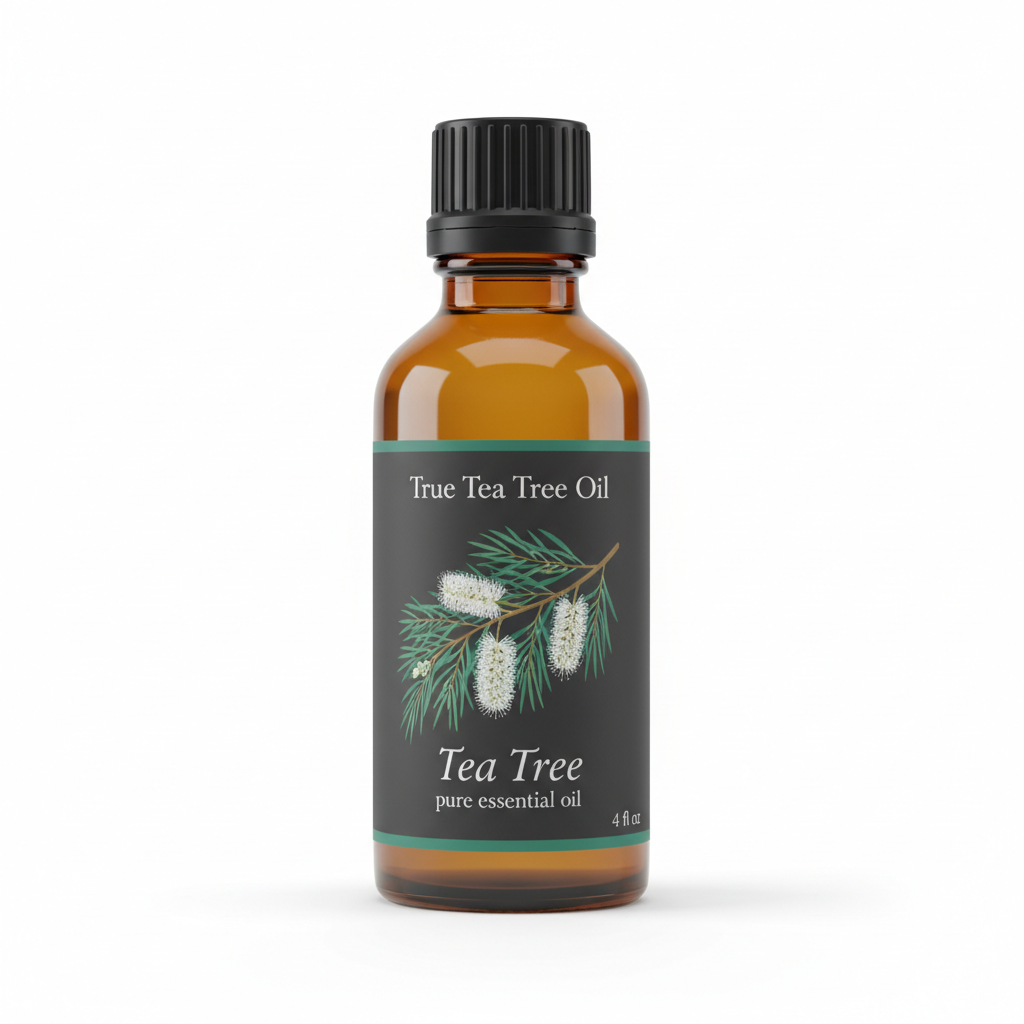
Tea Tree Essential Oil
Our own Tea Tree Essential Oil, in sizes from 0.5 oz to bulk.
From $10.99
Shop Now →Difficulty: Easy | Prep time: 5 minutes | Soak time: 15 to 20 minutes | Yield: one soak, enough for one basin
The Recipe
Ingredients
- A basin or foot tub, large enough for both feet to sit flat
- Warm water (comfortably warm, not hot) to fill the basin about halfway
- 1/2 cup Epsom salt (magnesium sulfate)
- 6 to 8 drops tea tree essential oil
- 1 tablespoon fractionated coconut oil, or 1 teaspoon unscented liquid castile soap
- Optional: 2 to 3 drops lavender or eucalyptus oil, for a rounder scent
- A towel, within reach before you sit down
- Optional: a pumice stone or foot file
On sourcing: look for tea tree oil that states compliance with ISO 4730:2017, the international standard that defines the chemical composition range for oil of Melaleuca alternifolia, terpinen-4-ol type. It won't change how the soak smells on day one, but it's a quick way to confirm you're buying the real oil and not a diluted or reconstructed stand-in. If you're unsure how tea tree behaves alongside other carriers, the best carrier oils for tea tree is worth a read before you build other recipes around it.
Instructions
- Fill the basin with water that feels comfortably warm on the inside of your wrist, not hot. Hot water doesn't make the soak work any better and it can make skin more reactive to anything placed on it afterward.
- In a small dish, combine the 6 to 8 drops of tea tree oil with the tablespoon of fractionated coconut oil (or the teaspoon of castile soap). Stir for a few seconds until the mixture looks uniform, not streaky.
- Add the Epsom salt to the warm water and stir until it dissolves.
- Pour the pre-mixed oil blend into the water and swirl it through with your hand before your feet go in.
- Ease your feet into the basin and settle in for 15 to 20 minutes.
- Lift your feet out, pat them completely dry with the towel, giving extra attention between each toe.
- While skin is still soft, go over heels and any rough patches with a pumice stone if you like.
- Finish with clean, dry socks.
Why the Oil Goes Into the Carrier First, Not the Water
This is the part most foot-soak instructions get wrong, and it's worth stating plainly: dropping essential oil straight into a basin of water is the single most common mistake in a DIY foot soak, and it's a chemistry problem, not a technique problem.
Tea tree oil is lighter than water and doesn't dissolve in it. Dropped straight into a basin, it beads up and floats, and those beads drift until they land somewhere on the skin, undiluted, at full strength.
Epsom salt doesn't fix this either, even though a lot of recipes imply it does by listing the salt and the oil in the same breath as if they're both doing the same job. Magnesium sulfate dissolves in water because it's ionic; tea tree oil is a mix of nonpolar terpene hydrocarbons and alcohols (terpinen-4-ol chief among them) with no polar group for water molecules to grab onto. Salt changes how the water feels against skin. It does nothing to make oil mix into it.
A tablespoon of fractionated coconut oil or a teaspoon of unscented castile soap solves the actual problem: both have a structure that can bridge oil and water, so the tea tree disperses into small, even droplets through the whole basin instead of pooling at a few points of direct, concentrated contact. That one step is the difference between a scented soak and a basin of random neat contact. Tisserand and Young make the same point about dilution generally in Essential Oil Safety, 2nd edition: undiluted essential oil against skin, even briefly, is a different exposure than the same oil carried in a base. If you want the fuller version of that math, how to dilute tea tree oil walks through ratios for other applications too.
The Ritual, Start to Finish
Fifteen to twenty minutes is long enough for the water to do its job and short enough that it doesn't go cold and clammy underneath you. Keep a towel within arm's reach before you sit down. Getting up to go find one, with wet feet, undoes the point of the whole exercise.
Drying is not optional and it's not quick. Damp feet, especially the skin between the toes, create exactly the environment that brings back the end-of-day funk the soak just addressed. Press the towel between each toe individually rather than running it once across the top of the foot. This takes an extra thirty seconds and it's the step people skip.
If you're going to use a pumice stone or foot file, do it while skin is still soft from the soak, before it's fully dry. Rough patches come off with far less effort in that window than they will an hour later.
Shoe-Side Housekeeping That Makes the Freshness Last
A foot soak is undone in a day if the shoes going back on are the same damp, closed-up pair from yesterday. A few habits carry the effect further than the basin alone:
- Rotate at least two pairs of daily shoes so each one gets a full day to dry out completely before it's worn again. Shoes worn two days running rarely finish drying between wears, especially with any kind of insulation or a rubber sole.
- Keep a cotton ball or two in the shoe cabinet or closet, the same low-effort trick that shows up in the deodorant playbook: a cotton ball with a drop of tea tree oil, tucked into a shoe overnight (not against skin), gives the inside of the shoe a chance to smell like something other than the day you just had.
- Put fresh socks on clean, fully dry feet, every time, not just after a soak. It's the simplest variable in this whole routine and the one most likely to get skipped on a rushed morning.
The same dispersal logic that governs this soak carries over to a tea tree body wash, if you want one product doing double duty from shower to basin.
Cautions, Honestly
A few things worth saying plainly rather than burying in fine print:
- Patch test before your first full soak. Mix one drop of tea tree oil into a teaspoon of carrier oil, apply a small amount to your inner forearm, and wait 24 hours. Redness, itching, or irritation at the test site means skip the soak.
- Skip the soak over broken or irritated skin. Open skin absorbs differently than intact skin, and a basin isn't the place to find that out.
- If you have reduced sensation in your feet or any circulation concerns, ask your clinician before any hot foot soak, tea tree or otherwise. This is a general rule of foot care, not something specific to this oil: reduced feeling makes it harder to notice if water is too hot, and that risk exists independent of what's dissolved in the basin.
- Keep the basin away from pets. Tea tree oil is not meant for use on or around cats and dogs, and a curious pet drinking from or walking through a treated basin is a real scenario, not a hypothetical one. If a pet is exposed, the ASPCA Animal Poison Control Center is the right call.
- If a person swallows tea tree oil accidentally, contact US Poison Control at 1-800-222-1222.
- This soak is a scent and comfort ritual, not a substitute for medical care. Talk to a healthcare provider about any ongoing foot concern rather than relying on an essential oil soak to address it.
Storage and Shelf Life
Mix the oil-and-carrier blend fresh for each soak rather than batching it ahead; once combined with a carrier it's meant to go straight into the water, not sit on a shelf. The tea tree oil itself, stored on its own, keeps better than most people expect if you treat it right: a dark glass bottle, capped tightly, kept somewhere cool and out of direct light, away from the steam and humidity of a bathroom cabinet. Monoterpenes like those in tea tree oxidize gradually on contact with air, which is part of why a bottle that's been opened and half-used for a year smells sharper and less rounded than a fresh one. The Australian Tea Tree Industry Association (ATTIA) notes that properly stored tea tree oil typically holds its character for one to two years from opening; a bottle that's gone cloudy, markedly darker, or sharply different in scent is past its useful window and should be replaced rather than used.
Variations and Substitutions
- No fractionated coconut oil on hand? Unscented liquid castile soap disperses tea tree oil just as effectively and rinses cleaner from the basin afterward.
- Want a rounder scent? Add 2 to 3 drops of lavender or eucalyptus oil to the carrier blend alongside the tea tree, keeping total drops in the 8 to 10 range so the dilution stays sensible.
- No Epsom salt? Plain warm water with the dispersed oil blend still works as a scented soak; you'll just lose the salt's contribution to the overall feel of the water.
- Smaller basin or shorter soak? Scale down proportionally: a quarter of the water volume calls for roughly a quarter of the Epsom salt and 3 to 4 drops of tea tree oil instead of 6 to 8, still pre-mixed into a half-tablespoon of carrier.
For everything else you're building with tea tree oil, from body care to household use, the full lineup is a reasonable place to see what's available in a form that's already measured out.