
The Best Carrier Oils for Tea Tree: Jojoba, Coconut, and More Compared
For most routines, fractionated coconut oil covers body work and jojoba covers the face, and that is nearly the whole answer. The carrier makes up roughly 98 to 99 percent of a finished blend, so its weight, scent, and shelf life matter more to how the blend actually feels than which bottle of tea tree oil you bought.
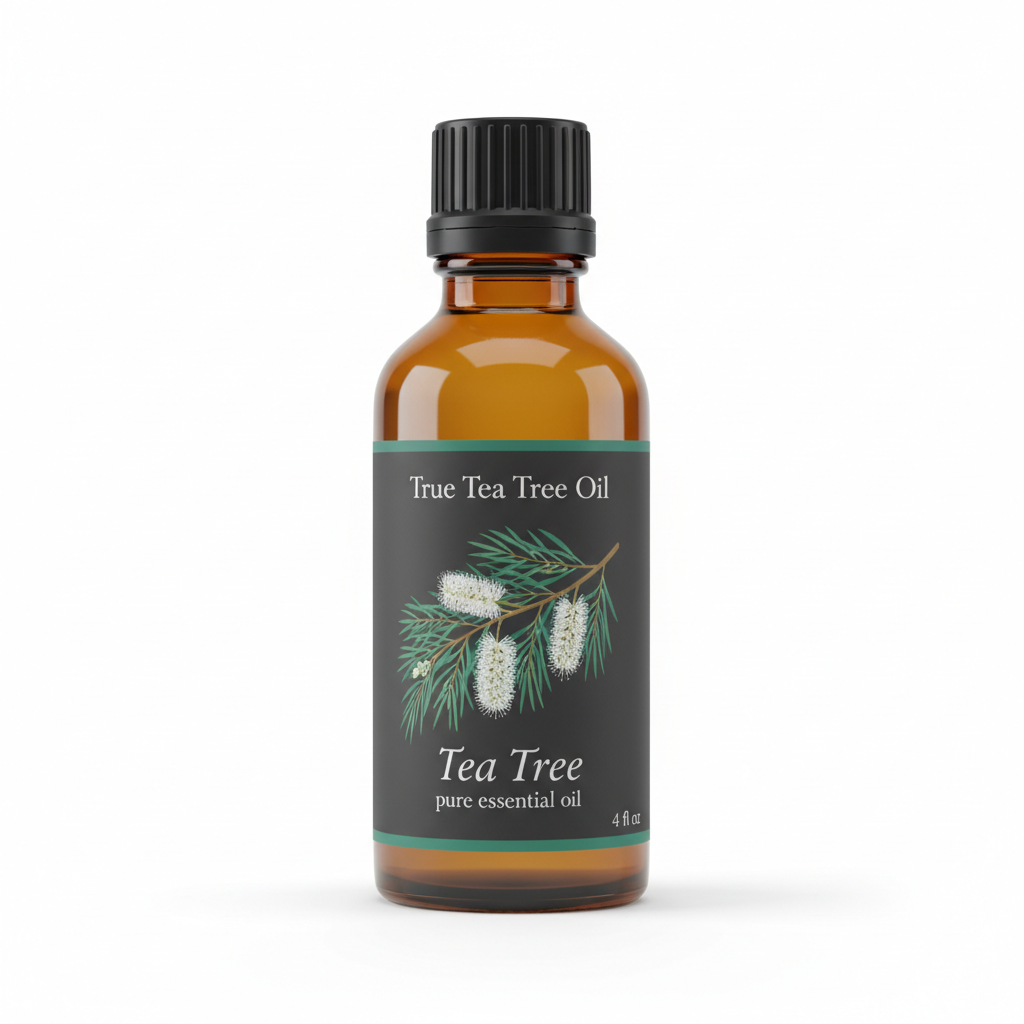
Tea Tree Essential Oil
Our own Tea Tree Essential Oil, in sizes from 0.5 oz to bulk.
From $10.99
Shop Now →Why the carrier is most of what you feel
A typical topical dilution lands between 1 and 2 percent tea tree oil, which means for every 30 mL of finished blend, you are looking at roughly 6 to 12 drops of tea tree oil in nearly 30 mL of carrier. That ratio is the whole reason this comparison matters: the oil contributes scent and the properties people associate with Melaleuca alternifolia, but the carrier decides how fast the blend spreads, whether it leaves a film, how it smells once the sharp top note of tea tree fades, and how long the bottle lasts before it turns. If you haven't settled on your ratios yet, our guide to how to dilute tea tree oil walks through the math and the reasoning behind it in more depth, including why Robert Tisserand and Rodney Young's reference text Essential Oil Safety recommends staying conservative on facial dilutions specifically.
Terpinen-4-ol, the compound ISO 4730:2017 uses to define authentic tea tree oil, sits in a blend alongside a cluster of monoterpenes that oxidize when exposed to air and light. A carrier that is itself prone to rancidity compounds that problem: an oxidizing base oil degrades the whole bottle faster, tea tree included. That is one of the quieter reasons the carrier choice below isn't just about feel and scent. It's also about how long the finished blend stays usable.
The comparison at a glance
| Carrier | Feel on skin | Scent | Approximate shelf life | Best use |
|---|---|---|---|---|
| Jojoba | Midweight, silky, absorbs without a heavy film | Nearly scentless | Very long, often 5 years or more unopened | Face routines, serums, roll-ons |
| Fractionated coconut | Thin, fast-spreading, dry finish | Effectively odorless | Long, 2 years or more | Sprays, roll-ons, massage oil, default body carrier |
| Virgin coconut | Rich, solid below about 24°C, melts on contact | Noticeable coconut | Long, 1 to 2 years | Balms and solid blends where coconut scent is welcome |
| Sweet almond | Medium weight, classic body-oil glide | Faint, nutty | Moderate, 6 to 12 months | Body oils and massage blends on a modest budget |
| Grapeseed | Light, almost watery | Faint, green | Shortest here, often 2 to 4 months once opened | Oily skin routines where a light hand matters more than longevity |
| Olive | Heavy, slow to absorb, leaves a film | Strong, vegetal, assertive | Long, 1 to 2 years | Soap and bar formulations more than skincare |
Jojoba: the closest thing to a universal answer for the face
Jojoba isn't technically an oil at all. It's a liquid wax ester, which is the botanical detail that explains both its near-total absence of scent and its unusual stability. Wax esters don't have the same double bonds that make plant oils like grapeseed oxidize quickly, so a bottle of jojoba sitting in a bathroom cabinet degrades at a crawl compared to the others on this list.
On skin, jojoba sits at a weight that reads as midrange: heavier than a spray carrier, lighter than olive oil, and it absorbs without the greasy delay you get from richer options. Because it carries almost no scent of its own, it lets tea tree's sharp, camphoraceous top note come through cleanly rather than competing with it.
- Pros: long shelf life, scentless, midweight finish that suits daily facial use, rarely clogs pores the way some richer oils can for acne-prone skin types
- Cons: costs more per ounce than fractionated coconut, and its lack of scent means it does nothing to soften tea tree's assertive smell
Best for: facial serums, spot blends, roll-ons meant for daily use on the face.
Fractionated coconut: the default for a reason
Fractionated coconut oil has had its longer-chain fatty acids removed, which is why it stays liquid at room temperature and why it's effectively odorless where whole coconut oil is not. That processing also makes it unusually stable. It's one of the cheapest carriers on this list by volume, and its thin, fast-spreading texture is exactly what a spray bottle or roll-on needs: nothing clogs the nozzle, and nothing leaves a sticky residue on skin.
- Pros: inexpensive, odorless, long shelf life, spreads thin enough for sprays and roll-ons without clogging
- Cons: thin enough that it can feel almost too light for a rich body-oil application; offers no scent cushioning if you want something to round out tea tree's edge
Best for: sprays, roll-ons, and as the general-purpose body carrier you reach for when you don't have a specific reason to choose something else.
Virgin coconut: the one that argues with tea tree
Virgin coconut oil is solid below roughly 24°C and melts on skin contact, which gives it a satisfying, almost theatrical feel in a balm or solid stick. The tradeoff is scent: virgin coconut smells distinctly like coconut, and that sweet, warm note sits in direct tension with tea tree's sharp, green, almost medicinal top note. The two don't blend so much as take turns being noticeable.
- Pros: solid at room temperature for balm formats, pleasant melt-on-contact feel, long shelf life
- Cons: its scent competes with tea tree rather than supporting it, and it isn't pourable at room temperature if your project needs a liquid
Best for: solid balms and sticks where you're comfortable with the coconut scent as part of the final smell, rather than trying to showcase tea tree alone.
Sweet almond: the classic body-oil weight
Sweet almond oil is a medium-weight oil with a faint, nutty smell that mostly disappears once it's diluted with tea tree. It's priced a step above fractionated coconut and a step below jojoba, and its feel on skin is what most people picture when they imagine a "body oil": enough glide for massage, enough richness to feel indulgent, without the heaviness of olive oil.
Its shorter shelf life compared to jojoba or fractionated coconut comes down to its fatty acid profile, which includes enough unsaturated fat to oxidize faster than a wax ester or a fractionated oil, though slower than grapeseed.
- Pros: classic body-oil feel, modest price, mild scent that doesn't fight tea tree
- Cons: shorter shelf life than jojoba or coconut, so smaller batches and more frequent restocking make sense
Best for: massage oils and body blends where you want more richness than fractionated coconut but don't need jojoba's shelf life.
Grapeseed: light, but the first to turn
Grapeseed oil is genuinely light on skin, almost watery, which makes it appealing for oily or acne-prone skin where a heavier oil feels like the wrong call. The catch is chemistry: grapeseed is high in polyunsaturated linoleic acid, and polyunsaturated fats oxidize faster than the monounsaturated fats in olive oil or the wax esters in jojoba. In practice that means a bottle of grapeseed can start to smell faintly off within a few months of opening, well before jojoba or fractionated coconut show any sign of turning.
- Pros: very light feel, suits oily skin types, faint scent
- Cons: shortest shelf life of the group, needs to be bought in small quantities and used quickly
Best for: small batches for oily or combination skin, made fresh and used within a couple of months rather than stockpiled.
Olive: better in soap than in skincare
Olive oil is heavy, slow to absorb, and carries a strong, vegetal scent that does not fade politely into the background the way jojoba or fractionated coconut do. On skin, especially the face, it tends to sit as a film rather than absorb. Where it earns its place is in cold-process soap, where its scent blends into the finished bar during saponification and its weight is less of an issue once it's no longer a liquid film on skin.
- Pros: inexpensive, widely available, performs well in soap-making
- Cons: heavy, slow-absorbing, strong scent that competes with tea tree rather than supporting it
Best for: soap bars and bar formulations, not daily facial or body oils.
Jojoba vs. coconut oil: really two different questions
The jojoba vs coconut oil question people ask usually conflates two separate decisions. The first is face versus body: jojoba's midweight, scentless profile suits a facial routine where you don't want a heavy film or a competing smell, while fractionated coconut's thin, fast spread suits sprays and body work where absorption speed matters more than richness. The second is liquid versus solid: fractionated coconut stays pourable at room temperature, while virgin coconut turns solid below about 24°C and brings its own distinct scent along with it. Treating "coconut oil" as one ingredient instead of two (fractionated and virgin behave nothing alike) is one of the most common mix-ups in a first-time blend.
Match the carrier to the job
Face routine: jojoba, for the reasons above. It's also the carrier we'd reach for in a cleanser formulation; our DIY tea tree face wash tutorial uses it as the base oil component for exactly that reason.
Body application: fractionated coconut oil, for its price, thin spread, and neutral scent. It's the carrier that does the least to get in the way of whatever scent profile you're building.
Beard balm: virgin coconut oil or a wax-and-butter base, where a solid format at room temperature is the point rather than a drawback. Expect the coconut note to show up in the final scent and plan around it rather than against it.
Deodorant base: fractionated coconut for the liquid portion, chosen the same way you'd choose it for a spray: thin, odorless, won't compete with any other fragrance notes in the formula.
Foot soak dispersal: tea tree oil doesn't dissolve in water on its own, so a carrier in a foot soak is really a dispersing step rather than a skin-feel decision. Fractionated coconut or a small amount of sweet almond oil, swirled into warm water before the tea tree oil goes in, does the job of spreading the oil through the water rather than leaving it floating as undiluted droplets on the surface.
Who this comparison isn't for
If you're formulating by scent alone and don't mind a carrier with its own strong smell, several of these recommendations won't matter to you, and that's a legitimate choice. This comparison is aimed at people trying to let tea tree's own scent lead, which rules out olive and virgin coconut as the base layer and points toward jojoba or fractionated coconut instead. It's also worth saying plainly: whichever carrier you pick, a new blend deserves a patch test before regular use, not just because of the tea tree oil but because carrier oils themselves can occasion a skin reaction in some people, almond and coconut included. Our 48-hour patch test guide covers how to do that properly before you commit a full bottle to a new recipe.
The mistake we see most often isn't choosing the "wrong" carrier. It's assuming the carrier doesn't matter and grabbing whatever is in the kitchen cupboard, which is usually olive oil. It works, technically, but the scent fights the tea tree and the weight makes it a poor match for a facial routine.
The verdict
Among the six compared here, fractionated coconut oil and jojoba cover nearly every situation a home formulator runs into: fractionated coconut for body work, sprays, and anything that needs to spread thin and stay odorless, jojoba for the face, where its scentless, midweight profile and long shelf life let tea tree's own character lead without a competing smell or a heavy film. Sweet almond is a reasonable middle ground for body oils if you want more richness than fractionated coconut and don't mind restocking more often. Grapeseed suits oily skin in small, fresh batches. Virgin coconut and olive both have a real place, in balms and soap respectively, but neither is the right default carrier if your goal is to let tea tree oil's own scent and feel come through cleanly. If you're assembling a full kit rather than a single bottle, our shop page lists the tea tree oil and companion products we'd start from before adding any of the carriers above.