
Tea Tree Oil During Pregnancy: A Cautious, Honest Guide
Short answer: nobody can tell you with certainty whether your particular tea tree oil habit needs to change during pregnancy, because the research record on essential oil use in pregnancy is thin across the board. Health authorities default to caution for exactly that reason. The only advice worth following is the one you get from your own prenatal clinician, who knows your history and can weigh it properly.
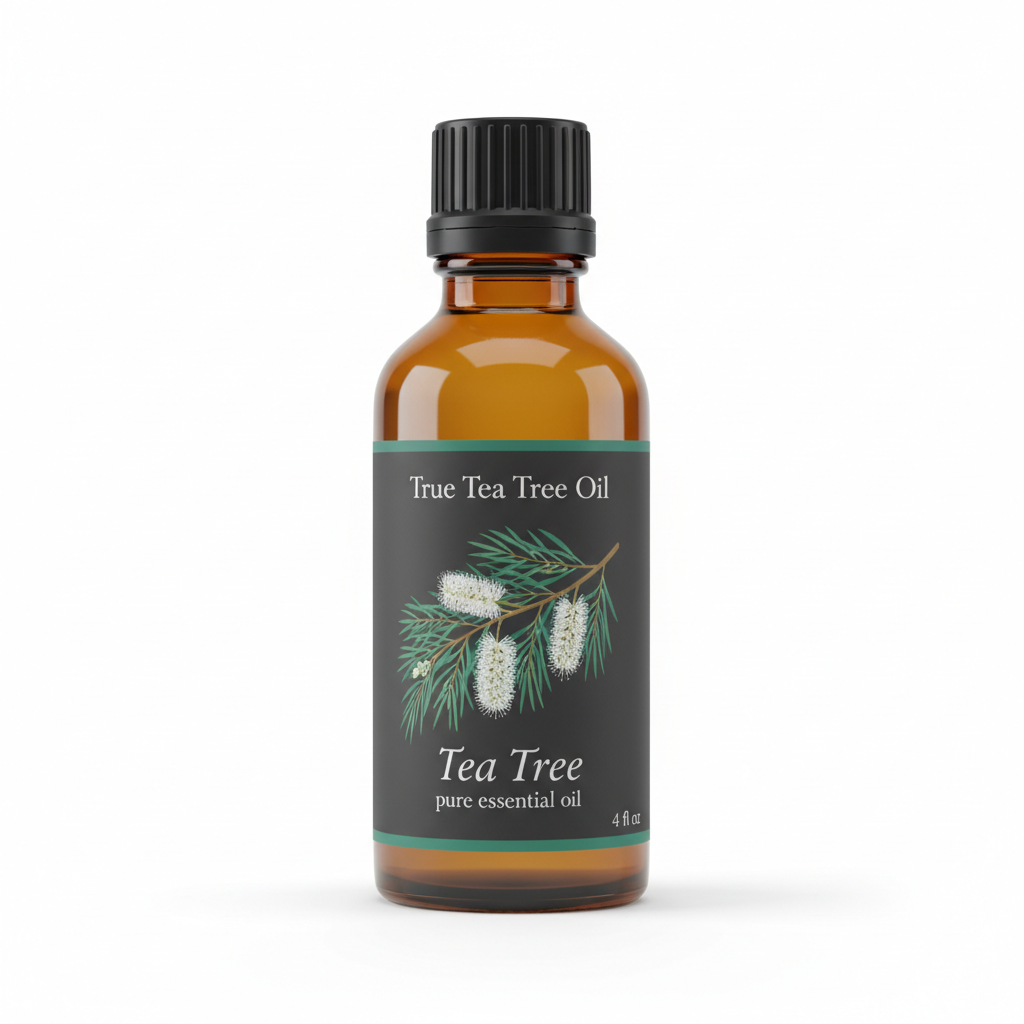
Tea Tree Essential Oil
Our own Tea Tree Essential Oil, in sizes from 0.5 oz to bulk.
From $10.99
Shop Now →The Honest Quick Answer
Is tea tree oil safe to use during pregnancy?
Nobody selling tea tree oil is in a position to answer that for you, and neither are we. The data set on essential oils while pregnant is small, uneven across different oils, and not built for a confident yes or no. Robert Tisserand and Rodney Young's Essential Oil Safety, 2nd edition, notes that pregnancy-specific safety data is limited for most essential oils, tea tree included, which is why caution is the standard recommendation rather than a specific verdict.
Why won't a tea tree oil brand just say yes or no?
Because a confident answer in either direction would be overstating what anyone actually knows. A brand that tells you tea tree oil is fine every day of pregnancy is guessing optimistically, and a brand that tells you to fear a drop of it on your wrist is guessing pessimistically. Both guesses sound reassuring. Neither one is evidence.
Who should I actually ask about this?
Your prenatal clinician, specifically, not a product label and not a forum thread. They can see your full chart, your trimester, and anything else going on, which a bottle of tea tree oil cannot account for. Bring the specifics of your habit (we lay out exactly what to bring further down) rather than a general question.
What Can Be Said Factually
How is tea tree oil normally used in a cosmetic routine?
Outside of pregnancy and inside it, tea tree oil belongs in external, well-diluted cosmetic use: a drop or two mixed into a carrier oil for a spot application, a few drops in a clay mask, that kind of thing. It is not formulated or sold as something to swallow. Our dilution and carrier guide covers the ratios people commonly use for skin application.
Does pregnancy make ingestion acceptable in small amounts?
No, and this is the one place where the answer is not hedged. Tea tree oil is not meant to be swallowed by anyone, pregnant or not, and that has nothing to do with pregnancy specifically. If a child or adult swallows any amount, the standard first step is to contact US Poison Control at 1-800-222-1222, not to wait and see.
Does pregnancy change how carefully I should dilute it?
Pregnancy is a reasonable season to tighten up dilution habits generally, the same way many people get stricter about ingredients on food labels once they're expecting. Our dilution guide and our 48-hour patch test walkthrough are good starting points if you want to keep a routine but make it more conservative. A lower-percentage, pre-diluted roll-on format from our shop is also a reasonable way to simplify the math.
Is this a good time to just drop tea tree oil from my routine?
For a lot of people, yes, simply because pregnancy already asks you to re-examine small daily habits, and tea tree oil is rarely load-bearing in anyone's routine. If it's a marginal habit rather than something you'd miss, dropping it removes one more variable to think about for a few months. That's a preference, not a safety verdict either way.
Is oil quality or sourcing relevant to this question?
It affects what's actually in the bottle, not whether pregnancy changes the calculus. Oil produced to the ISO 4730:2017 composition standard for oil of Melaleuca, terpinen-4-ol type, is a known, consistent material, and industry groups like the Australian Tea Tree Industry Association (ATTIA) frame it as a cosmetic and household ingredient rather than something meant for oral use. Consistent sourcing tells you what you're applying; it doesn't tell you how your body handles it right now.
Questions Worth Bringing to Your Prenatal Appointment
What exactly should I tell my provider about my tea tree oil use?
Come with specifics rather than a general "is this okay" question, since specifics are what let your clinician actually weigh in. A short list to write down and bring:
- Which current products contain tea tree oil (a cleanser, a spot stick, a DIY blend)
- How often you use each one
- At roughly what dilution or strength, if you know it
- Which part of your body it goes on
- Whether you also use it in a diffuser, and how often
What if I don't know the exact dilution percentage?
Bring the bottle or the label if you have it, since the ingredient list and any stated dilution will tell your clinician more than a verbal estimate. If it's a homemade blend, write down roughly how many drops per ounce of carrier you use. "A little" isn't information your provider can act on, but "two drops per ounce, twice a week" is.
What if my provider doesn't have a strong opinion either way?
That's a realistic outcome, not a non-answer, because the underlying research genuinely doesn't give a firm position for most essential oils in pregnancy. In that case, ask what they'd recommend as a conservative default for someone in your specific trimester and health situation, since that's a judgment only they can make with your chart in front of them.
Should I ask about this at every visit or just once?
Once is usually enough unless your routine changes, your trimester changes, or something new comes up that your clinician flags. If you start using tea tree oil somewhere new on your body, or more often than before, that's worth a follow-up mention rather than assuming the first answer still applies.
Tea Tree Oil and Breastfeeding
Is tea tree oil safe while breastfeeding?
The same honest answer applies here: data on tea tree oil and breastfeeding specifically is sparse, so the responsible move is the same conversation with your own clinician or lactation consultant, not a general reassurance from a product page. Terpinen-4-ol, the compound most associated with tea tree oil's characteristic scent and behavior, is a small, fat-soluble molecule according to its PubChem compound record, and how a molecule like that moves through body tissue during lactation isn't something that's been mapped in detail for this oil.
Can tea tree oil applied to my skin end up in breast milk?
Nobody can give you a precise answer to that, and we won't pretend otherwise. What's known is limited to the oil's general chemistry (small, fat-soluble molecules can cross tissue barriers in the body), not to tea tree oil's behavior in lactation specifically. That gap is exactly why this belongs in a conversation with your provider rather than a confident claim on either side.
Is it different if the tea tree oil goes near my chest or nipple area?
Location matters for a practical reason separate from the safety question: anything applied near the chest has a higher chance of direct skin-to-skin or mouth contact with a nursing infant. Many parents choose to keep any diluted tea tree product to areas away from the chest during a nursing season simply to avoid that contact, regardless of what the broader safety picture turns out to be.
What about using tea tree oil on my baby once they're here?
That's a separate question from pregnancy or breastfeeding use on yourself, and it deserves its own answer rather than an assumption. Our guide to tea tree oil and kids walks through age-appropriate caution and dilution for children specifically, which is a more conservative standard than anything in this article.
Scent Sensitivity During Pregnancy
Why does tea tree oil suddenly smell overwhelming now?
Pregnancy frequently sharpens the sense of smell, and a scent you found pleasant before can read as sharp or medicinal now. Tea tree oil's profile (our scent guide describes it as crisp, green, and a little camphorous) sits exactly in the register that newly sensitive noses tend to flag first.
Should I stop diffusing it altogether if the smell bothers me?
If it's unpleasant, stopping is simply a comfort decision, and you don't need a safety justification to make it. Scent discomfort is reason enough on its own, separate from anything in the safety discussion above.
Is there a lighter-handed way to keep diffusing it if I still like it some days?
Using fewer drops, running the diffuser for shorter stretches, and keeping it in a room you're not sitting in for hours are all ways to turn the intensity down without cutting it out completely. That's a comfort adjustment, not a measured safety change, but it's a reasonable middle ground for a scent you're genuinely ambivalent about rather than one you want gone.
What We Won't Do
Will you tell me tea tree oil is fine to use every day while pregnant?
No. That would be dressing up reassurance as evidence, and the evidence to back a daily-use endorsement during pregnancy doesn't exist in the first place.
Will you tell me to avoid it entirely out of caution marketing?
Also no. Fear sells too, and a blanket "never, under any circumstances" claim would be just as unsupported as a blanket green light. Both are a shortcut around the conversation that actually matters.
So what's the bottom line here?
The respectful answer to this entire question is a well-prepared conversation with your clinician, using the specifics in the checklist above. A seller who hands you a confident yes or a scary no instead is answering a question they don't actually have the data to answer.