
Tea Tree Oil for Oily-Feeling Skin: A Balancing Evening Routine
Skin that feels oily and shiny by mid-afternoon usually gets scrubbed harder in response, and that response is the mistake. Stripping every trace of oil at night tends to leave skin feeling tight within the hour, then shinier again by the next afternoon. A gentler evening routine, a gel cleanser followed by a few drops of tea tree oil diluted in jojoba, tends to leave skin feeling more settled than a squeaky-clean wash does.
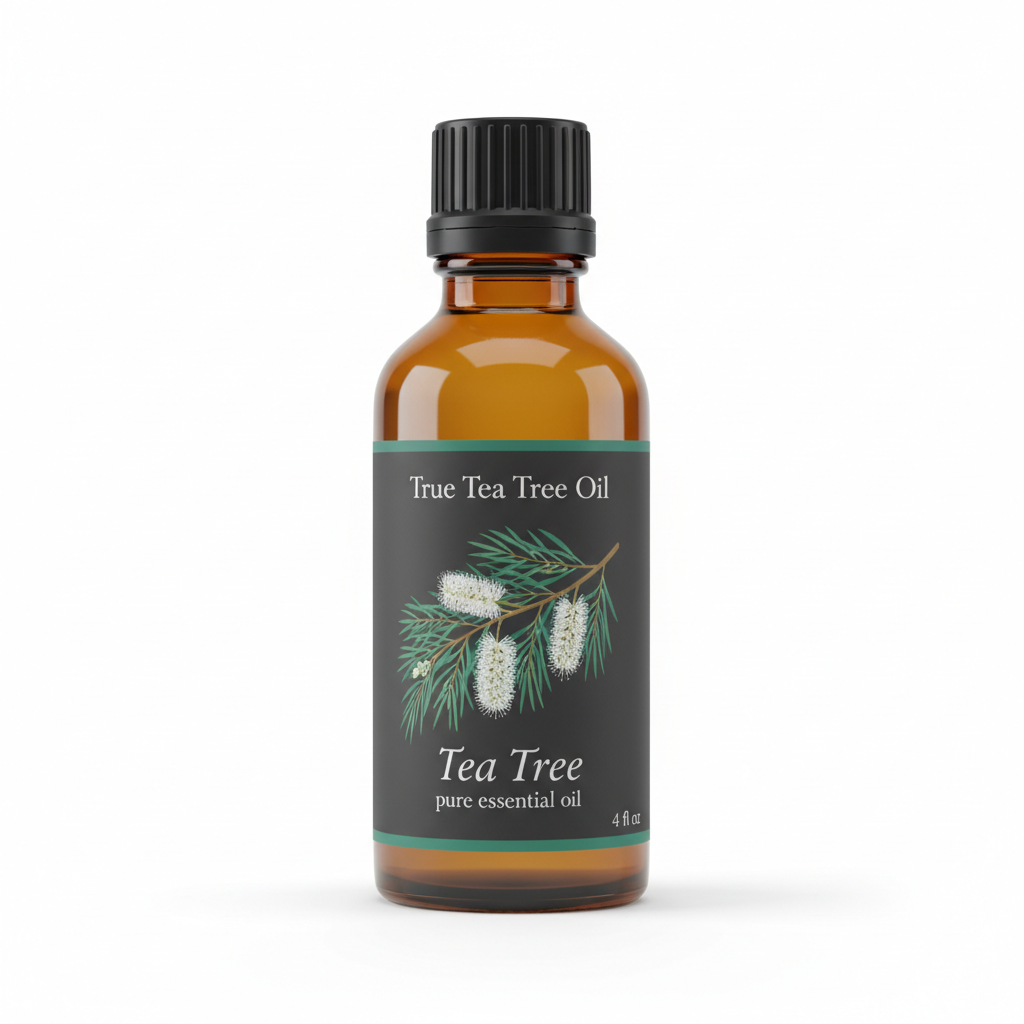
Tea Tree Essential Oil
Our own Tea Tree Essential Oil, in sizes from 0.5 oz to bulk.
From $10.99
Shop Now →Why Washing Oily-Feeling Skin Dry Backfires
The surface of skin holds onto moisture partly because of a thin lipid film sitting on top of it. A hot wash with a foaming, high-surfactant cleanser cuts straight through that film, oil included. For the first few minutes afterward, skin feels clean and matte. But without the film slowing evaporation, surface water leaves faster than usual, and skin can feel dry and tight within the hour. Whatever is driving the midday shine in the first place hasn't gone anywhere, and by the next afternoon the same shine shows up again, sometimes earlier than before.
This is the case for a lighter touch rather than a harder one. A gel cleanser with a low percentage of tea tree oil can clear the day's buildup without the stripped, tight feeling that a harsher face wash leaves behind. For more on what tea tree's scent and feel actually bring to a facial routine, and where that crisp note is useful versus overused, see tea tree oil for skin: a purifying feeling note, used wisely.
The Routine, Step by Step
What You'll Need
- A gel cleanser containing tea tree oil at under 1 percent (a simple one can be mixed at home; see the tutorial below)
- Lukewarm water, not hot
- A soft, clean towel kept separate from body towels
- A 1 percent tea tree-in-jojoba blend, either pre-mixed or made fresh (jojoba oil plus tea tree oil, measured as below)
- A small glass dropper bottle if mixing your own blend
If you'd rather build the cleanser yourself than buy one, the DIY tea tree face wash tutorial walks through a simple gel base at a comparable dilution.
Steps
- Warm the water to lukewarm, not hot. Hot water accelerates the same moisture loss described above. Lukewarm water cleans just as well and doesn't leave skin feeling raw.
- Cleanse for 30 to 60 seconds. Work the gel cleanser in with fingertips, not a brush or cloth, using light circular pressure. The goal is lifting the day's oil and residue, not polishing the skin.
- Rinse thoroughly. Residual cleanser left along the jaw or hairline is a common reason skin feels off the next morning. Rinse a few seconds longer than feels necessary.
- Pat dry, don't rub. Press the towel against skin rather than dragging it across. Leave skin slightly damp rather than fully dry.
- Press in 2 to 3 drops of the 1 percent tea tree-in-jojoba blend. Warm the drops between the palms first, then press (don't rub) into damp skin. Damp skin helps the blend spread thin rather than sitting on top in a film.
- Let it absorb before the pillow. Give it a minute or two before lying down. Jojoba is a liquid wax ester, not a triglyceride oil, which is part of why it feels light and almost dry on skin rather than greasy. That structural difference is also why it sits comfortably under a pillowcase without leaving the obvious shine that a heavier plant oil would.
The Measuring Math: What "1 Percent" Actually Means
A standard dropper delivers roughly 0.05 ml per drop, and a level teaspoon holds about 5 ml. One drop of tea tree oil stirred into one teaspoon of jojoba oil works out to roughly 1 percent, which is the concentration this routine is built around. Doubling to two drops per teaspoon moves to roughly 2 percent, which is more than this particular routine calls for on facial skin.
It's worth making a small batch rather than eyeballing it drop by drop each night. Ten drops of tea tree oil stirred into two tablespoons (about 30 ml) of jojoba oil gives the same roughly 1 percent ratio and lasts for weeks in a dark glass bottle. For a longer breakdown of dilution ratios, which carriers behave differently than others, and how to patch test a new blend before it goes anywhere near the face, see how to dilute tea tree oil: ratios, carriers, and patch tests. A pre-measured 1 percent tea tree-in-jojoba blend is also available in the shop for anyone who'd rather skip the mixing step.
Keep Mornings Plain
This routine is written for evenings on purpose. A morning routine that layers a cleanser, a facial oil, and sunscreen on top of each other is simply more to manage before the day starts, and more products under sunscreen tends to feel heavier and sit less evenly than fewer products do. A plain morning rinse with lukewarm water, followed by sunscreen alone, keeps the daytime feel light. Save the gel cleanser and the tea tree-in-jojoba blend for the evening, when there's no sunscreen going on top and nowhere to be in the next ten minutes.
What Commonly Goes Wrong
Three mistakes account for most of the complaints about tea tree oil on facial skin, and none of them are about the oil itself.
- Adding drops until it tingles, on the theory that tingling means it's working. It shouldn't tingle. A noticeable tingle or warmth on facial skin is a sign the dilution is too strong for that area, not a sign of anything positive. If a blend tingles, it needs more jojoba stirred in, not less.
- Skipping the patch test because the blend "is just a little tea tree oil." Facial skin, especially near the eyes and along the jaw, reacts differently than the inside of a forearm. A 48-hour patch test on the inner arm before the first facial use catches most problems before they reach a visible spot on the face. The full process is laid out in how to patch test tea tree oil: a 48-hour skin check step.
- Layering several strongly scented products in the same routine. A tea tree gel cleanser, a tea tree toner, and a tea tree-in-jojoba blend applied back to back in one evening adds up to a far higher cumulative exposure than any one of them alone, and a stronger scent load than most people actually want on a pillow. Pick one or two tea tree steps in the routine, not all of them.
With an essential oil this concentrated on facial skin, the right amount almost always looks like too little.
Who Should Pass on This Routine
This routine is written for skin that feels oily and shiny by mid-afternoon but is otherwise behaving normally. It is not written for reactive or broken skin, meaning skin that is currently cracked, weeping, freshly shaved, or already uncomfortable to touch. Essential oils sting on broken skin even at low dilutions, and there's no reason to test that on the face. Anyone already following a specific skin care routine set up with a dermatologist or other qualified provider should ask that provider before adding tea tree oil to it, since a new scented product can interact with whatever else is already in the routine. As always, this article is educational, not a substitute for guidance from a qualified healthcare provider.
What to Expect
Results with any topical routine vary by skin and by season, and tea tree oil is not an exception. Some people report that skin feels less shiny by late afternoon after a few weeks of the gentler evening routine described here, and that the tight, stripped feeling from harsher washing fades once skin isn't being stripped nightly. Others notice little change in feel at all. Anecdotal evidence and the basic chemistry of jojoba's lighter texture support why this routine might feel more comfortable than a harsher one, but it is not a guarantee, and skin that was shiny by afternoon before this routine may still be shiny by afternoon after it. The scent and feel are the honest selling points here, not a promised outcome.
Quality and freshness matter more than most routines account for. Tea tree oil sold to the ISO 4730:2017 standard for oil of Melaleuca, terpinen-4-ol type, is the baseline worth checking a label against, and a bottle that's been open a year or more is worth smelling before use, since the monoterpenes alongside terpinen-4-ol oxidize on air contact and a half-empty bottle ages faster than a full one. A stale bottle smells sharper and less clean than a fresh one, and that shift alone can explain a blend that used to feel pleasant suddenly feeling off.