
Tea Tree Oil vs Witch Hazel: Toner-Shelf Rivals Compared
Tea tree oil and witch hazel are not two versions of the same product. Witch hazel is a mild, mostly water distillate that can go straight onto skin from a cotton pad. Tea tree oil is a concentrated essential oil meant to be measured into a carrier at around 1 percent, never splashed on neat. The real question isn't which one wins. It's which phase of a routine each one is built for.
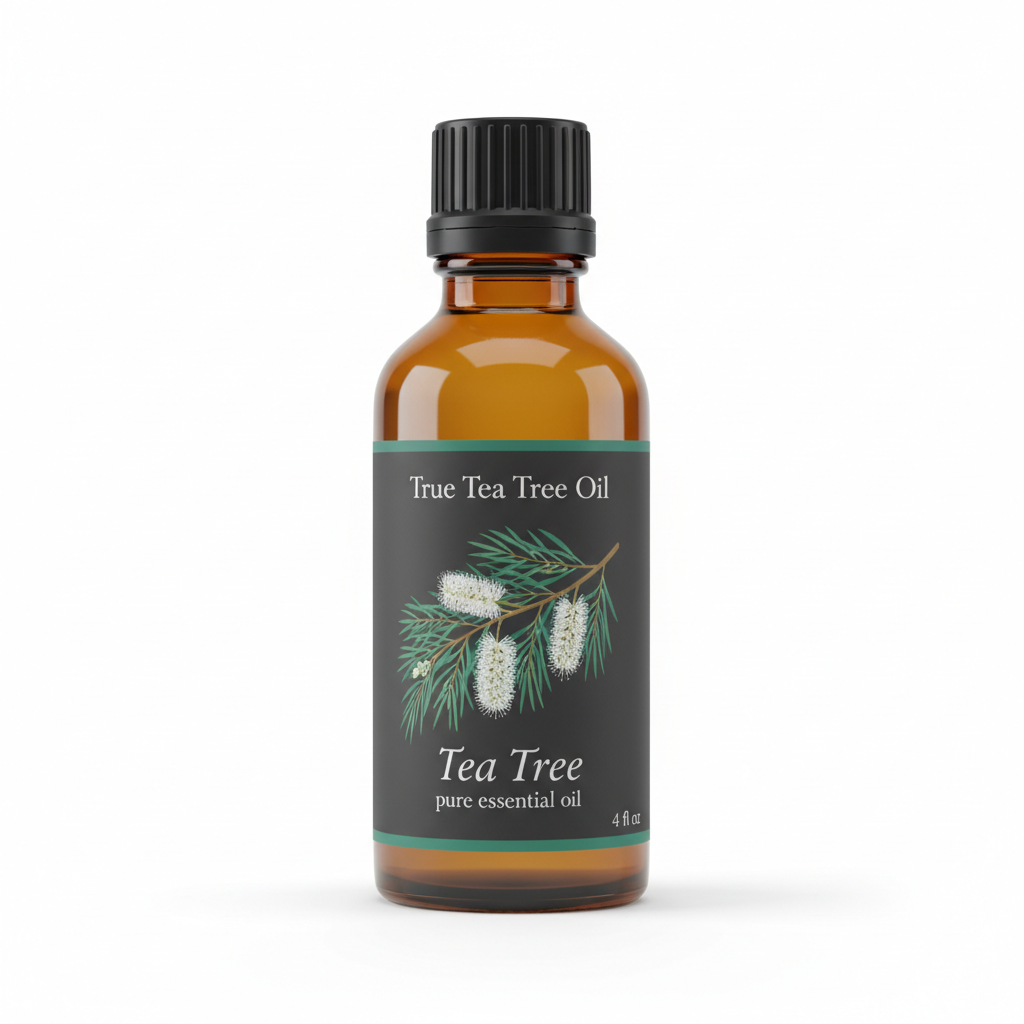
Tea Tree Essential Oil
Our own Tea Tree Essential Oil, in sizes from 0.5 oz to bulk.
From $10.99
Shop Now →The Quick Verdict: Different Jobs, Different Phases
Reach for witch hazel when you want a light, fast-drying splash right after cleansing. Reach for tea tree oil when you want a small, diluted amount of a distinct-smelling botanical oil worked into a carrier later in a routine. Neither replaces the other, and comparing them as rivals is a bit like comparing a glass of water to a bottle of vinegar extract because both sit near the sink. They can share a shelf. They don't share a job.
What Witch Hazel Actually Is
Witch hazel starts as the bark and twigs of Hamamelis virginiana, a shrub native to eastern North America, run through steam distillation to pull out a watery liquid. That alone would just be a plant-water distillate with a short shelf life. The common US drugstore bottle, labeled USP witch hazel, is a standardized preparation: roughly 86 percent witch hazel distillate combined with about 14 percent alcohol by volume. That detail matters more than most labels let on, because the alcohol fraction, not just the botanical distillate, is doing a lot of the work in how the liquid feels on skin: the quick evaporation, the slight tightening sensation, the smell of the bottle itself. A product sold as "witch hazel" without that alcohol percentage disclosed is a different liquid than the one most people picture.
What Tea Tree Oil Actually Is, By Contrast
Tea tree oil comes from steam-distilling the leaf of Melaleuca alternifolia, an Australian tree, into a concentrated essential oil. Quality bottles are generally checked against ISO 4730:2017, the international standard for oil of Melaleuca, terpinen-4-ol type, which sets expected ranges for the oil's component compounds. This is where the category error starts: tea tree oil is not a splash-on liquid at any concentration. Robert Tisserand and Rodney Young's reference text, Essential Oil Safety, 2nd edition, is explicit that tea tree oil is meant to be diluted, with roughly 1 percent in a carrier being a common ceiling for facial use, a ratio we walk through in more detail in our evening routine guide for oily-feeling skin. Witch hazel is used at full strength. Tea tree oil is used at around one part in a hundred. That gap in concentration, not brand reputation, is the actual difference between these two products.
Witch Hazel vs Tea Tree Oil: Side by Side
| Attribute | Witch Hazel (USP) | Tea Tree Oil |
|---|---|---|
| Botanical source | Hamamelis virginiana twigs/bark | Melaleuca alternifolia leaf |
| What's in the bottle | ~86% distillate, ~14% alcohol | 100% essential oil, multiple terpene compounds |
| Concentration on skin | Full strength from the bottle | Diluted to roughly 1% in a carrier |
| Texture | Watery, evaporates in seconds | Oily, viscous, does not mix into water |
| Scent | Faint, slightly woody | Sharp, green, announces itself immediately |
| Typical routine step | Water phase, right after cleansing | Oil phase, blended into a carrier or finished product |
| Patch test recommended | Yes, due to the alcohol fraction | Yes, every time, before first use |
Feel and Scent: The Part the Bottle Doesn't Tell You
Witch hazel goes on cool, evaporates within a minute, and leaves almost nothing behind. The scent is quiet: faintly woody, a little astringent-smelling, gone almost as fast as the liquid itself. Tea tree oil does the opposite. A single drop carries a sharp, green, camphor-leaning scent that lingers on skin and in the air long after application, a profile we break down fully in our guide to what tea tree oil actually smells like. If you dab tea tree oil on the back of your hand expecting a quick, neutral splash like witch hazel, the scent alone tells you within seconds that these are not interchangeable liquids.
The DIY Trap This Comparison Exists to Catch
A recipe that shows up often: a few drops of tea tree oil stirred into a bottle of witch hazel, shaken, and called a toner. The problem is chemistry, not proportions. Witch hazel is a water-and-alcohol liquid. It is not a solubilizer, meaning it has no ability to disperse an oil evenly through a watery base. Shake that bottle and the tea tree oil doesn't distribute. It breaks into tiny undissolved droplets that float, clump, and settle unevenly, so one swipe of the cotton pad might carry almost no oil and the next might carry a concentrated, undiluted droplet straight onto skin. That's the exact scenario the dilution guidance in Essential Oil Safety warns against: essential oil contacting skin at full strength, just disguised inside a product that looks diluted. A cleanser base built with an actual dispersing agent is a different story, which is why we walk through the real version of that process in our simple gel cleanser tutorial. If you want a pre-measured, already-diluted option instead of mixing your own, the shop carries tea tree blends formulated at a workable percentage, which removes the guesswork entirely. Whatever you use, patch test any new blend on the inside of your forearm and wait 24 hours before applying it more broadly, and keep undiluted tea tree oil away from children and pets. If it's swallowed, contact Poison Control at 1-800-222-1222, or the ASPCA Animal Poison Control Center for a pet.
Where Each One Actually Belongs in a Routine
Routines generally move from thinnest to thickest. Witch hazel, being mostly water, belongs early: right after cleansing, before anything oil-based touches skin. Tea tree oil, once diluted into a carrier, belongs later, in the oil-phase step, applied after the watery layers have had a moment to settle and before a moisturizer seals things in. Used in that order, there's no conflict between them. The mistake isn't using both. It's trying to force one liquid to do the other's job, whether that's splashing tea tree oil on like a toner or expecting witch hazel to carry an essential oil it has no ability to disperse.
Pros and Cons, Side by Side
Witch Hazel
- Pros: Ready to use straight from the bottle, no measuring or dilution math; dries quickly with no residue; widely available and inexpensive; a straightforward water-phase step after cleansing.
- Cons: The roughly 14 percent alcohol content means daily use over months can leave some skin feeling dry; the scent is faint, so it offers little for anyone specifically looking for an aromatic lift; it cannot safely carry an essential oil, since it has no dispersing ability.
Tea Tree Oil
- Pros: Highly concentrated, so a small diluted amount goes a long way; a distinct, recognizable scent that some people specifically seek out; quality can be checked against a published standard (ISO 4730:2017), giving a consistent way to compare bottles.
- Cons: Never usable at full strength on skin; requires actual measuring and a carrier every time; does not double as a toner or a quick splash product; the strong scent is a drawback for anyone who dislikes it; must be stored securely away from children and pets.
Best For, By Use Case
- A quick, no-fuss splash after cleansing: witch hazel. It's built for exactly this and needs no preparation.
- An aromatic, oil-phase step layered into an evening routine: tea tree oil, properly diluted in a carrier.
- A homemade "toner" project: neither one alone. A real dispersant or a product formulated for this purpose is required; don't improvise with witch hazel as the base.
- Skin that reacts to alcohol-based products: look for witch hazel specifically labeled alcohol-free, or patch test the standard USP version first.
- Households with kids or pets: store both out of reach. Tea tree oil especially should never be left where it could be licked, chewed, or swallowed.
The Verdict
Most "witch hazel vs tea tree oil" comparisons are really comparing reputations: one is the mild, old-fashioned drugstore staple, the other is the strong-smelling bottle people associate with DIY projects. Comparing the actual liquids settles the question faster than comparing marketing. Witch hazel is a dilute, alcohol-containing water distillate meant to be used as is. Tea tree oil is a concentrated essential oil meant to be measured, diluted, and used sparingly. They aren't competing for the same slot on the shelf, and a routine that uses both, in the right order and the right concentration, isn't contradicting itself. A routine that tries to combine them into a single homemade splash is the one that gets it wrong, because it asks a water-based liquid to do a job it was never formulated to do.