Tea Tree Diffuser Starter Kit: Bottles, Blends, and First Buys
So you've decided to bring tea tree essential oil into your home diffuser routine. Good move. The crisp, camphoraceous scent of true tea tree is one of the more distinctive aromas in the essential oil world, and it layers beautifully with other botanicals. But walking into this category without a little guidance can mean wasted money, disappointing blends, or a bottle of oil that barely resembles the real thing.
This guide covers everything you need to assemble a solid tea tree diffuser starter kit: what to look for in the oil itself, which diffuser features actually matter, how to build your first blends, and where to spend your money wisely across different budgets.
Why Tea Tree in a Diffuser?
Before we get into product specifics, it helps to understand what tea tree brings to an aromatic experience. Melaleuca alternifolia oil has a sharp, medicinal-green scent profile with woody and earthy undertones. In a diffuser, it fills a room with a clean, distinctive atmosphere that many people associate with clarity and freshness.
The tea tree essential oil diffuser benefits people most often describe are sensory rather than clinical: a feeling of a cleaner space, a sharper mental environment for focused work, or a grounding counterpoint in evening wind-down blends. It is not a fragrance oil in the soft, sweet sense. It commands attention, which is exactly why blending matters so much.
Start with the Oil: Quality Indicators That Actually Matter
Your diffuser is only as good as what you put in it. A low-quality oil will diffuse poorly, smell off, or fade within minutes. Here is what to check before you buy.
Botanical Source and Species
True tea tree oil comes from Melaleuca alternifolia, a native Australian species. Some sellers substitute or blend in oil from related species like Melaleuca quinquenervia or Leptospermum scoparium (manuka). These are interesting oils on their own terms, but they are not tea tree. Check the Latin name on the label.
GC/MS Testing and Terpinen-4-ol Content
Quality tea tree oil is standardized by ISO 4730, which specifies a terpinen-4-ol content of at least 30 percent, with 1,8-cineole capped at 15 percent. Terpinen-4-ol is the compound most associated with tea tree's characteristic aroma profile. Reputable sellers will share a gas chromatography/mass spectrometry (GC/MS) report on request or display it on their website. If a brand cannot or will not provide one, move on.
For a deeper breakdown of what grade distinctions mean at the sourcing level, our complete guide to tea tree oil grades walks through the full picture.
Color and Aroma as Basic Freshness Checks
Fresh tea tree oil is pale yellow to nearly colorless. If a bottle is noticeably dark yellow or amber without explanation, the oil may have oxidized. Oxidized tea tree oil smells harsh and stale rather than crisp and green. It also performs poorly in a diffuser and may cause skin sensitivity in topical applications.
Packaging
Dark glass bottles (amber or cobalt) protect the oil from UV degradation. A dropper top or orifice reducer is useful for diffuser use, where you are typically adding 5 to 15 drops at a time. Avoid plastic bottles entirely; essential oils degrade plastics over time, and the leached compounds can alter the oil's scent and composition.
Choosing Your First Diffuser: Features That Matter
Diffusers range from under ten dollars to several hundred. For most people starting out, an ultrasonic diffuser in the thirty-to-sixty-dollar range is the right call. Here is what to compare.
Diffuser Type
- Ultrasonic: Uses water and vibration to create a fine mist. Gentle on the oil's aromatic compounds. Most common and most affordable. Good for everyday home use.
- Nebulizing: No water. Diffuses pure oil directly into the air as a fine particle mist. More intense scent output, better for larger rooms or shorter diffusion sessions. Typically costs more.
- Heat diffusers: Not recommended for quality oils. Heat alters aromatic compounds and degrades scent complexity quickly.
- Reed diffusers: Passive, no electricity. Suitable for light continuous scenting but not powerful enough to fill a room effectively with tea tree.
Tank Size and Run Time
A 300 mL ultrasonic diffuser will run four to six hours on a single fill. That covers most evening or work-from-home sessions without refilling. Larger tanks (500 mL or more) suit open-plan spaces or all-day use. Smaller personal diffusers (100 mL) are useful for a desk or bedroom but need refilling more often.
Auto-Shutoff
Non-negotiable for safety. Any diffuser worth buying will shut off automatically when the water level drops to empty. This protects the motor and prevents the unit from running dry while you sleep or step out.
Mist Settings
Adjustable mist output (low/high, or interval settings) lets you control how much oil disperses into the air. Tea tree is a potent scent; a lower mist setting is often the better starting point until you find your preferred intensity.
Top Picks at Different Price Points
Under $30: The No-Fuss Entry Point
At this price, you are looking at basic 100 to 200 mL ultrasonic diffusers from brands like InnoGear, URPOWER, or generic Amazon picks. They work, they auto-shutoff, and they are fine for a single room. The tradeoff is shorter run times, simpler controls, and less durable motors. If you want to test whether diffusing tea tree fits your routine before investing more, this tier makes sense.
What to prioritize: Auto-shutoff, dark or opaque water tank, at least 3 hours run time.
$30 to $80: The Sweet Spot
This range includes well-reviewed ultrasonic diffusers from brands like ASAKUKI, VicTsing, Vitruvi, and Stadler Form. You get larger tanks (300 to 500 mL), better mist control, quieter motors, and more thoughtful industrial design. The Vitruvi Stone Diffuser sits at the top of this range and has earned its reputation for build quality and aesthetic. For diffusing tea tree blends on a daily basis, this is where most people should start.
What to prioritize: 300 mL or larger tank, interval mist setting, a motor rated for continuous use.
$80 and Up: Nebulizers and Premium Ultrasonic
If you want maximum scent diffusion without water dilution, a nebulizing diffuser from brands like Organic Aromas or Raindrop 2.0 will outperform any ultrasonic unit in pure scent intensity. These are better suited to experienced users who already know their preferred tea tree blends. They also consume oil faster, so the oil cost per hour goes up.
Building Your First Tea Tree Diffuser Blends
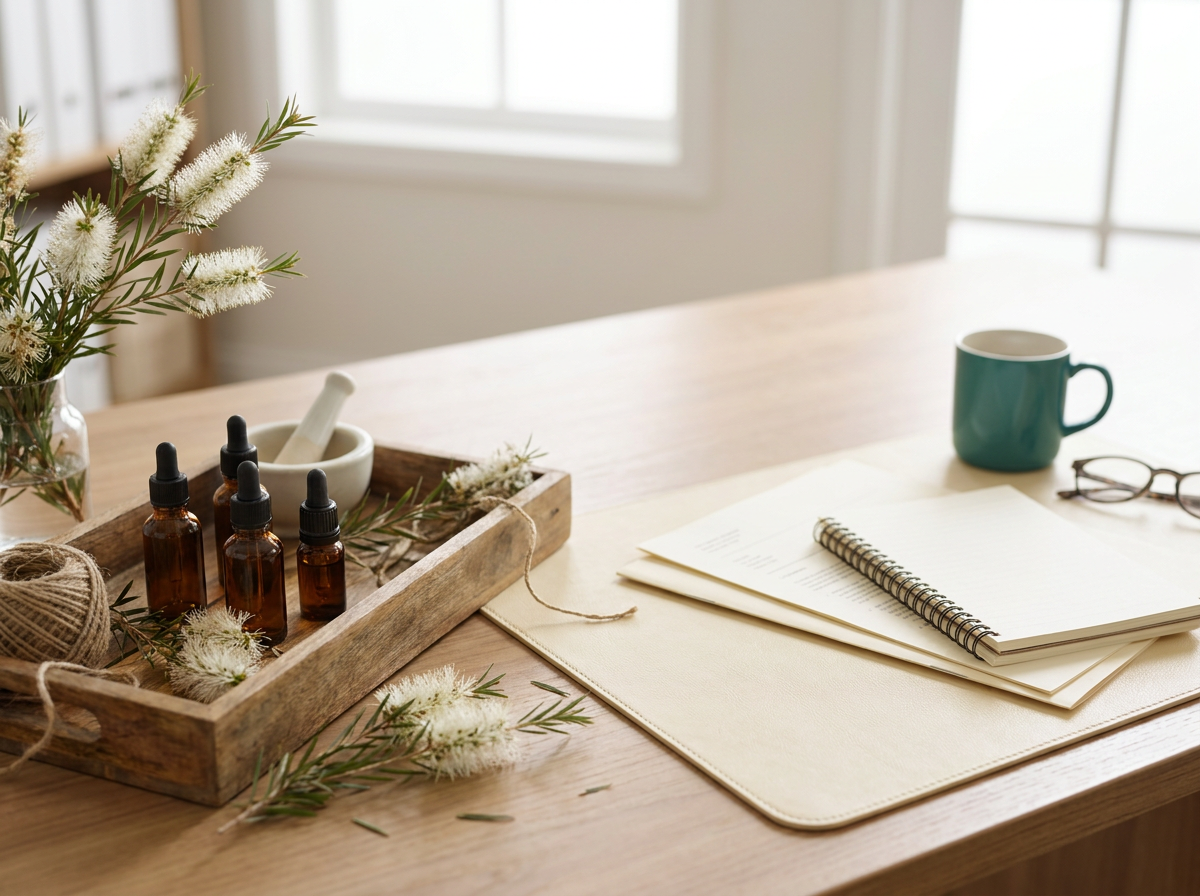
Tea tree is a top-to-middle note. It blends well with other clean, green, or earthy scents and needs some softening companions to work in a home environment. Here are three reliable starting points.
Fresh Focus Blend
- 4 drops tea tree
- 3 drops eucalyptus
- 2 drops peppermint
Sharp and invigorating. Works well for a home office or morning routine. The eucalyptus rounds out tea tree's edges while peppermint adds lift.
Calm Evening Blend
- 3 drops tea tree
- 4 drops lavender
- 2 drops cedarwood
Tea tree's green note is grounded here by cedarwood's warmth and lavender's softness. A good choice for a bedtime wind-down atmosphere.
Citrus Clean Blend
- 3 drops tea tree
- 5 drops lemon
- 2 drops rosemary
Bright and kitchen-friendly. Lemon lifts tea tree's intensity, and rosemary adds an herbal dimension. Many people find this blend particularly well-suited to spaces that benefit from a clean, fresh atmosphere.
A note on proportions: start with fewer drops total (6 to 8 drops in a 300 mL tank) when you are testing a new blend. Tea tree is assertive. You can always add more. You cannot take it back once it is in the water.
Red Flags to Avoid
The essential oil market has a significant adulteration problem. Here are the specific things to watch for when buying tea tree for diffuser use.
- No Latin name on the label. A label that just says "tea tree oil" with no species name is a warning sign.
- Unusually low prices. Quality Melaleuca alternifolia oil from Australian sources has a real cost of production. A 4-ounce bottle priced under ten dollars is almost certainly diluted or adulterated.
- "Fragrance oil" or "blended" language in the fine print. These are not essential oils. They are synthetic fragrance compounds and will not give you the characteristic tea tree aroma profile.
- No batch testing or GC/MS data available. Reputable brands test every batch. If a brand's website has no testing information and customer service cannot provide a report, that is a meaningful signal.
- Plastic bottles. As mentioned above: a dealbreaker.
How Much Oil to Buy First
For diffuser use, a 10 mL bottle goes faster than you might expect. A 100 mL (roughly 3.4 ounces) bottle is a more practical starting quantity if you plan to diffuse regularly. It gives you enough volume to experiment with blends without the commitment of a large supply.
If tea tree becomes a staple in your routine, the per-mL cost drops considerably when you move to larger sizes. Our guide to choosing the right bottle size breaks down the cost-per-use math across common options. And for those building out a professional or studio setup, wholesale and bulk purchasing options are worth understanding before you scale up.
Where to Buy
The best sources combine transparency with consistent quality control. Here is a general hierarchy:
- Direct from the producer or a specialized botanical supplier. You get the clearest supply chain and the most accessible testing data. Pricing is often better than retail markup.
- Established natural health retailers (online or in-store). Brands like Plant Therapy, Mountain Rose Herbs, and Florihana have built reputations on sourcing transparency. Their tea tree is typically well-documented.
- Amazon and general marketplaces. Convenient, but buyer awareness is essential. Stick to brands you can verify independently. Read ingredient labels carefully, not just the listing title.
Avoid buying essential oils from gift shops, dollar-tier stores, or any source that cannot tell you where the oil was distilled or whether it has been tested. The diffuser experience is only as good as the oil inside the bottle.
Your Starter Kit Checklist
| Item | What to Look For | Budget Range |
|---|---|---|
| Tea tree essential oil | Melaleuca alternifolia, GC/MS tested, dark glass bottle | $10 to $30 for 30 mL |
| Ultrasonic diffuser | 300 mL+ tank, auto-shutoff, interval mist settings | $30 to $80 |
| Complementary oils (lavender, eucalyptus, lemon) | Same sourcing standards as your tea tree | $8 to $20 each |
| Measuring dropper or pipettes | Glass preferred, graduated markings | Under $10 |
| Storage (dark drawer or small box) | Away from direct light and heat | Often already at home |
A well-assembled diffuser starter kit does not require a large investment. What it does require is a little attention to sourcing quality at the oil level. Get that right, pair it with a diffuser that suits your space, and tea tree becomes one of the most versatile and distinctive aromas you can work with at home.