Tea tree is the oil where age matters most. We distil Australian Melaleuca alternifolia ourselves and print the distillation date so you can judge it.
Tea tree does not simply fade with age. It changes into something more likely to irritate skin.
Exposed to air, light and warmth, its terpenes oxidise, and the oxidation products are the part associated with skin reactions. A bottle that has sat in a warm shop for three years is not a weaker version of a good oil; it is a different and less friendly material.
Which makes date labelling the whole argument for this one. We distil Australian-grown leaf ourselves, print the distillation date rather than a vague best-by, and would rather sell you a small bottle you finish than a large one that turns.
Every batch is analysed by an independent third-party laboratory, and for tea tree the analysis is the product specification.
The principal active constituent and the figure that separates a serious tea tree oil from a passable one.
Wanted low here. A high reading points to the wrong Melaleuca or careless distillation.
Checks the oil is fresh rather than aged stock rebottled with a new label.
Give us the lot and we will send its full composition. The contact page reaches us as well.
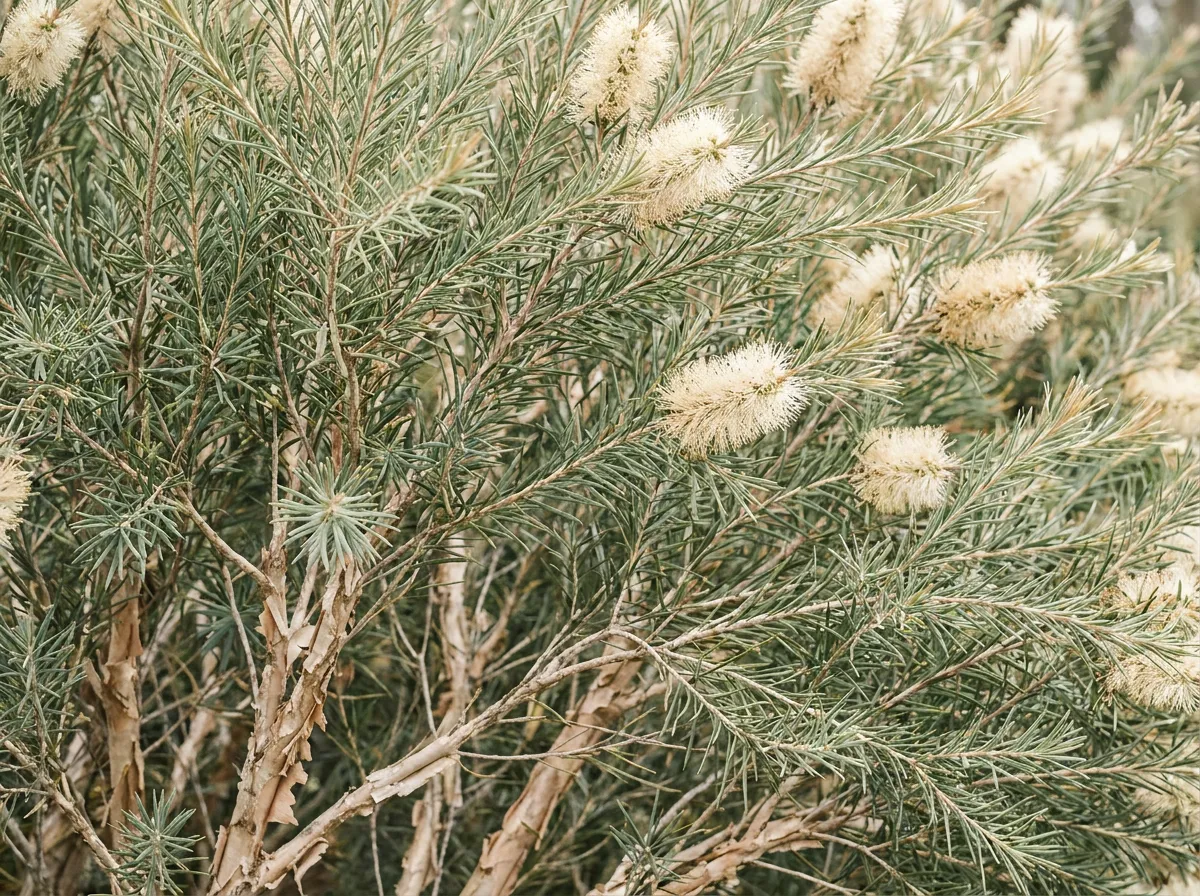
Melaleuca alternifolia is a paperbark native to the creeks and swampy ground of northern New South Wales, and it is grown as a coppiced crop rather than harvested from bushland.
The plant is cut back hard, regrows, and is cut again, which is why a tea tree plantation looks more like a hedge farm than a forest.
Australian-grown oil distilled to the recognised standard is still the benchmark the rest of the world is measured against, and that standard is about composition rather than geography alone.
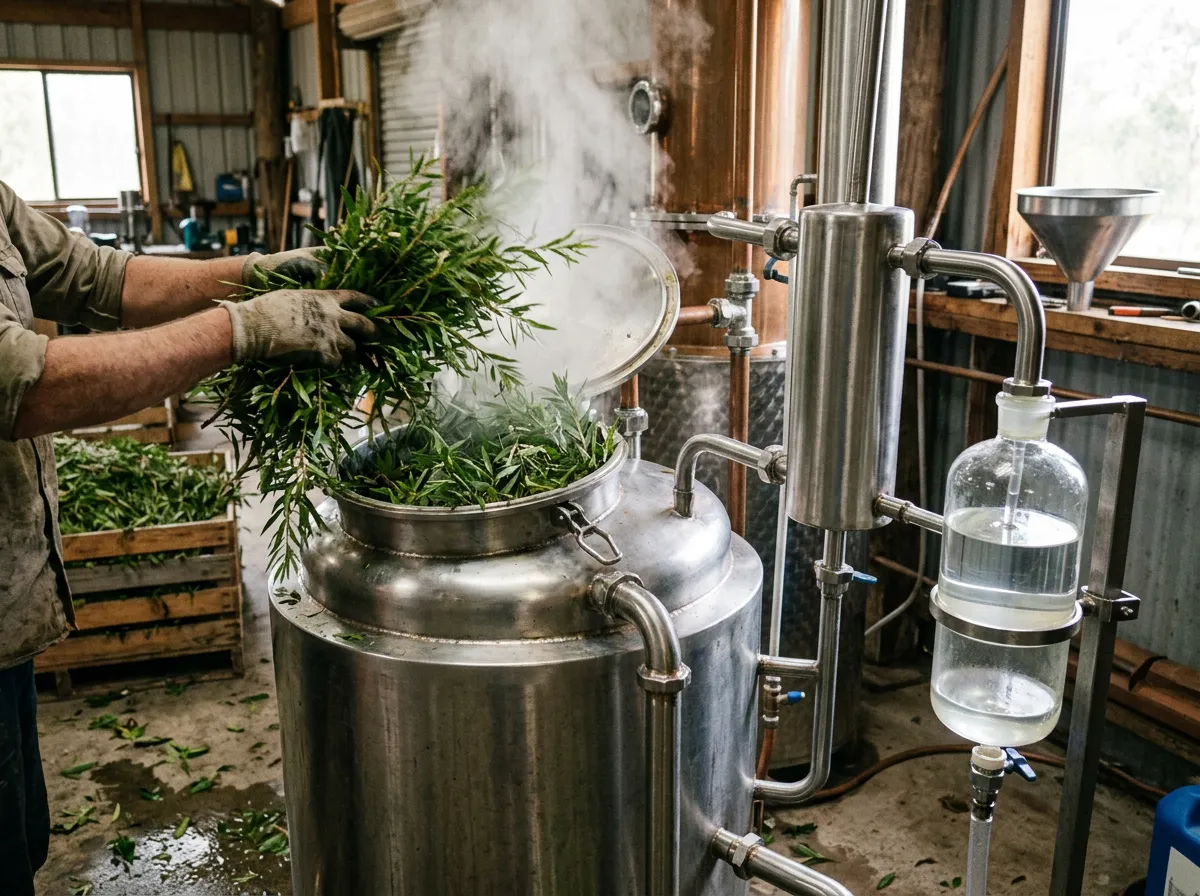
The still belongs to us. With an oil whose quality is a function of time, taking delivery of finished stock would mean inheriting an unknown amount of shelf life.
Fresh-cut foliage is packed and steam is passed through it until the leaf is spent, and the oil separates out clear to pale straw with that unmistakable sharp green smell.
The batch is dated at distillation, not at bottling alone, so the clock you are reading is the real one.
The still date sits alongside the fill date and lot, and with tea tree the older one matters more.
Amber throughout, since light is one of the three things that turn this oil.
Undiluted single-species oil, with no cheaper Melaleuca blended in.
We are not making medical claims for it. Tea tree has a substantial research literature and we would rather point you at it than summarise it into a promise.
Carry it in a base oil rather than applying it neat, and test a small patch before regular use. and take the oxidation point seriously: an old, badly stored tea tree oil is considerably more likely to irritate than a fresh one. Keep the cap tight, keep it cool, keep it dark.
It should never be swallowed, and it is genuinely toxic to cats and dogs at concentrations people casually use, so keep it away from pets entirely.
Six standing rules for every tea tree lot.
Plantation-grown alternifolia from organic growers, not bush-cut material.
Bought in bulk direct from the farms that cut it.
Fresh leaf into our own still, so the shelf life starts here.
Independent laboratory work on terpinen-4-ol and cineole.
We do not rebottle aged oil, whatever the price of it.
Small orders and wholesale volumes, each carrying its own distillation date.
Organically grown Australian alternifolia, distilled in our own still, analysed for terpinen-4-ol, and dated so freshness is a fact rather than a hope.
Buy small, use it up.
Shop Tea Tree Oil