
Does Tea Tree Oil Help Hair Growth? An Honest Look at the Hype
No solid body of evidence suggests tea tree oil makes hair grow. In the United States, a product that promises to grow hair or stop hair loss has already left cosmetics behind and stepped into drug-claim territory, with everything that status requires to back it up. That line is exactly why shampoo bottles choose their words so carefully, and we're not going to choose them any less carefully here, even though we sell the oil.
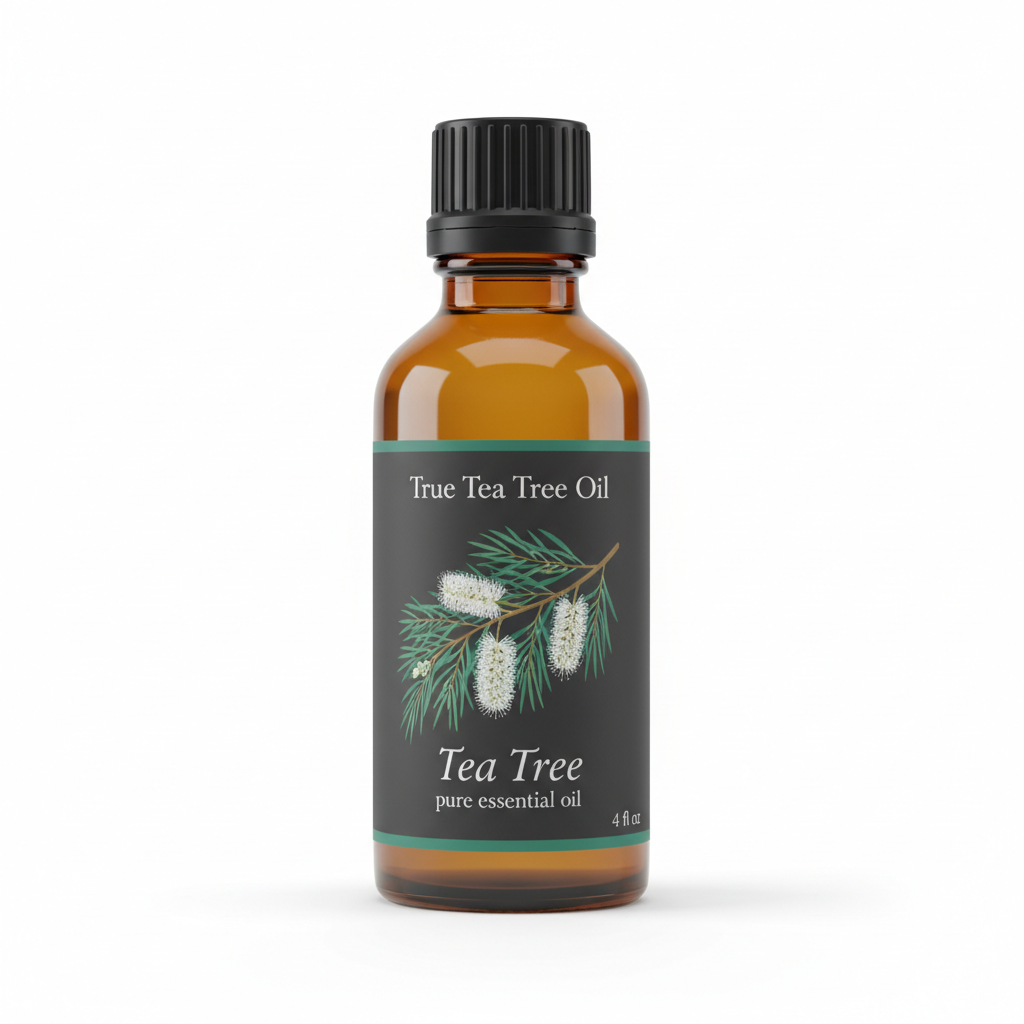
Tea Tree Essential Oil
Our own Tea Tree Essential Oil, in sizes from 0.5 oz to bulk.
From $10.99
Shop Now →The Myth: Tea Tree Oil Grows Hair
Search "tea tree oil hair growth" on any short-video platform and the claims get specific fast: apply this oil to the scalp and dormant follicles wake up, strands get thicker, growth speeds up in a matter of weeks. That is not a grooming claim. It's a claim about changing how the body functions, and that distinction matters more than marketing copy usually admits. The US Food and Drug Administration draws its line at function: an ingredient that cleans, conditions, or scents hair is a cosmetic; an ingredient claimed to alter hair growth itself is regulated as a drug, with the kind of trial data behind it that an approved growth ingredient like minoxidil has on file. Tea tree oil, including the terpinen-4-ol type standardized under ISO 4730:2017, has never gone through that process for hair growth, because no manufacturer has filed the data to support it. Research suggests the oil's reputation rests almost entirely on how it smells and how it feels on skin, not on any documented effect on the follicle itself.
Where the "Hair Growth" Claim Actually Comes From
The myth doesn't come from nowhere. It comes from a short leap that feels logical until you look at it directly: a scalp feels fresher after a tea tree rinse, therefore the hair growing out of it must be doing better too. Feeling clean and growing faster are two different claims, and only one of them has anything backing it. The second ingredient in the myth is citation laundering: a lab study on terpinen-4-ol's behavior in a petri dish, or its effect on an unrelated cell culture, gets screenshotted into a caption and presented as if it says something about human scalps and hair follicles, when the original paper never went near either one. Evidence indicates this kind of citation drift is extremely common in essential oil marketing generally, not just with tea tree, and spotting it takes knowing what the original source actually measured. Our guide on how to read tea tree oil research without getting fooled walks through exactly how a citation about one thing migrates into a claim about something else, and what to check before trusting a study link in a product description.
What Tea Tree Oil Honestly Offers in a Hair Routine
None of this means the oil has no place on wash day. It has a role, just a smaller and more honest one than social media suggests. Diluted properly in a carrier oil and massaged into the scalp before a shower, it brings a brisk, almost minty tingle, a sensation that comes from terpinen-4-ol and the other monoterpenes in the oil meeting skin, not from any effect on follicles below the surface. A few drops in a sulfate-free shampoo add a clean, resinous scent that cuts through the smell of styling product buildup between washes. Here's what that honestly adds up to:
- A crisp, herbal scent layered into a wash-day routine, not a fragrance that lingers for days
- A cooling, tingling feel during a pre-wash scalp massage
- A small, deliberate step in a routine aimed at a scalp that feels less weighed down, which is a cosmetic goal, not a growth one
If you want the specifics on building that into an actual routine rather than a one-off rinse, the fresh scalp wash-day playbook lays out a full sequence, and massage, rinse, and pre-wash ideas covers how to work the oil in before you ever reach for shampoo. Always dilute before scalp contact and patch test on the inner forearm 24 hours ahead of a first full application; Robert Tisserand and Rodney Young's Essential Oil Safety, 2nd edition, is a useful reference for sensible dilution ranges on monoterpene-rich oils like this one, and the oil should stay well clear of eyes.
The Trade-Off Nobody Mentions: Residue Over Enthusiasm
The part that gets skipped in most of the enthusiastic posts is what happens when someone decides more drops means more benefit. Essential oil is still oil. On fine hair especially, extra drops that don't rinse out cleanly leave a dull film instead of the lightness most people are chasing on wash day, which is the opposite of what a fresh-feeling scalp routine is supposed to deliver. That's the actual reason the ratio matters more than how enthusiastic you feel about the bottle: too little and there's no scent or sensation worth noticing, too much and you're rinsing out residue instead of rinsing it away. Our breakdown of how many drops of tea tree oil in shampoo gives ratios by bottle size instead of a vague "a few drops" instruction, and what to look for on a tea tree shampoo label covers how to tell a shampoo with a real, measured amount of oil in it from one trading on the name alone. A bottle with a known ISO-graded terpinen-4-ol content, the kind detailed on our own shop pages, at least makes the math possible; a bottle with no grading on it leaves you guessing at both the ratio and the strength you're diluting from.
Who Should Skip This Question Entirely
If you are genuinely worried about thinning hair or noticeable hair loss, this entire question, tea tree oil or any other essential oil, is the wrong place to look for an answer. That conversation belongs with a dermatologist or another qualified healthcare provider, who can look at the actual pattern involved and consider causes a bottle of fragrant oil has no way to address. A scalp massage can feel good and smell good at the same time that it does nothing to change an underlying pattern, and no cosmetic seller, including us, should let those two things blur together in how we talk about it.
When a seller promises hair growth from a bottle of essential oil, the promise itself is the signal to walk away, not something to read past.
The honest version of tea tree oil's place in a hair routine is smaller than its social-media version, and it doesn't need the bigger claim to be worth keeping around. A scent, a tingle, a deliberate step in a wash-day ritual: that's a real, specific thing, not a placeholder for a bigger promise someone decided not to make honestly.