
Tea Tree Oil for Your Scalp: Massage, Rinse, and Pre-Wash Ideas
If your scalp feels less than comfortable by midweek, tea tree oil for scalp routines might be worth adding to your wash-day lineup. The oil's sharp, camphoraceous scent is unmistakable, and its long history in Australian botanical traditions has made it one of the most recognized essential oils in personal care. This guide walks you through three practical formats: a scalp massage blend, a rinse you can make in minutes, and a pre-wash oil treatment. Each method suits a different hair type and schedule, so you can choose what fits your routine rather than overhauling it.
Before diving in, one foundational note: pure tea tree oil should never be applied directly to the scalp without a carrier oil or water-based dilution. Undiluted essential oils can cause significant irritation. Proper dilution is the single most important factor in any of the techniques below.
Why Scalp Routines and Tea Tree Oil Are a Natural Pairing
The scalp is skin. It has follicles, sebaceous glands, and a moisture barrier just like the skin on your face. Yet most people treat it as an afterthought, focusing product attention on the hair shaft instead. A consistent scalp care routine may support a cleaner, more balanced environment for hair to grow from, and people who incorporate tea tree oil for itchy scalp routines often report a noticeable cooling sensation after application.
Some research suggests that constituents in tea tree oil, particularly terpinen-4-ol, interact with scalp surface conditions in ways that interest cosmetic formulators. These are early-stage observations rather than definitive conclusions, and results vary. What is consistent in user accounts is the sensory experience: a brisk, clean feeling that many find satisfying after a long day or a workout.
For a broader look at what this oil can do across different areas of your home routine, see our complete guide to tea tree oil uses.
Choosing Your Tea Tree Oil
Quality matters more than price point. Look for oil that lists Melaleuca alternifolia as the sole ingredient, sourced from Australia where growing conditions are optimal. Terpinen-4-ol content should be at least 30 percent, ideally 35 to 48 percent, and cineole content should be below 15 percent. High cineole levels are associated with greater skin irritation potential.
Packaging tells you something too. Dark glass bottles with a tight dropper cap protect the oil from oxidation. Avoid oils sold in clear plastic: they may have already degraded before you open them. Smell the oil before using it. Fresh, quality tea tree oil has a clean, medicinal-adjacent sharpness. Rancid or muted smell is a sign the oil has oxidized and should be discarded.
Method One: Tea Tree Scalp Massage Blend
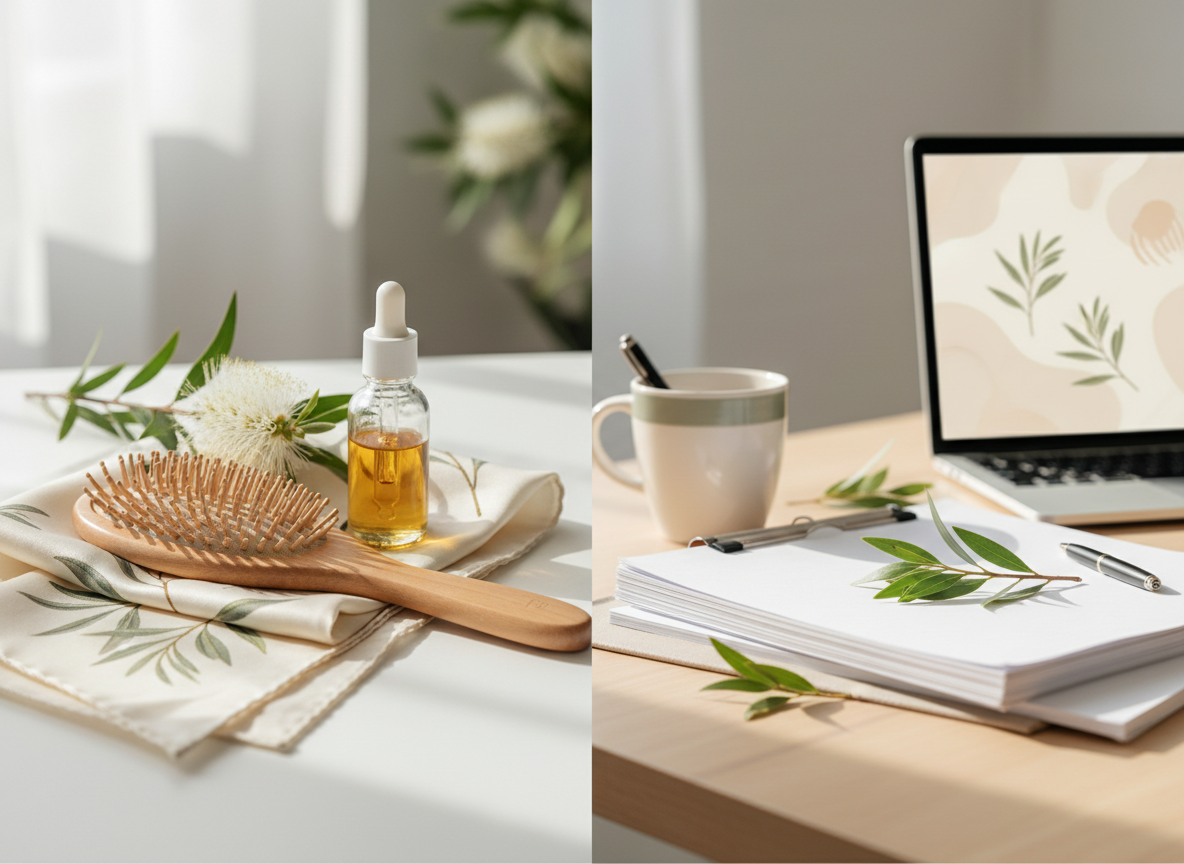
A tea tree scalp massage is perhaps the most satisfying of the three methods. The combination of manual stimulation and botanical scent turns a regular hair-care step into a proper ritual.
What You'll Need
- 2 tablespoons of a carrier oil (jojoba, fractionated coconut, or sweet almond oil all work well)
- 4 to 6 drops of pure tea tree essential oil (this gives a 2 to 3 percent dilution)
- A small glass or ceramic bowl
- A dropper or pipette for precision
- A wide-tooth comb (optional, for parting)
- A shower cap or warm towel
Steps
- Combine oils in the bowl. Add your carrier oil first, then drop in the tea tree oil. Stir gently with a clean utensil or swirl the bowl. Do not premix large batches; essential oils diluted in carrier oils are best used within a few days for maximum freshness.
- Patch test. Apply a small amount of the blend to the inside of your wrist or elbow. Wait 24 hours. If you notice redness, stinging, or itching, do not proceed. Reduce the number of tea tree drops or try a different carrier oil.
- Section your hair. Use a wide-tooth comb to create horizontal partings from the nape of your neck upward. Working in sections ensures even coverage rather than a heavy pool in one spot.
- Apply to the scalp, not the hair. Dip your fingertips into the blend and press them directly against your scalp at each parting. You need very little product. Resist the urge to pour oil across the top of your head.
- Massage with intention. Using the pads of your fingers (not your nails), work in small circular motions. Spend 30 to 60 seconds on each section, moving systematically from the nape toward the crown and then to the temples. A full tea tree scalp massage should take 5 to 8 minutes.
- Cover and wait. Place a shower cap over your hair, or wrap loosely with a warm towel. Leave the blend on for 20 to 30 minutes. Some people prefer to leave it overnight, which is fine as long as the dilution ratio is correct.
- Shampoo thoroughly. Rinse with lukewarm water and shampoo twice to remove all oil residue. Incomplete rinsing can leave hair looking flat and greasy.
Tips and Common Mistakes
- Do not exceed a 3 percent dilution on the scalp, especially for first-time users. Sensitivities vary widely.
- Avoid getting the blend near your eyes. If contact occurs, rinse immediately with plain water.
- People with color-treated hair should check with their stylist before adding oil treatments, as some carriers may affect color longevity.
- Using too much oil is the most common mistake. Two tablespoons of carrier oil is enough for a full scalp application. More will not improve results and will require extra shampoo to remove.
Method Two: Tea Tree Scalp Rinse
A rinse is a lighter approach, suited to people with fine hair who find oil treatments too heavy, or those who want a quick scalp refresh between wash days. It is also a good entry point if you are new to tea tree oil for itchy scalp routines and want to start conservatively.
What You'll Need
- 1 cup of distilled or filtered water (tap water works, but distilled has a longer shelf life in this formula)
- 3 to 5 drops of tea tree essential oil
- 1 teaspoon of aloe vera gel (optional, adds slip and a soothing quality)
- A small spray bottle or squeeze bottle
Steps
- Build your rinse base. Pour one cup of water into your bottle. Add aloe vera gel if using, then cap and shake to combine.
- Add tea tree oil last. Add your drops of tea tree oil. Cap and shake vigorously. Note that oil and water do not fully combine without an emulsifier, so you will need to shake the bottle each time before use.
- Apply after shampooing. After your final shampoo rinse, while hair is still wet, part your hair into sections and spray or squeeze the rinse directly onto the scalp.
- Work in gently. Use your fingertips to distribute the rinse across the scalp. You are not lathering; just spreading evenly.
- Leave in or rinse out. For a lighter effect, leave the rinse in and style as usual. For a cleaner finish, wait 2 to 3 minutes and rinse with cool water.
- Use within one week. Water-based blends do not have preservatives, so make small batches and store in the refrigerator. Discard anything unused after seven days.
Tips and Common Mistakes
- Shake before every use. The oil will separate.
- Do not use this rinse on a dry scalp and then go out in sunlight without rinsing. Some essential oil constituents may increase photosensitivity on certain skin types.
- Keep the spray nozzle pointed away from your face. A fine mist can carry enough oil to irritate eyes.
Method Three: Tea Tree Pre-Wash Oil Treatment

A pre-wash treatment sits between the two methods above in terms of intensity. You apply it before shampooing rather than after, which means the shampoo step removes most of the oil and you do not need to worry about weighed-down hair. This is a good weekly ritual for people who want the full scalp contact time of an oil treatment without the residue.
What You'll Need
- 1 tablespoon of castor oil (adds thickness and clings to the scalp well)
- 1 tablespoon of jojoba or grapeseed oil
- 4 to 5 drops of tea tree essential oil
- A small applicator bottle with a pointed tip (sold at beauty supply stores)
Steps
- Combine all oils in the applicator bottle. Shake gently. The pointed tip allows precise application directly to the scalp rather than coating the hair shaft.
- Apply to dry hair, 30 to 60 minutes before washing. Timing is flexible. If your schedule allows, a longer contact time (up to two hours) may give you a more thorough sensory experience. Some people apply it the night before wash day.
- Work the oil in with your fingertips. Spend a few minutes massaging the blend across the scalp in the same systematic pattern described in Method One. The scalp massage component is part of what makes pre-wash treatments effective from a circulation-and-sensation standpoint.
- Do not apply heat. Unlike some hair masks, this blend does not need a heated cap. Heat combined with essential oils can accelerate absorption in ways that may increase irritation risk.
- Shampoo twice. Begin your wash with a good lather on the dry hair before wetting it. Shampoo applied to dry, oily hair removes product more efficiently. Rinse, lather again with water, and rinse thoroughly.
- Condition the lengths only. Apply conditioner from mid-shaft to ends. Avoid the scalp, which you have just cleansed.
Tips and Common Mistakes
- Castor oil is thick. If you find the blend too viscous for the applicator bottle, reduce the castor oil to half a tablespoon and increase the jojoba.
- This method is not ideal for wash days when you are short on time. The double shampoo step adds several minutes to your routine.
- If your hair is currently going through a dry or brittle period, consider a lighter carrier like sweet almond rather than castor oil, which can be difficult to fully remove from fine strands.
What to Realistically Expect
After your first session with any of these methods, you will likely notice the cooling, slightly tingling sensation that tea tree oil is known for. That is the terpinen-4-ol interacting with temperature receptors in the skin. It passes within minutes and is generally considered pleasant.
Over several weeks of consistent use, people who regularly incorporate tea tree oil for itchy scalp routines often report that their scalp feels fresher for longer after wash day. Some notice a reduction in visible flaking. These are personal, anecdotal observations rather than guaranteed outcomes, and individual results depend on scalp type, water quality, the rest of your hair-care routine, and the quality of the oil you use.
If you notice any persistent redness, stinging, or changes in the scalp after starting a new essential oil routine, discontinue use and consult a qualified healthcare provider. Scalp conditions with an underlying cause need professional assessment, not botanical oil routines.
For related reading on skin-facing uses of this oil, visit our guide to tea tree oil for skin, which covers face and body applications with the same dilution-first philosophy. And if your scalp care routine extends to post-shave comfort on the neck and nape, you might also find value in our article on tea tree oil after shaving.
A Quick Reference: Dilution Ratios by Method
| Method | Carrier Amount | Tea Tree Drops | Approximate Dilution | Best For |
|---|---|---|---|---|
| Scalp Massage Blend | 2 tablespoons carrier oil | 4 to 6 drops | 2 to 3 percent | Normal to dry scalp, weekly ritual |
| Scalp Rinse | 1 cup water | 3 to 5 drops | Less than 1 percent | Fine hair, between wash days |
| Pre-Wash Treatment | 2 tablespoons blended carrier | 4 to 5 drops | 2 to 2.5 percent | Weekly deep scalp reset before shampooing |
Building a Consistent Scalp Care Habit
The most effective scalp routines are the ones that actually get done. Start with the rinse method if you are new to tea tree oil for scalp care. It requires the fewest materials, takes under five minutes, and lets you gauge how your scalp responds before committing to a longer treatment. Once you are comfortable, layer in a weekly pre-wash treatment or a full scalp massage on wash day.
Consistency over intensity is the better approach. One properly diluted weekly routine repeated across a month will give you a much clearer picture of how your scalp responds than a single intensive session. Keep a simple log: note how your scalp felt before, how it felt during the cooling phase, and how long that fresh sensation lasted. That information will help you decide which method to make a permanent part of your routine.
A note on sourcing: The quality of your tea tree oil shapes every result listed above. Undated stock, oxidized oil, or oils cut with synthetic fragrance compounds will not perform the same way as fresh, properly certified Melaleuca alternifolia. When in doubt, request a certificate of analysis from the supplier before purchasing.