Tea Tree After Shaving: Fresh Care for Ingrown-Prone Skin
If you shave regularly, you already know that fresh skin and a close shave do not always come as a pair. Redness, bumps, and the particular frustration of hairs that curl back beneath the surface are familiar territory for a lot of shavers. Tea tree oil has become a staple in many post shave skin care routines, and for good reason: it brings a cooling, clarifying quality that feels genuinely purposeful right after a blade has passed over skin.
This guide walks you through a straightforward tea tree aftershave routine, from the materials you will need to each step in sequence. Along the way, you will find tips for avoiding the most common missteps, and honest, realistic notes on what you can reasonably expect.
Why Tea Tree Oil Shows Up in Post Shave Routines
Tea tree oil is steam-distilled from the leaves of Melaleuca alternifolia, a plant native to the coastal wetlands of New South Wales, Australia. Its scent is sharp, green, and clean in a way that reads as medicinal without being cloying. That scent alone makes it a popular choice in grooming products.
Beyond the aroma, some research suggests that the naturally occurring compounds in tea tree oil, particularly terpinen-4-ol, may support skin clarity and a balanced surface environment. People who shave regularly report that incorporating tea tree oil into their post shave skin care helps their skin look and feel more settled in the hours after shaving.
It is worth being clear about one thing: tea tree oil is not a substitute for medical attention if you are dealing with a persistent skin concern. What it does offer is a botanical addition to a grooming ritual, with a long history of traditional use in cosmetic and personal care applications. For a broader look at how this oil fits into everyday life, the complete guide to tea tree oil uses is a helpful starting point.
What You Will Need
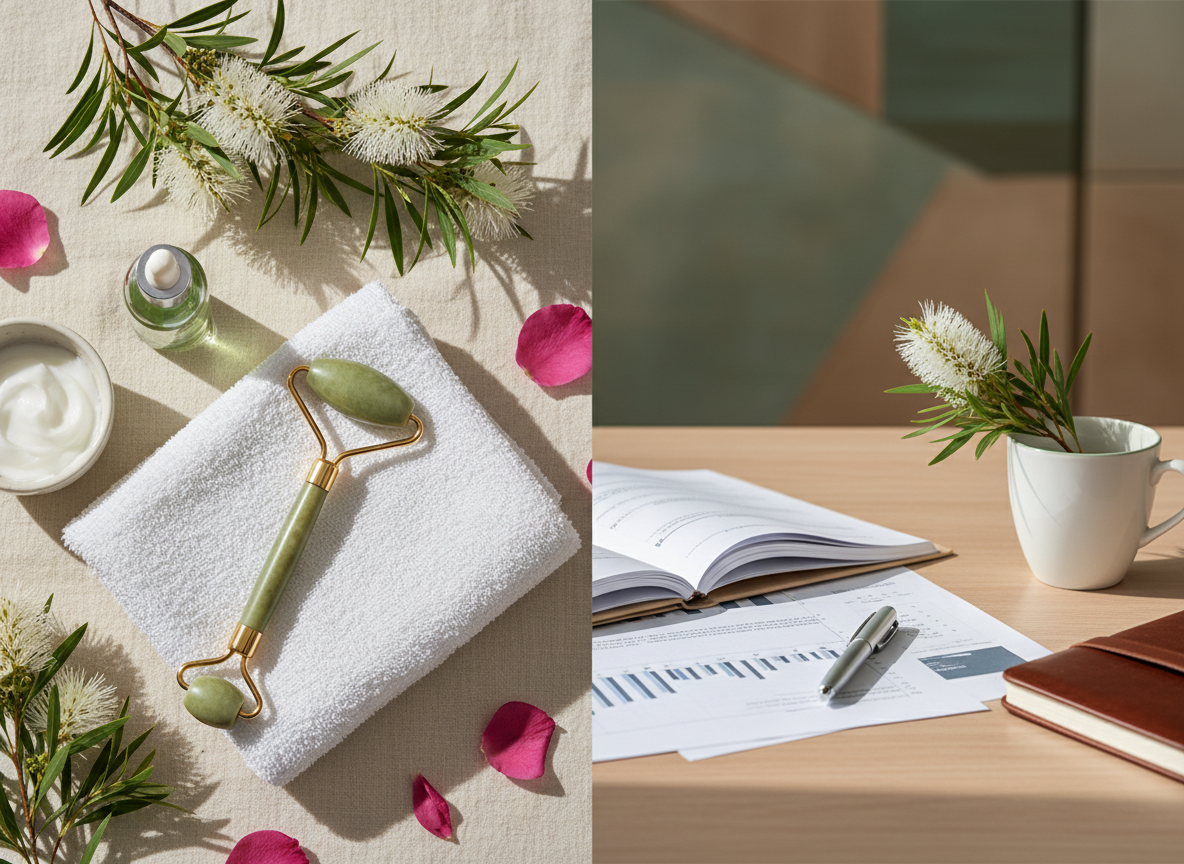
Before you begin, gather everything so the process flows without interruption. Freshly shaved skin benefits from prompt, deliberate care rather than a rushed scramble through a cluttered cabinet.
- True tea tree oil (100% pure): Look for Melaleuca alternifolia on the label, with a clear country of origin (Australian sourcing is the benchmark) and a GC/MS test result available from the supplier. Purity matters here because adulterated oils may contain synthetic additives that are not appropriate for recently shaved skin.
- Carrier oil: Jojoba oil is an excellent choice for post shave use because its structure closely resembles the skin's natural sebum and it absorbs without a heavy residue. Sweet almond oil and fractioned coconut oil are solid alternatives.
- Unscented witch hazel (alcohol-free if possible): Witch hazel acts as a gentle astringent and helps the skin transition between rinsing and moisturizing. Alcohol-based versions can be drying; check the label.
- A clean, soft towel: Patting rather than rubbing is important here.
- A small mixing bottle or dropper bottle: A 1-ounce or 2-ounce dark glass bottle works well for mixing your diluted tea tree blend.
- A gentle, fragrance-free face wash or body wash (optional): Useful for the pre-shave cleanse step.
Step-by-Step Tea Tree Aftershave Routine

Step 1: Prepare Your Dilution Before You Shave
Preparation makes the routine easier to stick to. Mix your tea tree aftershave blend in advance so it is ready the moment you finish shaving.
For facial use, a 1% dilution is appropriate for most adults: that is roughly 6 drops of tea tree oil per 1 ounce (30 ml) of carrier oil. For body areas such as legs or underarms, a 2% dilution (12 drops per ounce) is generally well-tolerated by adults with no known sensitivities.
Shake or swirl gently to combine. Label your bottle with the date; a mixed dilution is best used within three to six months.
Patch test first: If this is your first time using tea tree oil on your skin, apply a small amount of the diluted blend to the inner forearm and wait 24 hours before using it on your face or shaved areas. Discontinue use if you notice redness, itching, or irritation.
Step 2: Cleanse Before You Shave
A clean surface gives you a closer, smoother shave and reduces the chance of skin congestion afterward. Wash the area you plan to shave with warm water and a gentle, fragrance-free cleanser. Warm water opens the follicle slightly, which helps the hair release more cleanly.
If you shave in the shower, this step is already built into your routine. Take an extra moment to massage the cleanser gently into the skin before rinsing.
Step 3: Shave With Steady, Light Strokes
Technique matters as much as what you apply afterward. A sharp blade, light pressure, and short strokes with the grain of the hair reduce the mechanical disruption to the follicle. Shaving against the grain gives a closer result but increases the likelihood of hairs being cut below the skin surface, which is the starting point for ingrown hairs.
Rinse the blade frequently. A clogged blade drags.
Step 4: Rinse With Cool Water
After shaving, rinse the area thoroughly with cool (not cold) water. This helps close the follicles and removes any remaining shaving product. Pat the skin dry with a clean, soft towel. Do not rub. Freshly shaved skin is more sensitive than it appears, and friction at this stage can cause irritation that compounds later.
Step 5: Apply Witch Hazel
Pour a small amount of witch hazel onto a cotton pad and sweep it gently across the shaved area. This step helps remove any last traces of shaving product and provides a light toning effect that some people find helps their skin feel balanced before the next step.
Allow the witch hazel to dry fully before moving on. This takes about 30 to 60 seconds.
Step 6: Apply Your Tea Tree Oil Blend
Dispense three to five drops of your pre-mixed tea tree oil blend into your palm. Rub your palms together lightly to distribute the oil, then press them gently against the shaved skin. Use pressing and patting motions rather than rubbing. This minimizes friction while ensuring even coverage.
For areas prone to ingrown hairs (the jawline, bikini line, backs of knees), pay particular attention, but do not apply more than the diluted amount. More is not better with essential oils.
The cooling sensation you feel is normal. If you experience burning or significant stinging, rinse the area with a plain carrier oil (not water, which can spread the irritation) and discontinue use.
Step 7: Follow With a Plain Moisturizer (Optional)
If your skin tends to feel tight after shaving, a plain, fragrance-free moisturizer applied over the tea tree blend can help maintain the skin's surface comfort. Choose something lightweight that will not block the work the tea tree oil is already doing.
Common Mistakes to Avoid
Using Undiluted Tea Tree Oil
This is the most frequent error. Neat (undiluted) tea tree oil applied directly to freshly shaved skin can cause significant irritation. Always dilute. The step above is non-negotiable.
Skipping the Patch Test
Even people who have used tea tree oil in other contexts can have a sensitivity response when applying it to an area that has just been shaved. The barrier function of the skin is temporarily reduced after shaving, so the same dilution that feels fine on intact skin may feel more intense on a freshly shaved surface.
Applying Too Soon After Nicks or Cuts
If you have any nicks or cuts from shaving, allow them to close fully before applying the tea tree blend. Applying any oil-based product to an open nick introduces an unnecessary variable. A small dot of plain petroleum jelly on a nick, allowed to dry, is the better immediate choice.
Overusing the Blend
Once daily after shaving is sufficient. Some people apply additional tea tree oil between shaves hoping for faster visible results. This can disrupt the skin's natural balance. Consistency over days and weeks is what tends to produce the most noticeable difference in how skin looks and feels.
Using Low-Quality or Adulterated Oil
Tea tree oil is one of the most commonly adulterated essential oils on the market. If the price seems unusually low or the label does not specify the botanical species, approach it with skepticism. Adulterated oils may contain synthetic fillers that are not appropriate for post shave skin care. Sourcing matters. A reputable supplier will offer batch-specific GC/MS (gas chromatography/mass spectrometry) testing documentation.
What to Reasonably Expect
People who use a consistent tea tree aftershave routine often report that their skin appears clearer and less reactive over time. Some notice a visible reduction in the frequency and prominence of post-shave bumps after two to four weeks of regular use. These are self-reported observations, and individual results vary considerably.
Tea tree oil for ingrown hair-prone skin is not an instant result. The routine works by supporting the skin's surface environment consistently over time, not by producing a dramatic overnight change. Think of it the way you would think of any good grooming habit: the benefit is cumulative.
If you are seeing persistent or widespread bumps, significant redness that does not subside, or any signs of a skin concern that is not responding to a better grooming routine, consulting a dermatologist or qualified healthcare provider is the right next step. A grooming routine, even an excellent one, is not a substitute for professional guidance.
Expanding Your Tea Tree Grooming Toolkit
Once you are comfortable with the post shave routine, tea tree oil integrates naturally into adjacent grooming steps. A tea tree-infused cleansing wash used before shaving sets a clean foundation. If you enjoy making your own personal care products, the DIY tea tree face wash tutorial is a practical next project, and the melt-and-pour tea tree soap guide is a satisfying way to extend the same botanical freshness into your shower routine.
Building a cohesive grooming ritual around a single well-sourced ingredient simplifies your cabinet, reduces your exposure to unnecessary synthetic additives, and gives you a much clearer sense of what is actually working for your skin.
Quick Reference: Tea Tree Aftershave Routine at a Glance
| Step | Action | Key Detail |
|---|---|---|
| 1 | Prepare dilution | 1% for face (6 drops per oz); 2% for body (12 drops per oz) |
| 2 | Cleanse before shaving | Warm water, gentle fragrance-free wash |
| 3 | Shave with the grain | Sharp blade, light pressure, short strokes |
| 4 | Cool water rinse | Pat dry, do not rub |
| 5 | Apply witch hazel | Let dry fully before next step |
| 6 | Apply tea tree blend | Press and pat; no rubbing |
| 7 | Moisturize if needed | Fragrance-free, lightweight formula |
A note on sourcing: The quality of your results is only as good as the quality of the oil you use. Seek out true Melaleuca alternifolia oil with verified terpinen-4-ol content between 30% and 48%, which is the ISO standard range for genuine tea tree oil. A supplier who is proud of their sourcing will make that documentation easy to find.