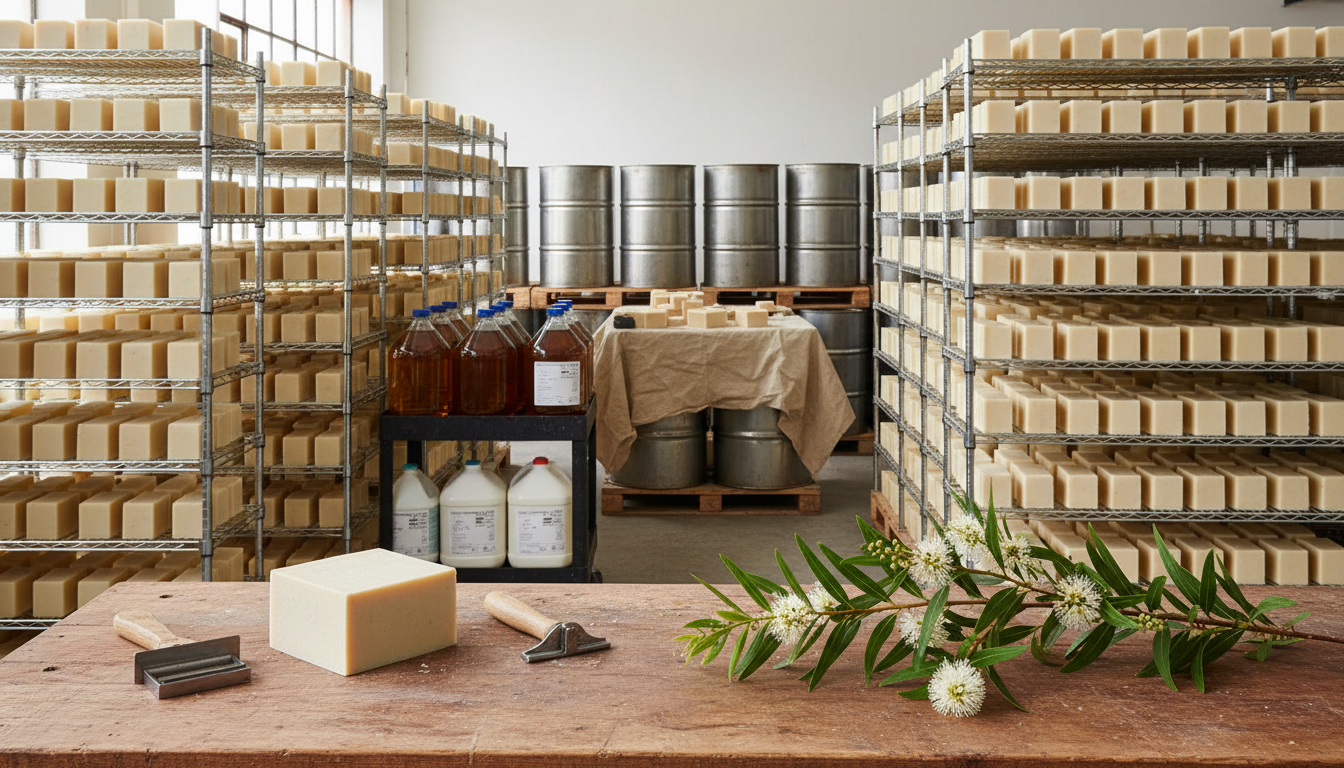
Soap makers buy tea tree oil by the pound for its aroma performance through saponification and cure, not for skin-contact dilution alone. This page is part of our Guide to Buying Tea Tree Essential Oil in Bulk.
Compare pound-tier pricing before your next full batch.
Tea tree's crisp, green top note holds up reasonably well through the saponification process, which is not true of every essential oil, and soap makers building a clean, no-nonsense bar lean on it heavily, a project documented start to finish in a clean, green melt-and-pour project.
Body wash formulas draw on the same aroma logic in a liquid format, covered in a fresh shower staple you can make, and soap makers weighing purity claims against production cost benefit from the complete guide to grades and quality.
Cold-process soap makers add tea tree at trace, testing load rate against cure time since a fresh bar smells different than one cured for several weeks. Melt-and-pour makers add it after the base has cooled slightly, since excess heat burns off the top note faster than a maker expects.
Batch testing at bench scale before committing to a full pound-tier order is standard practice, tracking how the aroma holds from pour through final cure.
Test load rate against full cure time, not just at the pour: tea tree's top note fades faster through cure than a heavier base note would, so soap makers should sample cured bars before locking production volume.
Recipe testing generally runs on 2 oz or 4 oz bottles, with full batch production scaling to 5 lbs and 25 lbs once cure performance is confirmed.
Get a small bottle and the current batch COA to test load rate.