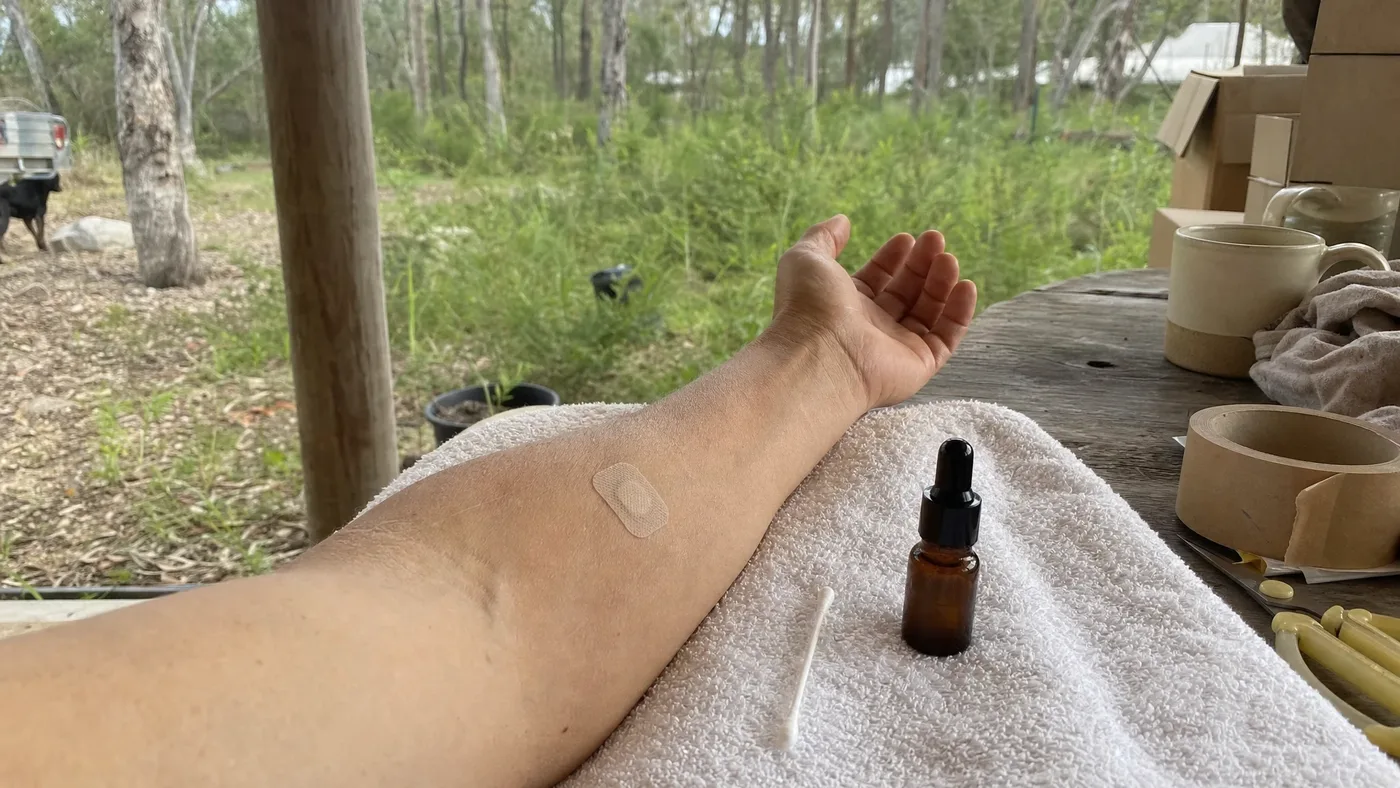
How to Patch Test Tea Tree Oil, Step by Step
A patch test is the cheapest bit of insurance in your bathroom cabinet. You mix a little of what you plan to use, put it on a small patch of skin, and wait. For tea tree oil it deserves a few extra minutes of care, because tea tree is one of the essential oils most often reported to cause allergic skin reactions.

Tea Tree Essential Oil
Our own Tea Tree Essential Oil, in sizes from 0.5 oz to bulk.
From $10.99
Shop Now →Why tea tree earns a patch test
A 2016 review of the contact allergy literature put it plainly: of all essential oils, tea tree oil has caused the most published allergic reactions since the first cases were reported in 1991, and positive patch tests in routine testing ranged from 0.1% to 3.5%. Fresh oil is a weak to moderate sensitiser, and oxidation raises its allergenic potency. Most of the reactions in the review came from applying the oil neat. That is why every piece of our guidance starts with the same line: dilute first, then test.
A home patch test is not the clinical test dermatologists run. Clinical patch testing can use 5% oxidised tea tree oil under a clinician's supervision. Yours is a gentle, sensible check of the blend you actually intend to use.
How to do it
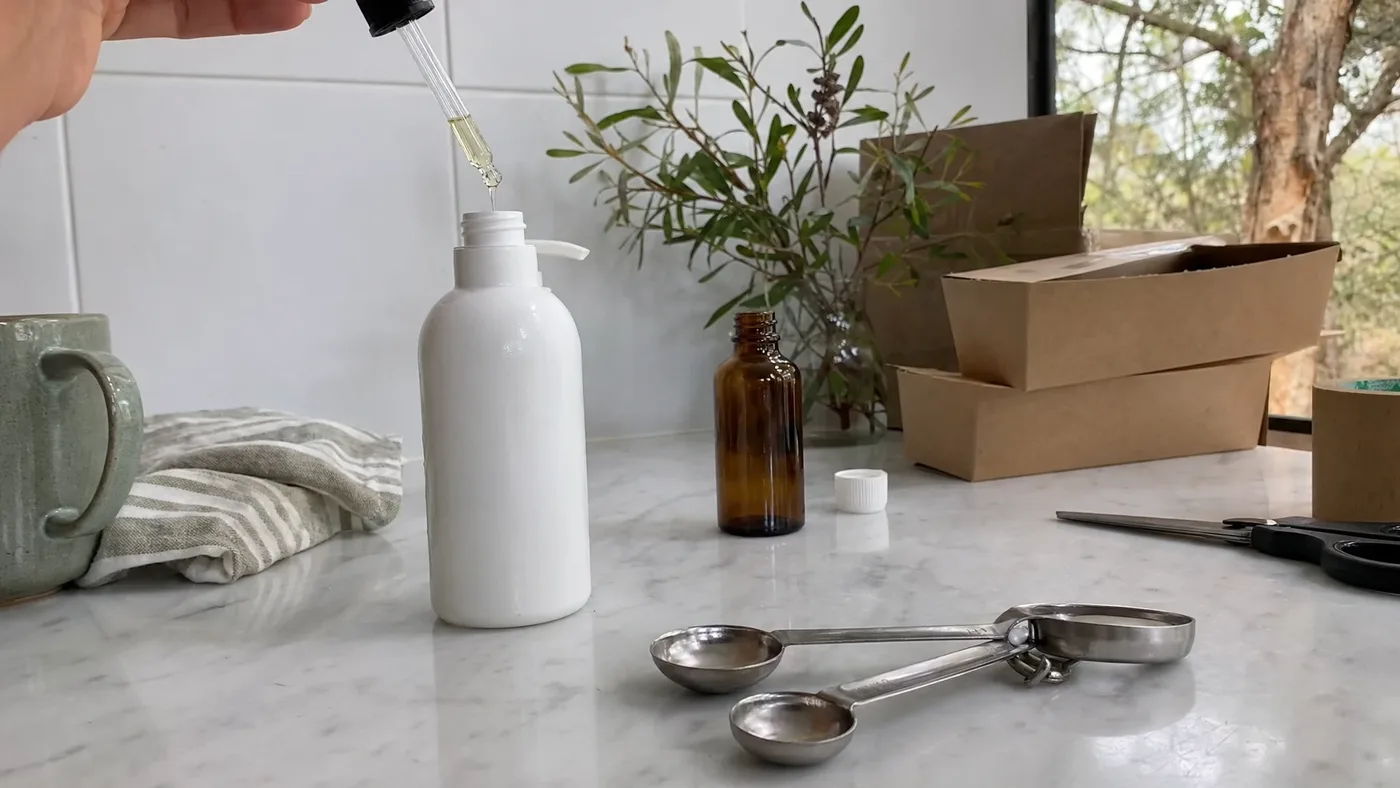
- Mix your real blend. Test the dilution you will use, not a weaker one. We recommend 0.5% to 2% in a carrier oil, which is about 3 to 12 drops per ounce by our arithmetic at 20 drops per mL. We would start at 0.5%. Our dilution guide shows the maths.
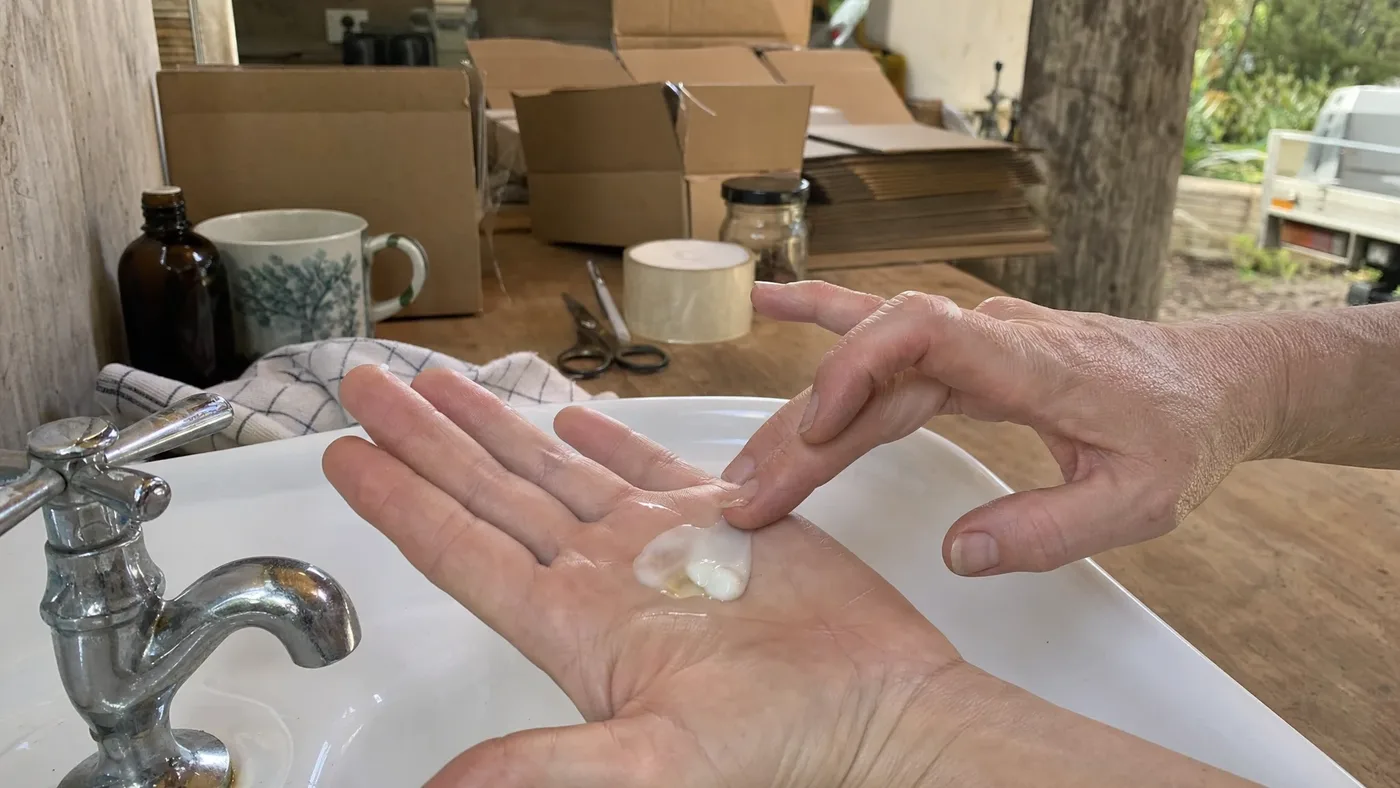
- Pick a calm spot. Dermatology guidance as summarised by Healthline suggests somewhere the product will not be rubbed off or washed often, such as the inner forearm or the bend of the elbow, about the size of a quarter. For essential oils the same article says to test on an inconspicuous body spot such as the forearm, not on the face.
- Use a normal amount. Apply about as much and as thick as you would use, and leave it on for as long as you normally would.
- Repeat and watch. The same guidance runs twice a day for about 7 to 10 days. Allergic reactions do not always show up right away, so a short check can miss a slow responder. If a few days is all you can manage, count it as a first screen rather than a green light.
- Know the signs. Redness, itching, burning or stinging, a rash, swelling, blisters or very dry, cracked skin all mean stop.
Getting ready
A little setup makes the test easier to stick with. Mix your blend in a clean glass bottle, label it, and set out a cotton swab or clean fingertip. Wash and dry the spot you plan to use, and choose a place where a plaster or clothing will not rub the patch off. A strip of tape or a small bandage can protect the area, but follow the guidance in the steps above.
Put a note in your phone or on the bathroom mirror with the start date. It is easy to lose track of day three or day five when life gets busy, and a quick reminder keeps the whole check honest.
Keep a simple log
Take a minute each day to look at the patch in good light. Jot down a word or two: "clear", "slightly pink", "itchy". If you see anything that makes you hesitate, trust that feeling and stop. A written note is also helpful if you do need to describe a reaction to a doctor later.
If your skin objects
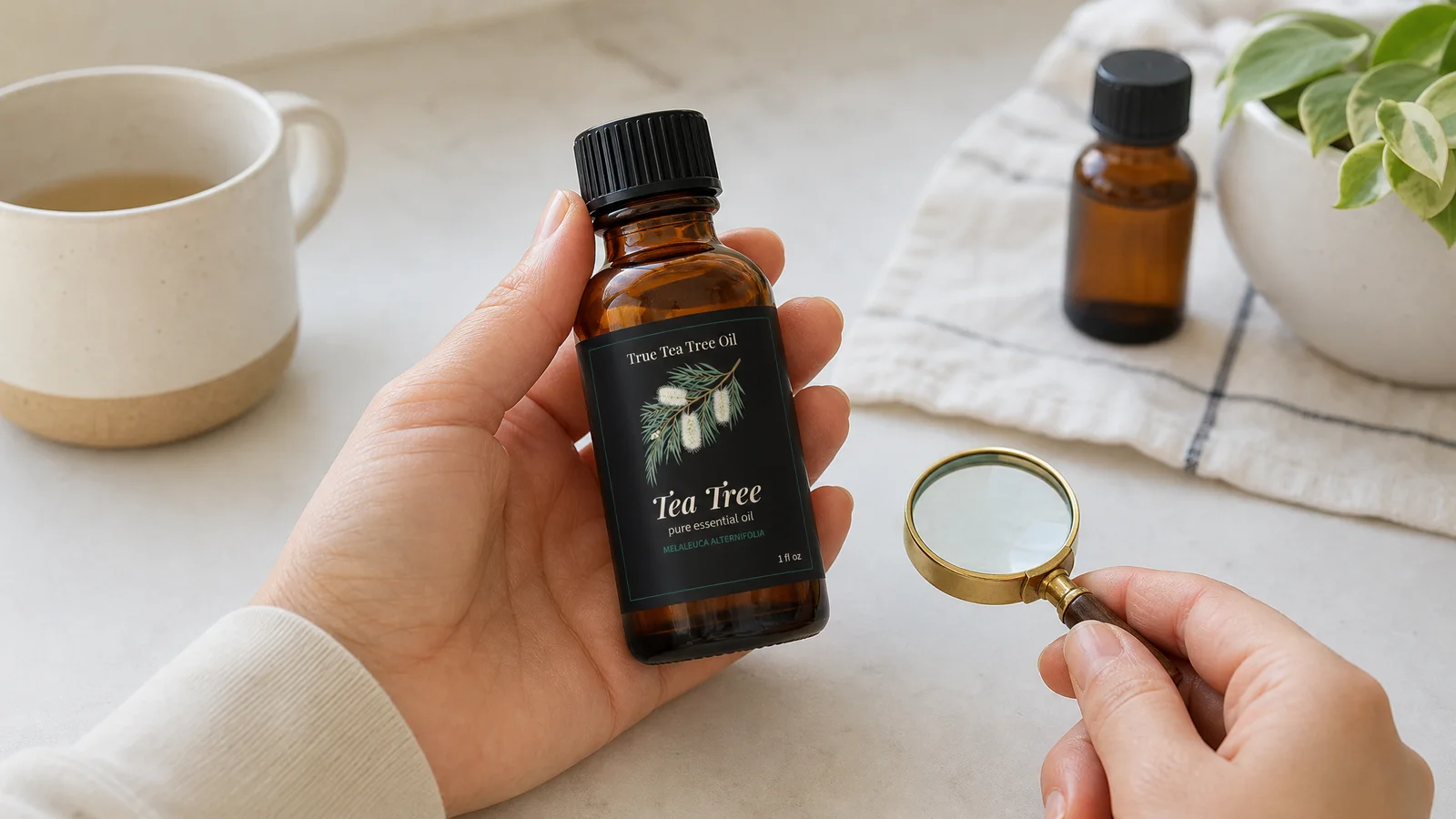
Wash the blend off as soon as you can with a mild soap and water, stop using it and make a note of the product. If the reaction is severe or does not settle with home care, see a doctor or dermatologist. Please also tell them what you used, including the oil's name, Melaleuca alternifolia.
Use a bottle you trust
Because oxidation raises tea tree oil's allergenic potency, the age and storage of your bottle matter. A 2023 review of 159 adverse-reaction reports to the World Health Organization found skin problems especially when the oil had been exposed to light or air. Keep the cap tight and the bottle cool and dark, as we describe in our storage guide. We list the Australian oil at typically 2 to 3 years unopened and the South African oil at typically 1 to 2 years when sealed. Once a bottle is open, use it up while it is lively.
What a patch test cannot tell you
A clear test is a good sign, not a promise. Sensitisation can develop with repeated exposure, and that is another reason we suggest low strengths and fresh oil. Pregnancy, young children and any medical condition are questions for a doctor first, and the oil should be kept away from pets. Our oils are cosmetic, external products sold neat, so the dilution and the testing are yours to do. If you are choosing a number for a routine, our piece on using tea tree neat explains why we always reach for the carrier.
If you share a household, be sure that everyone knows which bottle holds the blend, and keep it where children and pets cannot reach it. A labelled bottle on a high shelf is the simplest habit to adopt.
It takes a few minutes of mixing and a few days of patience, and after that you can enjoy the oil with more confidence.
Tea Tree Essential Oil
Tea Tree Essential Oil from our own shop, in sizes from 0.5 oz to bulk.
From $10.99
Shop Now →