Can You Put Tea Tree Oil on Skin Undiluted?
The dab is a familiar habit: a drop of tea tree oil on a fingertip, straight onto a spot, no carrier, no fuss. We understand the appeal, and we still do not recommend it. Diluting takes about a minute, and it takes away the one thing about this oil that can catch people out later.

Tea Tree Essential Oil
Our own Tea Tree Essential Oil, in sizes from 0.5 oz to bulk.
From $10.99
Shop Now →The reaction that arrives late
Ordinary irritation is quick and obvious. You apply something too strong, the skin protests, and it settles when you stop. Sensitization is a different animal. It is the immune system gradually learning to object to something, and it can build quietly over weeks or months of perfectly uneventful use before the first visible reaction. That is why "I have used it neat for years" tells you less than it sounds like. It may describe a bottle that was used sparingly and replaced often, or it may describe someone partway through the process.
Tea tree oil has a notable record here. A 2016 review of the contact-allergy literature reported that, among essential oils, it has caused the most published allergic reactions since 1991, with positive patch-test rates of 0.1% to 3.5% in routine testing, and it noted that most reactions came from the oil used on its own rather than from cosmetics that contain it. The reviewers also observed that oxidation increases the oil's allergenic potency.
Why an old bottle changes the picture
Oxidation is the second reason to dilute. Tea tree oil is rich in monoterpenes, and these react with oxygen. In a 1999 study, peroxide levels in the oil rose sharply within four days of exposure, and the byproducts that formed were the ones driving allergic reactions: fresh oil was only a weak sensitizer, while the oxidized oil was roughly three times stronger in guinea pigs.
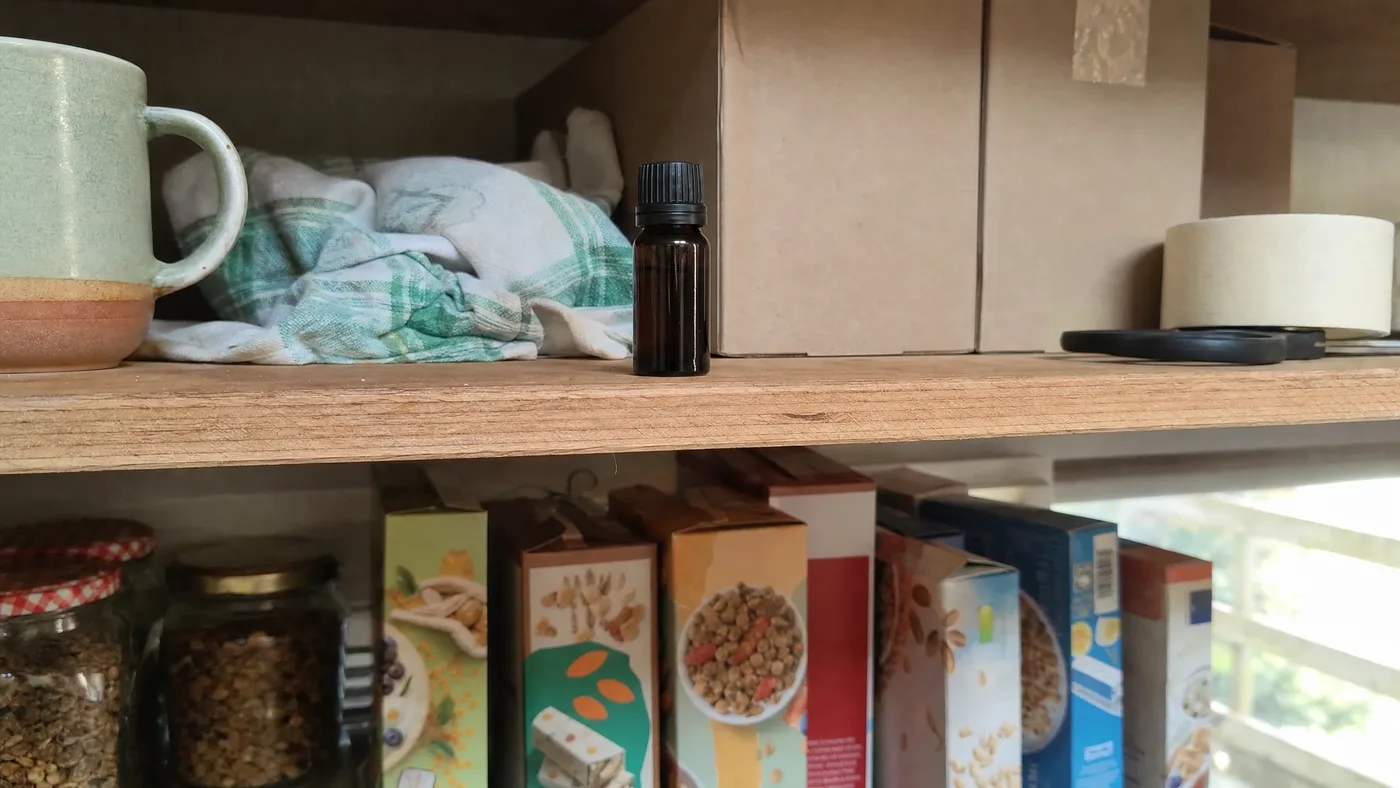
The Tisserand Institute makes the practical point that the more tea tree oil oxidizes, the less safe it is for skin, and advises refrigerating it and using it within one to two years of purchase. The trouble is that a bottle can smell like tea tree oil long after it has changed, so smell is not a reliable freshness test. Dilution does not fix an oxidized oil, but it does give you more margin, and it pairs well with good storage habits. Our storage guide shows how to keep a bottle in good shape.
"But it is only one spot"
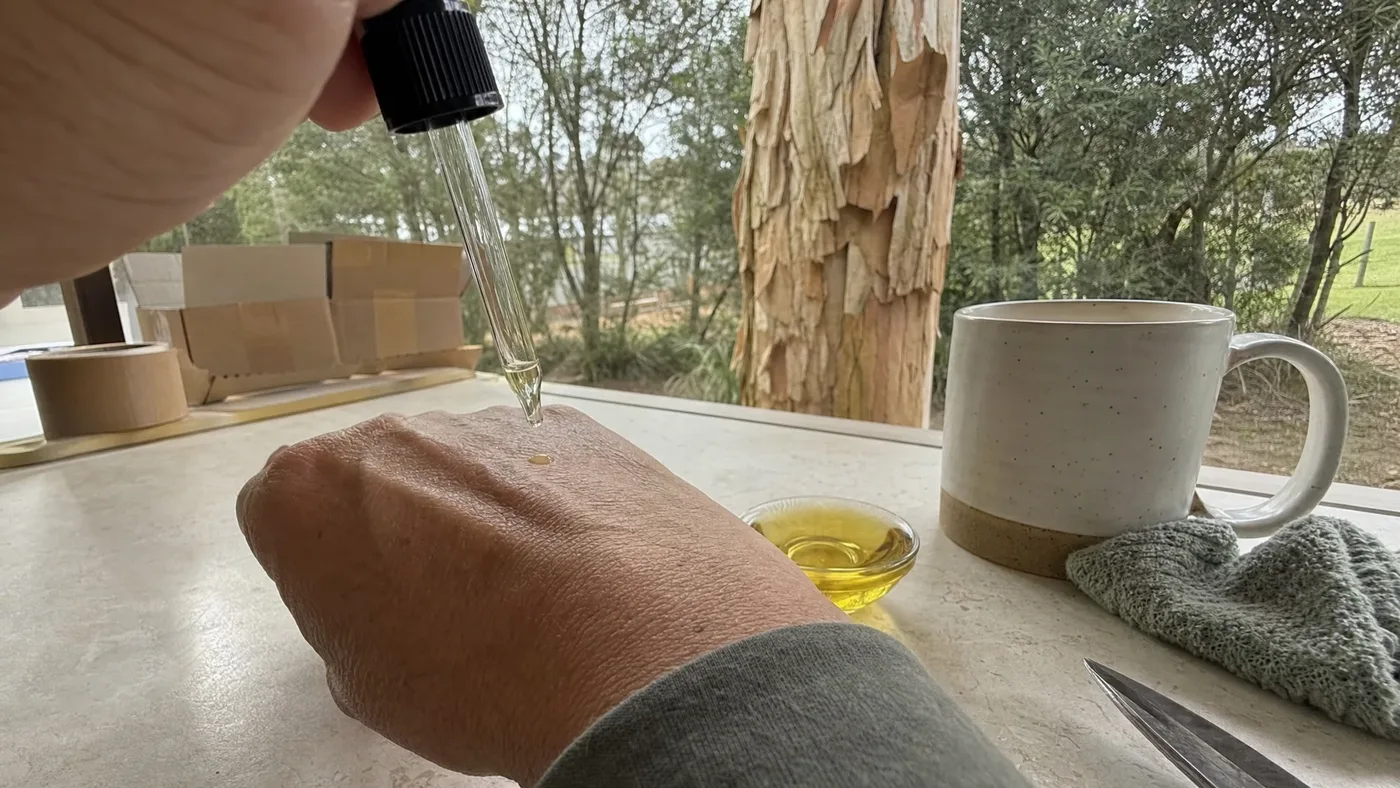
A small area does not make the oil weaker. The concentration touching that spot is exactly the concentration in the bottle, whether it covers a fingertip or a forearm. A cotton swab keeps your fingers clean, and the skin underneath still meets the undiluted oil.
What the careful version of that habit looks like is simple: the same swab, the same spot, a diluted blend. Our guidance is to dilute to 0.5% to 2% in a carrier oil such as jojoba or sweet almond, and to start at the lower end, especially on a face or on skin that reacts easily. As arithmetic, at roughly 20 drops to a millilitre, one ounce of carrier takes about 3 drops for 0.5% and about 12 for 2%. Droppers vary, so treat those counts as a guide. We sell the tea tree oil only; carrier oils are easy to find at a pharmacy, grocery or craft shop.
Patch test first, whatever the dilution. A dab of the blend on the inner forearm, left alone for a couple of days, is a cheap way to learn whether your skin is happy with it. We walk through the steps in how to patch test tea tree oil, and the ratios and carriers are covered in how to dilute tea tree oil.
A tidy way to blend a small batch
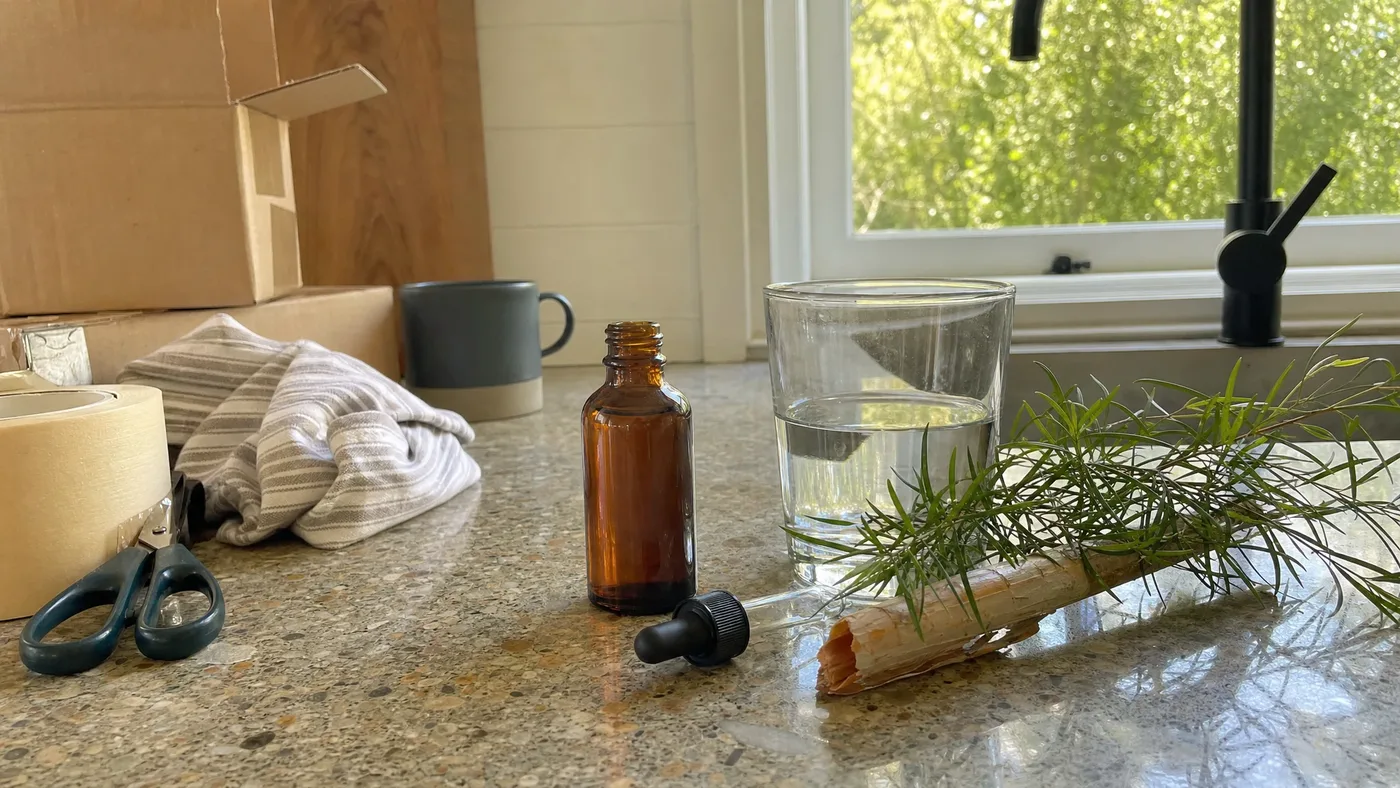
If you decide to use it on skin, blend a small amount at a time. Pour the carrier oil into a small, dark glass bottle first, then add the tea tree oil drop by drop, cap it, and roll the bottle gently between your palms to mix. Label it with the date and the strength.
Smell the blend before you use it. It should smell crisp and green, and it should be gentler than the bottle on its own. If the scent is overwhelming, you have used too much, and it is easy to add more carrier.
Who should be extra careful
Anyone whose skin reacts easily, anyone considering it for a child, anyone pregnant or nursing, and anyone with a medical condition should talk to a doctor or pharmacist before using essential oils on skin at all. Keep the bottle away from your eyes, and out of reach of children and pets. Tea tree oil can be harmful to cats and dogs at the concentrations people casually use, so please keep it away from pets entirely and ask a veterinarian if one has been exposed. It is never for swallowing. If it is swallowed or splashes into an eye, contact a poison control center or a doctor right away.
What we would do instead
Treat the bottle as a concentrate, like a flavoring extract, not a ready-to-use product. Measure into a carrier, label the blend with the date, and use fresh batches. You keep the scent that makes tea tree oil so recognizable, crisp, green and a little camphorous, and you give your skin an easier ride. For a broader look at everyday ways to use it, our guide to everyday uses has plenty of ideas that all start from a diluted oil.
A minute of measuring is a small price for an oil you can keep enjoying for years.
Tea Tree Essential Oil
Tea Tree Essential Oil from our own shop, in sizes from 0.5 oz to bulk.
From $10.99
Shop Now →Sources & Further Reading
- de Groot AC, Schmidt E. Tea tree oil: contact allergy and chemical composition, Contact Dermatitis, 2016
- Hausen BM, Reichling J, Harkenthal M. Degradation products of monoterpenes are the sensitizing agents in tea tree oil, American Journal of Contact Dermatitis, 1999
- Tea Tree Oxidation and Safety, Tisserand Institute