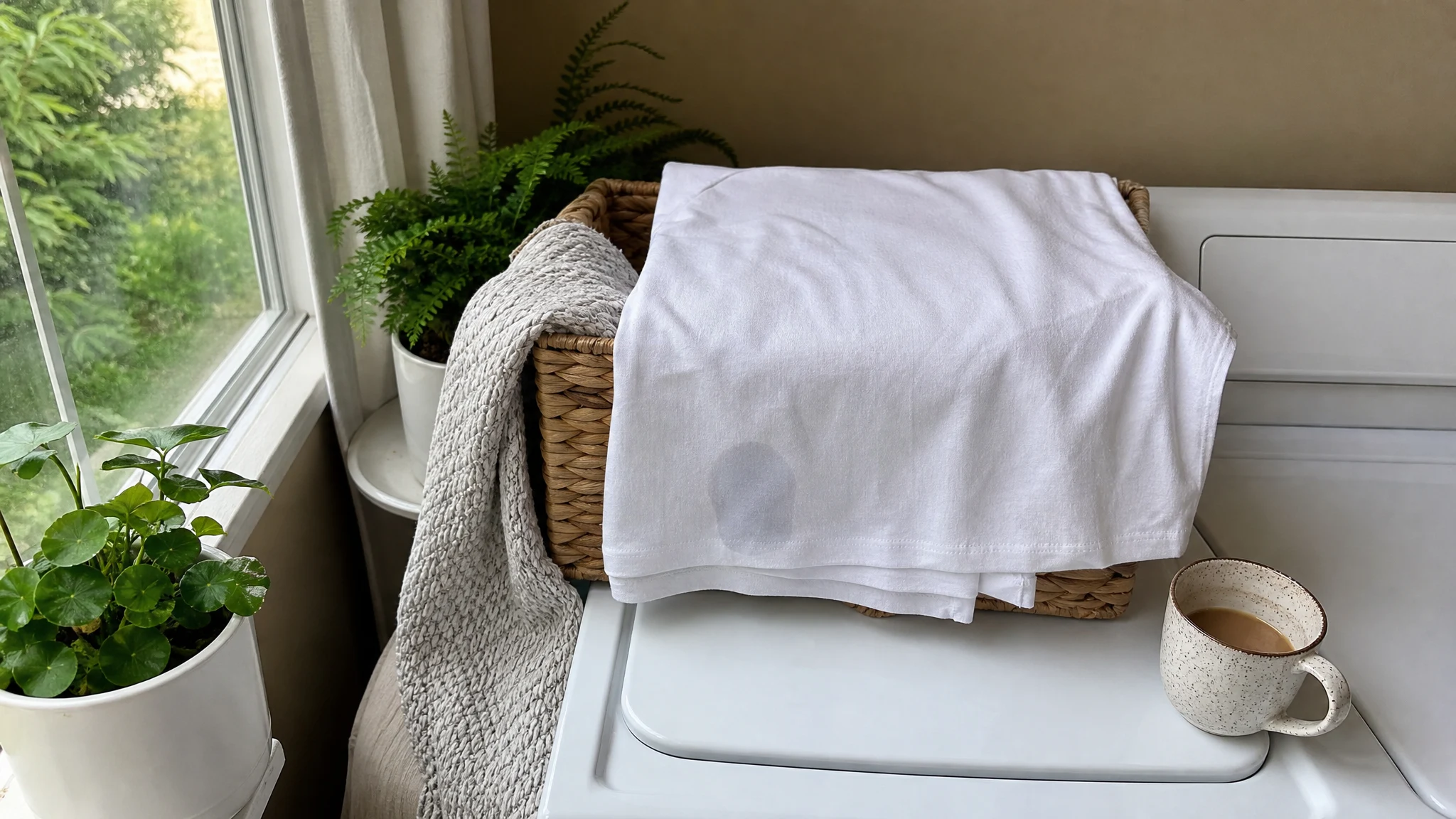
Does Tea Tree Oil Stain? Getting It Out of Fabric and Surfaces
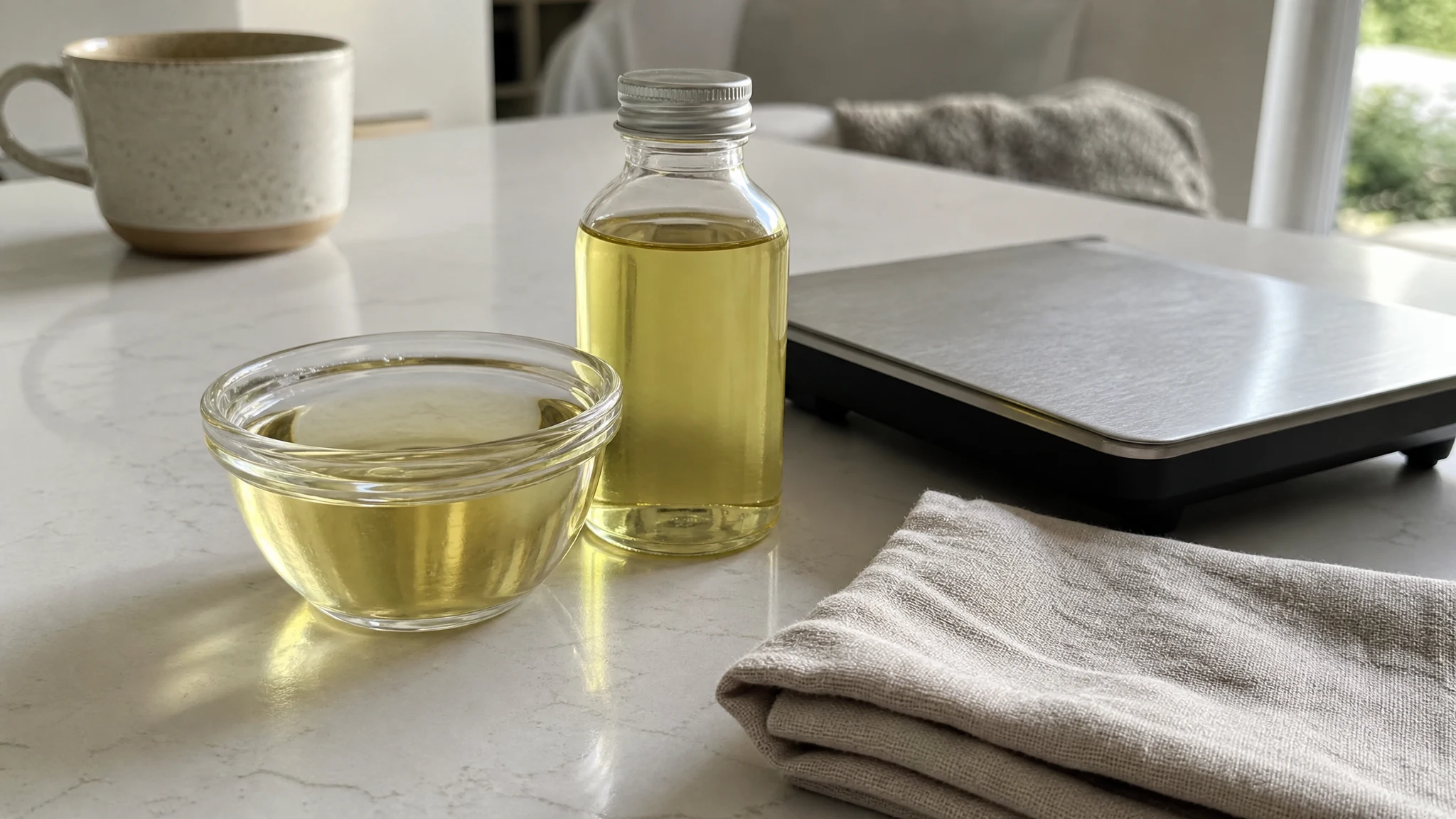
Most people expect a tea tree spill to look dramatic, and it rarely does. The oil is clear to pale yellow, so what it leaves on a cotton tee is closer to a salad-dressing mark than a dye: a slightly darker, slightly shiny patch that can still be there after the shirt has dried. That is good news for your laundry, because grease-type marks are among the most familiar things a washing routine deals with.

Tea Tree Essential Oil
Our own Tea Tree Essential Oil, in sizes from 0.5 oz to bulk.
From $10.99
Shop Now →Why the mark stays
An essential oil is an oil, and oil does not dissolve in water. The 2006 review of tea tree oil in Clinical Microbiology Reviews describes it as only sparingly soluble in water and miscible with nonpolar solvents, which is a technical way of saying that a rinse under the tap mostly moves it around. What lifts it is detergent, which surrounds the oil droplets and carries them into the wash water. We would not call any oil stain-proof, ours included: it is the same kind of mark you would get from a drop of cooking oil, only smaller, and with a sharp green smell attached.
On washable fabric
Extension services in the United States give nearly identical advice for oil-based stains, and it is worth following in this order.
- Blot, do not rub. Press a clean paper towel or cloth onto the spot to lift what is sitting on the surface. Rubbing spreads the oil and can damage the fibres.
- Pretreat while it is fresh. The University of Kentucky guide to washable fabrics says to work full-strength heavy-duty liquid detergent into an oil-based stain, or use a pretreatment spray, then launder. An ordinary liquid laundry detergent from the supermarket does the job. Dish detergent works on the same surfactant principle, and plenty of households keep it handy for exactly this.
- Wash as warm as the care label allows. The same guide calls for hot water if the fabric is safe with it. A cotton tee can usually take more heat than a polyester blouse, so let the label decide.
- Look before you dry. This is the step that saves garments. Mississippi State University Extension says never to put the garment in the dryer until you are sure the stain is completely gone, because heat sets it. If a shadow remains, repeat the pretreatment and wash again.
For a bigger or older patch, the Mississippi State advice is to lay the stain face down on clean paper towels and apply detergent to the back, so the oil is pushed out of the fabric instead of further in. Swap the towels as they take up the oil, then rinse and wash.
When to hand it to a professional
The Kentucky guide is clear that its methods are for washable items, that you should always read the care label, and that dry-clean-only garments belong at the dry cleaner. It also says to take items there when a stain covers a large area or the fabric is fragile, and not to treat suede, leather or fur yourself. Silk, wool and vintage pieces fall into the same camp in our book. Point out the oil to the cleaner and tell them what it is. Whatever you use, try it first on a hidden seam or hem to check that the colour holds.
Surfaces and furniture
The fabric sources above do not cover countertops or sofas, so this part is our own reasoning from how oil behaves. On a sealed, hard surface such as laminate, glazed tile or a finished worktop, wipe up the pool with a paper towel, then go over the area with a damp cloth and a little dish soap, and dry it. On unsealed wood, stone, grout or upholstery, speed matters more, because the oil can soak in. Blot straight away, do not scrub, and test any cleaner out of sight first. If it is a valuable piece, a furniture or upholstery specialist is the better call.
Plastics deserve a small mention. The same 2006 review notes that tea tree oil is readily absorbed into plastics, which is one reason we favour glass for anything you plan to keep, and one reason a spilled-on plastic organiser can hold the scent long after the surface looks clean.
Keeping it off in the first place
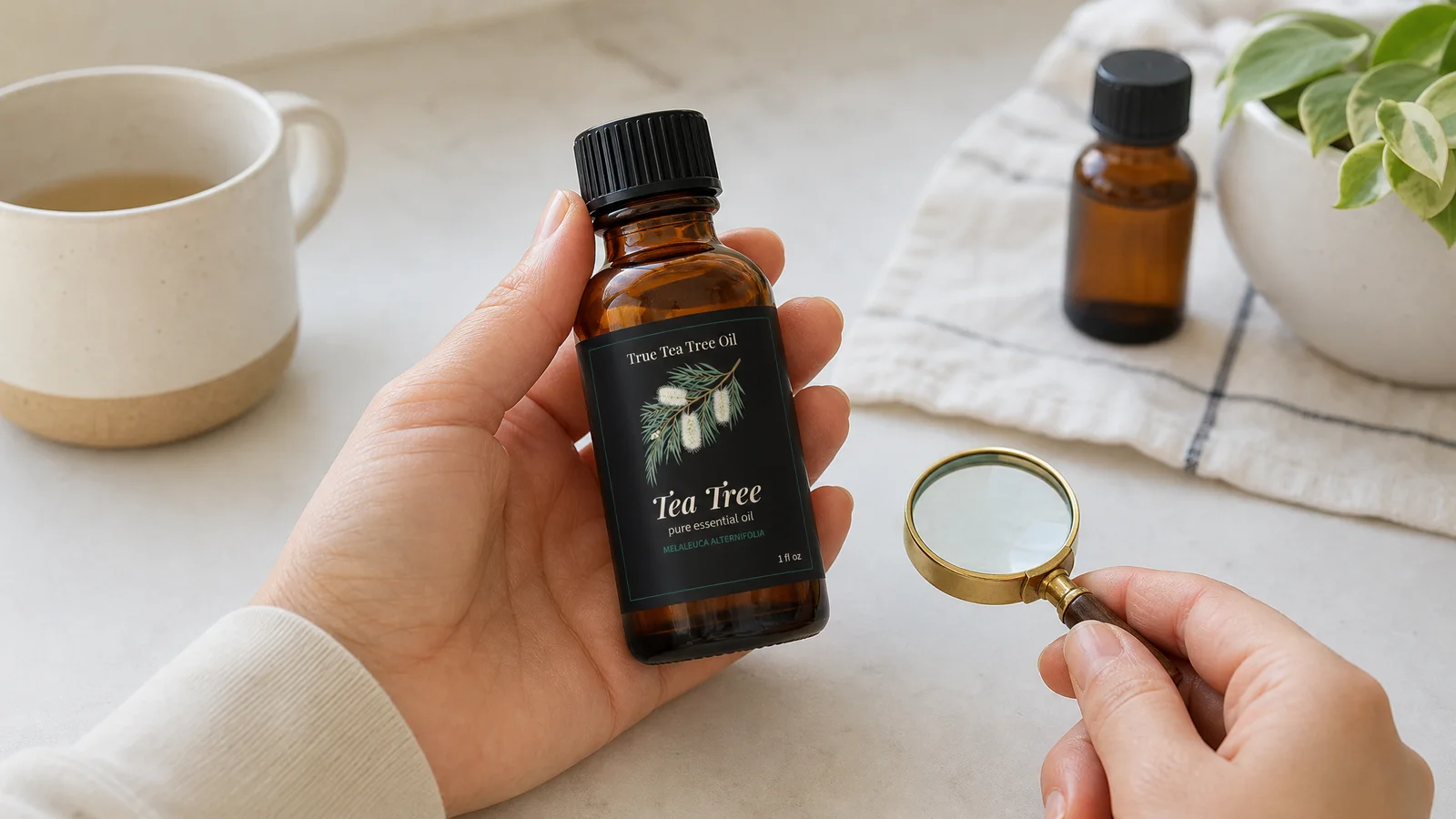
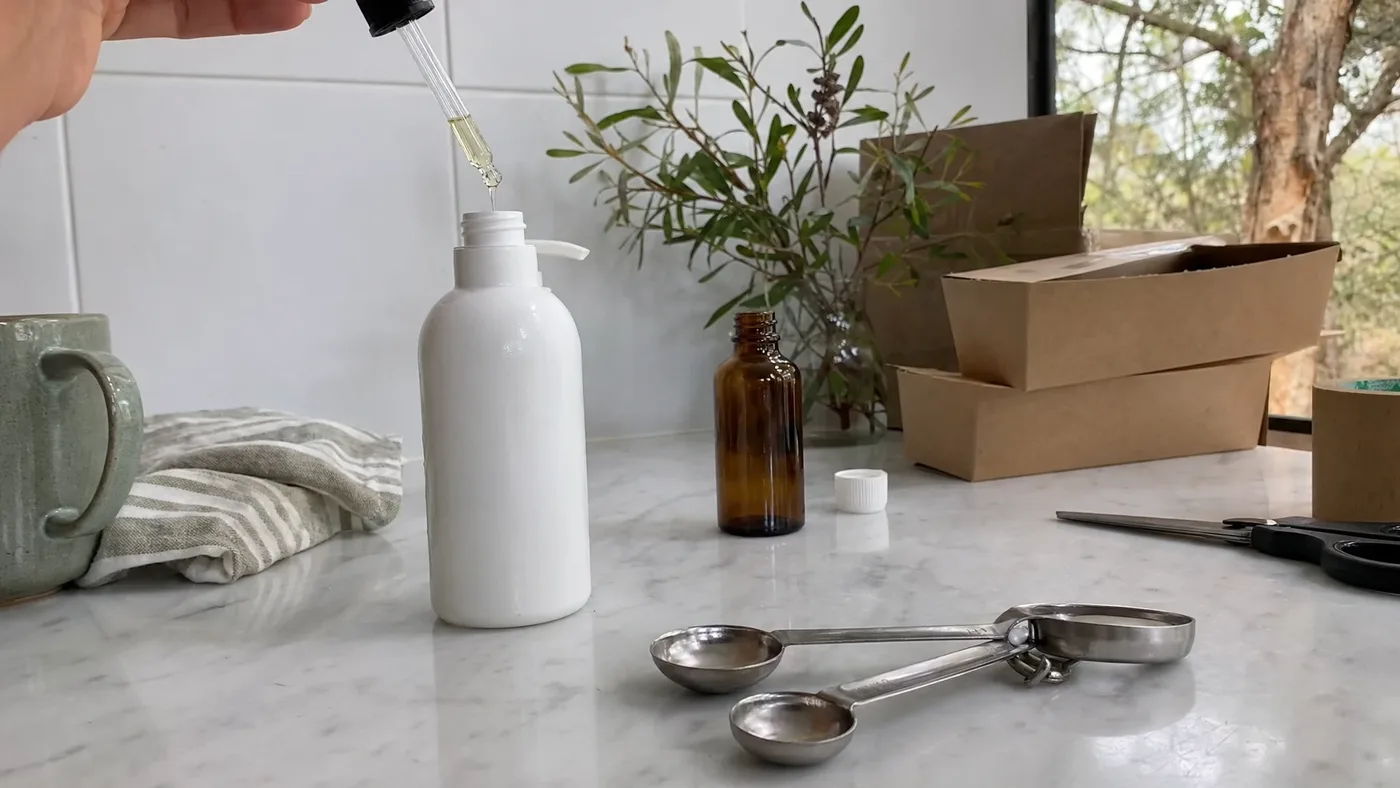
Most spills happen at the moment of pouring or dropping. Work over a tray or a towel you do not mind about, keep the bottle capped between uses, and measure into a clean glass vessel rather than holding the bottle over fabric. Our oil comes in an amber bottle with a black cap, and keeping that cap on is the simplest stain prevention there is. Diluting the oil in a carrier before it goes anywhere near skin or sheets also leaves you with a much weaker mark if something does drip; our dilution guide shows the arithmetic, and the storage article covers where the bottle should live.
If the smell lingers after the mark is gone, a second wash and some time on the line usually settles it. Our laundry piece looks at the smell side of things, and if you are unsure what a clean cloth ought to smell like afterwards, our scent guide describes the oil itself. We sell tea tree essential oil for external aroma and cosmetic use, so stain removers, detergents and any specialist cleaning products are things to pick up at the supermarket or a hardware store.
A small stain is a small job when it is caught early, and that goes for most things in a home that smells of crisp green leaves.
Tea Tree Essential Oil
Tea Tree Essential Oil from our own shop, in sizes from 0.5 oz to bulk.
From $10.99
Shop Now →Sources & Further Reading
- FCS2-840: Stain Removal for Washable Fabrics, University of Kentucky Cooperative Extension
- How to Remove Pesky Stains, Mississippi State University Extension Service
- Melaleuca alternifolia (Tea Tree) Oil: a Review of Antimicrobial and Other Medicinal Properties, Carson, Hammer and Riley, Clinical Microbiology Reviews, 2006