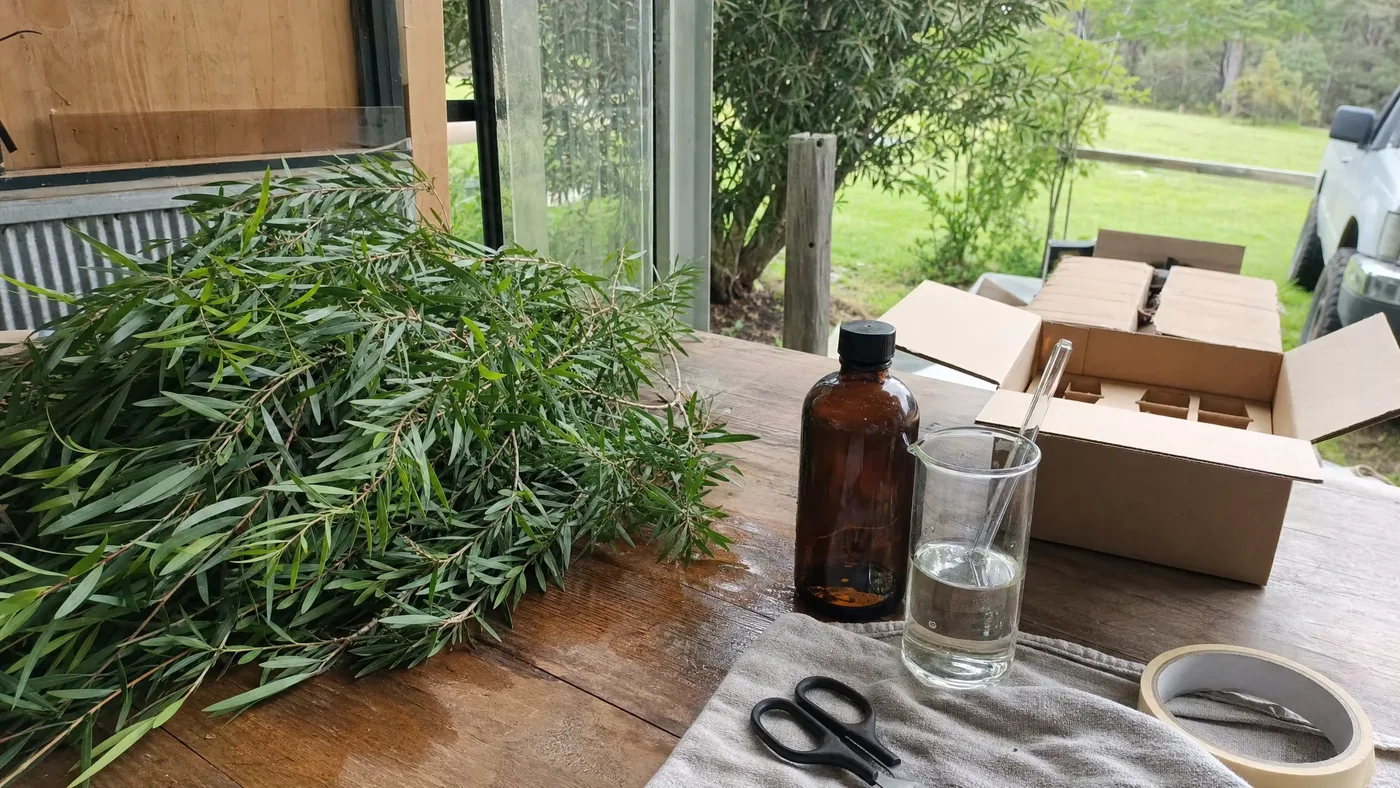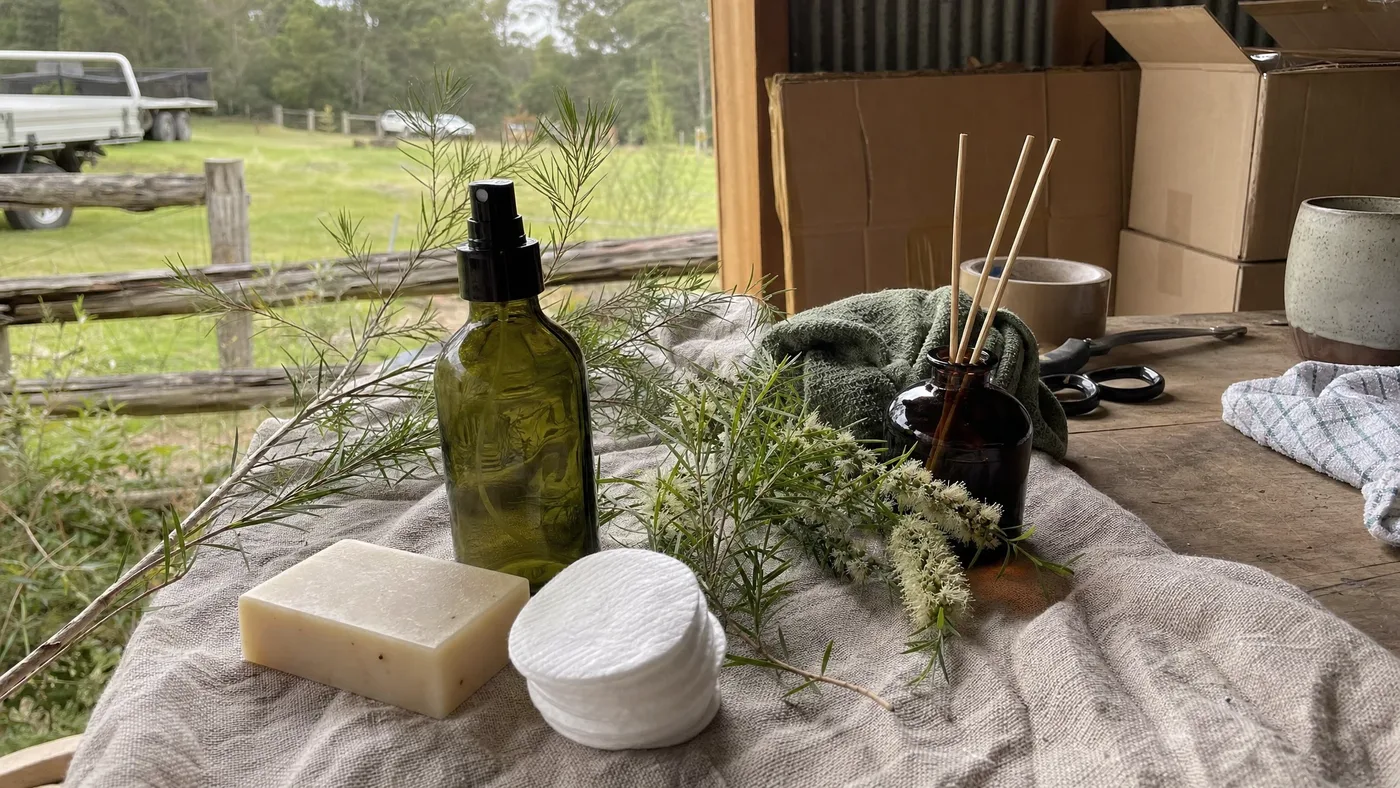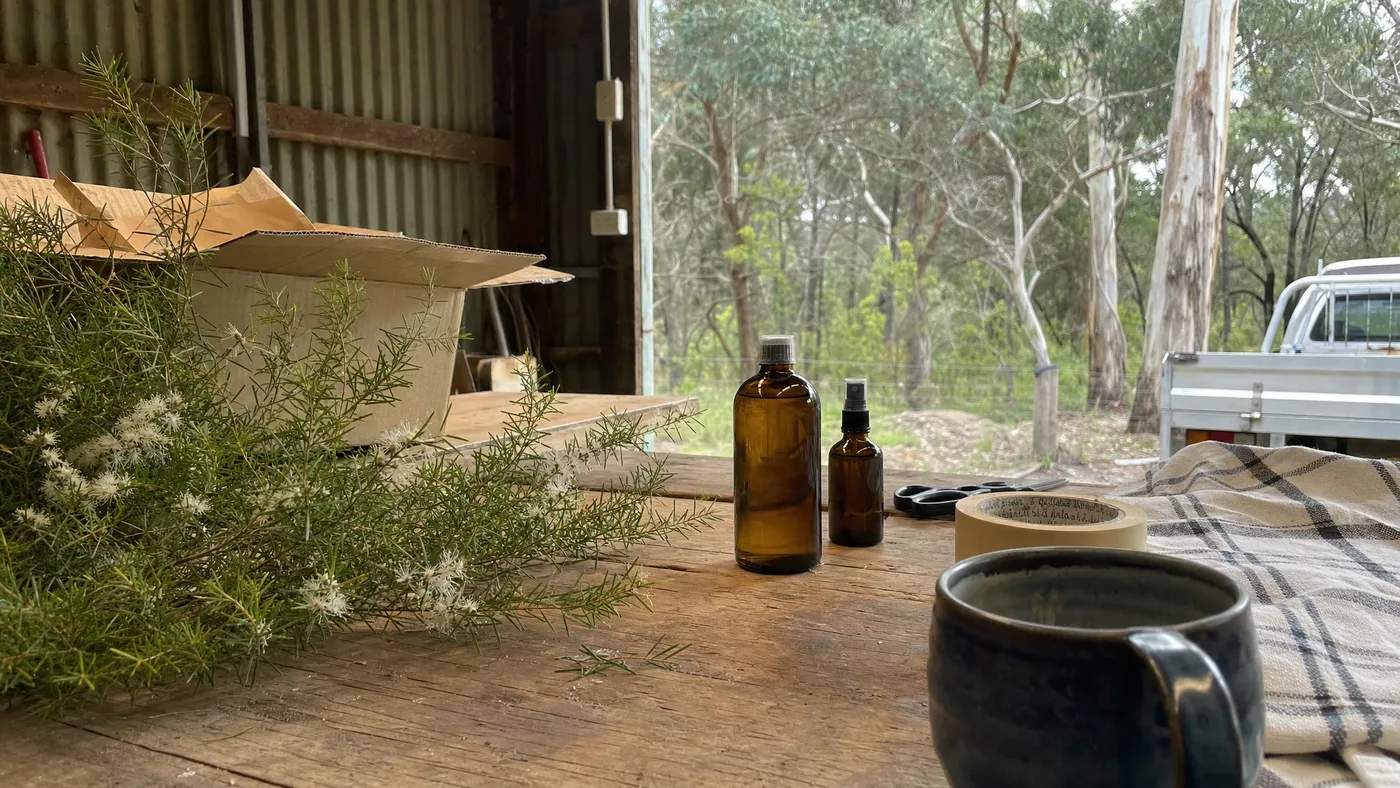
How to Buy Tea Tree Oil: 4 Questions to Ask First
Shopping for tea tree oil can feel like decoding a secret language: grades, purity claims, lab words. The good news is that there is no ladder of grades to climb. What exists is a composition standard, a few ways a good oil can change over time, and four questions that sort out almost every buying decision.

Tea Tree Essential Oil
Our own Tea Tree Essential Oil, in sizes from 0.5 oz to bulk.
From $10.99
Shop Now →1. What is it for?
A bottle for a diffuser or a cleaning spray asks less of the oil than one for skin. For skin, tea tree is a well-documented contact allergen. A 2016 review found positive patch tests in 0.1% to 3.5% of people in routine testing, and noted that oxidation raises the oil's allergenic potency. The EU's consumer safety committee calls it a moderate skin sensitiser in its opinion adopted on 30 October 2025. It is also never for swallowing: a review of 159 adverse-reaction reports to the World Health Organization concluded it should never be taken by mouth. We say it plainly and move on, because the rest of buying is much more fun.
Our guidance for skin is 0.5% to 2% in a carrier oil with a patch test first. We start toward the low end, and for anything on the face the European committee's figures are lower still, so please use our dilution guide to choose your own number.
2. What does the paperwork show?
The international standard for tea tree oil, ISO 4730, is about composition. In the version Carson, Hammer and Riley summarised in their 2006 review, it asks for at least 30 percent terpinen-4-ol and no more than 15 percent 1,8-cineole. It has been updated since (the EU committee refers to the 2017 edition and mentions a 2025 one), so the useful question for any seller is which edition a document refers to. Think of the standard as a pass mark, not a quality tier: two oils can both pass and still differ.
Here is how that looks for us. We sell two tea tree oils, both Melaleuca alternifolia. For the Australian one we publish a Certificate of Analysis covering a single batch, with relative density, refractive index and optical rotation. It does not include a GC-MS breakdown. We publish no document for the South African oil. If you need a composition report or a document for a particular oil, ask us in writing through the contact page before ordering and get the answer in writing.
A habit we like: answer the first question before you open a single product page. Write "diffuser", "cleaning spray" or "skin blend" on a scrap of paper and keep it beside you. It sounds almost too simple, but it stops the browsing spiral where every bottle looks equally tempting and you end up with three half-used ones.
3. How old is it?
Light, heat, air and moisture all affect the oil, and Carson's review recommends dark, cool, dry storage in a vessel with little air. For an unopened bottle, we list the Australian oil at typically 2 to 3 years and the South African oil at typically 1 to 2 years when sealed. Once it is open, air gets a vote. That is why a bottle you will finish is a better buy than a bottle that will sit half-full for years. Our guide to storing tea tree oil has the habits worth keeping.
4. How much will you actually use?
This is the practical one, and the arithmetic helps. An ounce is about 29.6 mL, which at the usual 20 drops per mL is around 590 drops. A one-ounce body oil at 1 percent takes about 6 drops, so a half-ounce or one-ounce bottle goes a long way for a household that dabs, diffuses and mixes the occasional spray. We sell sizes from 0.5 oz to 16 oz, and bulk sizes from 5 lb up, for each oil; the 5 lb and larger sizes are best for soap makers, studios and anyone with a real project. If you are weighing options, our piece on choosing a bottle size walks through it. Larger orders can go through our wholesale page, where we can also talk samples.
When the bottle arrives
Take a minute to look it over. Check that the cap is tight and that the label names the plant, Melaleuca alternifolia. Then open it and take a slow sniff. Tea tree oil should smell crisp, green and camphorous, a little like a freshly cut herb garden with something sharper behind it. Everyone's nose differs, so treat that as a loose guide rather than a test.
Then give it a home. A cupboard that stays cool and dark, away from the stove and the bathroom steam, does more for the oil than any gadget. Write the day you opened it on the label, and you will always know how long it has been in use.
If you are shopping for someone else, a small bottle makes a friendlier gift than a large one, because there is less pressure to finish it. Include a note about dilution, since the oil is sold neat and the person opening it may not know that.
The short version
Decide what the oil is for, ask what paper exists and which batch it covers, pick a size you will finish while the oil is lively, and keep the cap on tight. That is more useful than any grade label.
If you want something specific that is not here, ask us. We are happy to answer in writing.
Tea Tree Essential Oil
Tea Tree Essential Oil from our own shop, in sizes from 0.5 oz to bulk.
From $10.99
Shop Now →Sources & Further Reading
- Melaleuca alternifolia (Tea Tree) oil: a review of antimicrobial and other medicinal properties
- SCCS - Scientific Opinion on Tea Tree Oil (CAS/EC No. 68647-73-4 /285-377-1)
- Tea tree oil: contact allergy and chemical composition
- Safety assessment and adverse drug reaction reporting of tea tree oil (Melaleuca aetheroleum)