Cheap Tea Tree Oil: What Price Can and Cannot Tell You
Stand in front of a shelf of tea tree oils and the prices run from a few dollars to a good deal more, all on bottles that say the same Latin name. It is natural to wonder whether the cheap one is just as good. Honestly, the price alone cannot answer that, in either direction, and the useful question turns out to be a different one: what is inside, and how old is it?
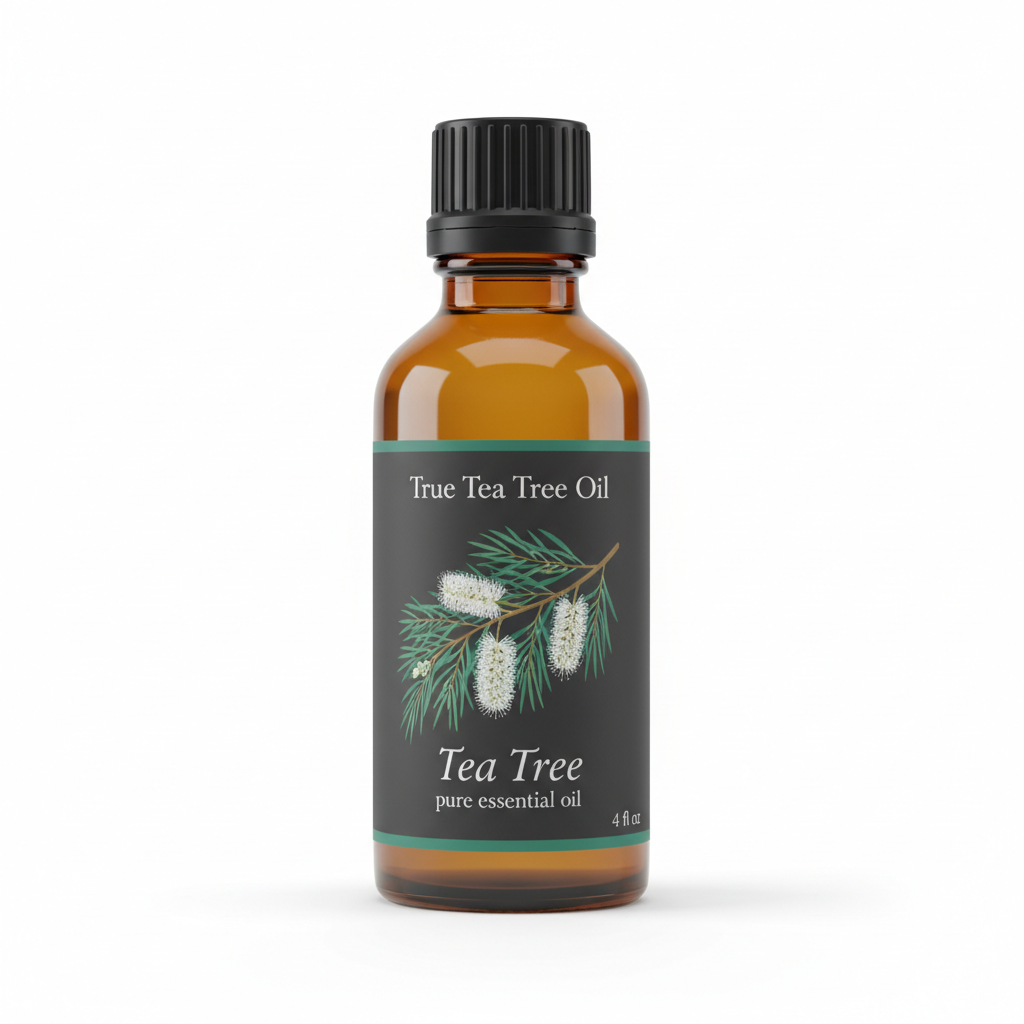
Tea Tree Essential Oil
Our own Tea Tree Essential Oil, in sizes from 0.5 oz to bulk.
From $10.99
Shop Now →What "tea tree oil" actually covers
Tea tree oil comes from a plant, and plant oils vary. The international standard for it, ISO 4730, sets a window rather than a recipe: at least 30 percent terpinen-4-ol, the main marker compound, and no more than 15 percent 1,8-cineole, the sharper, eucalyptus-like one. Plenty of oils sit comfortably inside that window while smelling a little different from each other. When a research group analysed seven commercial Melaleuca alternifolia oils bought from sellers in the US and India, terpinen-4-ol ran from about 38 to 44 percent across the set.
That spread is ordinary, and it is the reason a price is a weak signal. Two bottles can both be a proper tea tree oil and still not be identical, and a higher price does not tell you which end of the window you bought. If you care about the composition of a particular bottle, the only way to know it is a report for that batch.
Freshness is the quiet variable
The thing that changes tea tree oil most after it is made is air. Researchers who left the oil exposed found peroxide levels rising sharply within four days, and in guinea pig tests the oxidized oil was roughly three times as strong a sensitizer as fresh oil. The Tisserand Institute puts the practical side plainly: the more tea tree oil oxidizes, the less comfortable it is for skin, and they suggest keeping it refrigerated and using it within one to two years of buying.
So when you are comparing bottles, a sealed amber bottle, a tight cap and a date you can trust are worth more than a few dollars of savings. And whatever you buy, how you keep it at home matters as much as what was on the shelf. Our guide to storing tea tree oil covers the habits that slow oxidation down.
A small exercise before you shop
Before you compare bottles, write down what the oil is for. A diffuser, a cleaning spray and a skin blend all ask different things of a bottle, and a short list keeps you from paying for a promise you will never use. Then read each label with that list beside you. You will notice quickly which sellers answer your questions and which only repeat adjectives.
It also helps to start with a small bottle. A small size lets you meet the aroma, which should read as crisp, green and camphorous, before you commit to more. If you like it, you can step up later.
What a label can and cannot tell you
Labels are marketing space, and in the United States a cosmetic label has to be truthful and not misleading but does not need FDA approval before it goes on sale. FDA also keeps no list of approved cosmetic claims. That means words like "natural" or "therapeutic" on a bottle are the seller's own and carry no certificate. A few things are worth looking for instead:
- The botanical name, Melaleuca alternifolia, so you know it is not a different Melaleuca. Our note on reading a tea tree oil label explains the wording.
- A batch or lot number, since a report can only be tied to a bottle through one.
- A report that prints actual numbers, especially terpinen-4-ol and 1,8-cineole, rather than only a statement that the batch complies.
- A named standard and what was measured against it. A standard quoted on a label is a target, and a report is the evidence.
- A date and sensible storage advice, because freshness cannot be seen or smelled with certainty.
A seller who can answer the first three has done the hard part, whatever the price. If you would like a longer tour of the home checks people try, such as dropping oil on paper, our piece on checking a tea tree oil explains why they are a weak substitute for paperwork.
Where we stand
We hold ourselves to the same list. We sell two tea tree oils, one listed as Australian and one as South African, both Melaleuca alternifolia, sold undiluted. The Certificate of Analysis we publish covers one batch of the Australian oil and lists appearance, smell, relative density, refractive index and optical rotation. If you need terpinen-4-ol and 1,8-cineole figures, a South African document, or a report for a specific lot, ask us in writing through the contact page before you order and get the answer in writing. Our own suggestion for any tea tree oil on skin is to dilute to 0.5% to 2% in a carrier oil and patch test first, which the guide on diluting tea tree oil walks through.
Making a modest bottle last
The cheapest oil is the one you do not have to replace. Keep the cap on, keep the bottle in a cupboard, and measure by the drop rather than by the pour. Skin blends use only a few drops to the ounce, so even a small bottle stretches a long way. Write the date you opened it on the label, so you can decide later whether it still belongs in your skin routine or has moved on to cleaning jobs.
Shopping on a budget is perfectly sensible. Spend your attention on the batch, the date and the storage, and a modest bottle can serve you well. Our shop lists the sizes we sell, and our bulk page and guide to buying tea tree oil in bulk cover larger ones.
Tea Tree Essential Oil
Tea Tree Essential Oil from our own shop, in sizes from 0.5 oz to bulk.
From $10.99
Shop Now →Sources & Further Reading
- Carson CF, Hammer KA, Riley TV. Melaleuca alternifolia (Tea Tree) Oil: a Review of Antimicrobial and Other Medicinal Properties, Clinical Microbiology Reviews, 2006
- Vazquez A, Tabanca N, Kendra PE. HPTLC Analysis and Chemical Composition of Selected Melaleuca Essential Oils, Molecules, 2023
- Hausen BM, Reichling J, Harkenthal M. Degradation products of monoterpenes are the sensitizing agents in tea tree oil, American Journal of Contact Dermatitis, 1999
- Tea Tree Oxidation and Safety, Tisserand Institute
- Cosmetics Labeling Claims, FDA