Best Carrier Oils for Tea Tree: Jojoba, Coconut, Almond
When you dilute tea tree oil, about 98 or 99 percent of what lands on your skin is the carrier. That makes the carrier oil the quiet star of any blend: it decides how the mix glides, how it smells once the first sharp note fades, and how long the bottle stays pleasant to use. Choosing one is mostly a matter of matching texture and keeping qualities to the job.

Tea Tree Essential Oil
Our own Tea Tree Essential Oil, in sizes from 0.5 oz to bulk.
From $10.99
Shop Now →Start with the arithmetic
We recommend diluting our tea tree oils to between 0.5 and 2 percent and patch testing first. As arithmetic, using the common rough figure of 20 drops per milliliter (droppers vary), one ounce of carrier is about 590 drops, so 0.5 percent is about 3 drops of tea tree oil, 1 percent about 6, and 2 percent about 12. Europe's Scientific Committee on Consumer Safety set its 2025 maximums for finished products at 0.1 percent in face cream and 1 percent in face wash, with 2 percent for shampoo, so we suggest staying near the bottom of our range for anything that stays on skin. Our dilution guide has the full table.
Jojoba, the keeper
Jojoba is the carrier we would reach for first when shelf life matters, and it is a good example of why chemistry is worth a minute. It is not a typical plant oil. It is a liquid wax, made of long-chain wax esters rather than the triglycerides found in most oils. In a 2022 study comparing jojoba oil with olive oil and squalene after 60 days of heating at 60 degrees Celsius, jojoba showed the lowest peroxide and carbonyl values and no rise in acid value, and the authors called it the most stable of the three against autoxidation. That is a laboratory stress test, not a promise about your cabinet, but it explains why jojoba has the reputation it does. It has almost no scent of its own, so tea tree's crisp green note comes through unmasked. It is the first carrier we name in our own guidance.
Coconut, in two forms
Coconut oil is about 90 percent saturated triglycerides, according to the Cosmetic Ingredient Review's assessment of the oil. High saturation is why it keeps well and why the virgin form turns solid in a cool room. Virgin coconut oil brings a pronounced coconut scent that sits beside tea tree rather than behind it, which is lovely in a balm where you want that warm sweetness and less useful when you want the tea tree to lead. Fractionated coconut oil is processed to stay liquid and is nearly scent-free, so it behaves more like jojoba in a sprayer or roller bottle. Both are widely sold in craft and supply shops and many grocery stores. We do not sell carrier oils ourselves.
Sweet almond, the classic body oil
Sweet almond is a familiar medium-weight body oil with a faint nutty smell that mostly disappears under tea tree. It is a good fit for massage-style blends. One note for households: almonds are one of the tree nuts the U.S. Food and Drug Administration lists among the major food allergens. If anyone who will touch the blend has a tree nut allergy, choose another carrier and ask their allergist about the rest. We name sweet almond alongside jojoba as a carrier example, which is why we flag the allergy point here.
Feel and scent: what you will notice
Before you commit to a carrier, put a drop of each candidate on the back of your hand, one at a time, and rub it in. You will notice the differences right away. Jojoba slides and then seems to settle. Fractionated coconut feels light and almost silky. Sweet almond leaves a little more cushion behind. Virgin coconut may start solid and melt as it warms, bringing its sweet scent along with it.
That small comparison costs next to nothing and tells you which one you would actually enjoy using every day. The best carrier on paper is no use if you dislike the feel of it on your skin.
Small bottles first
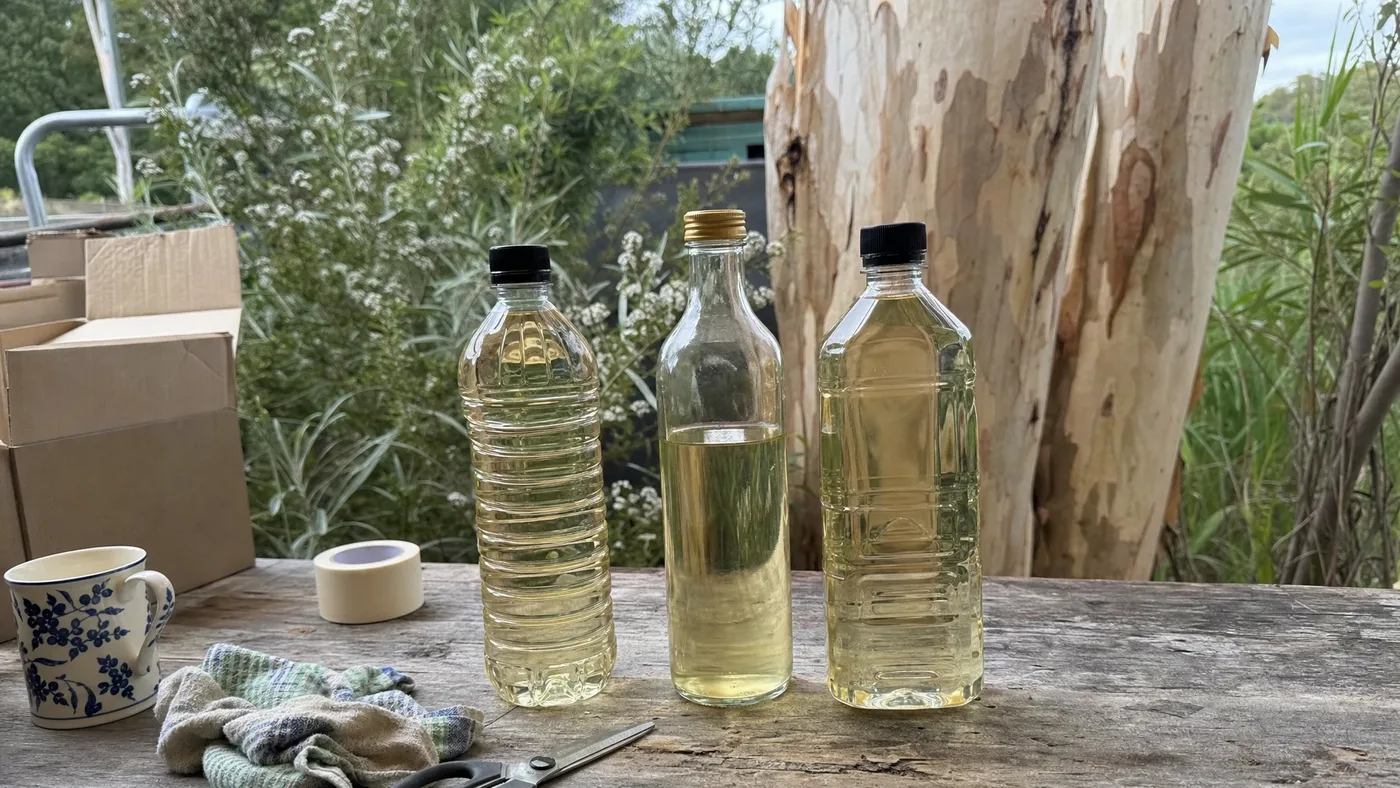
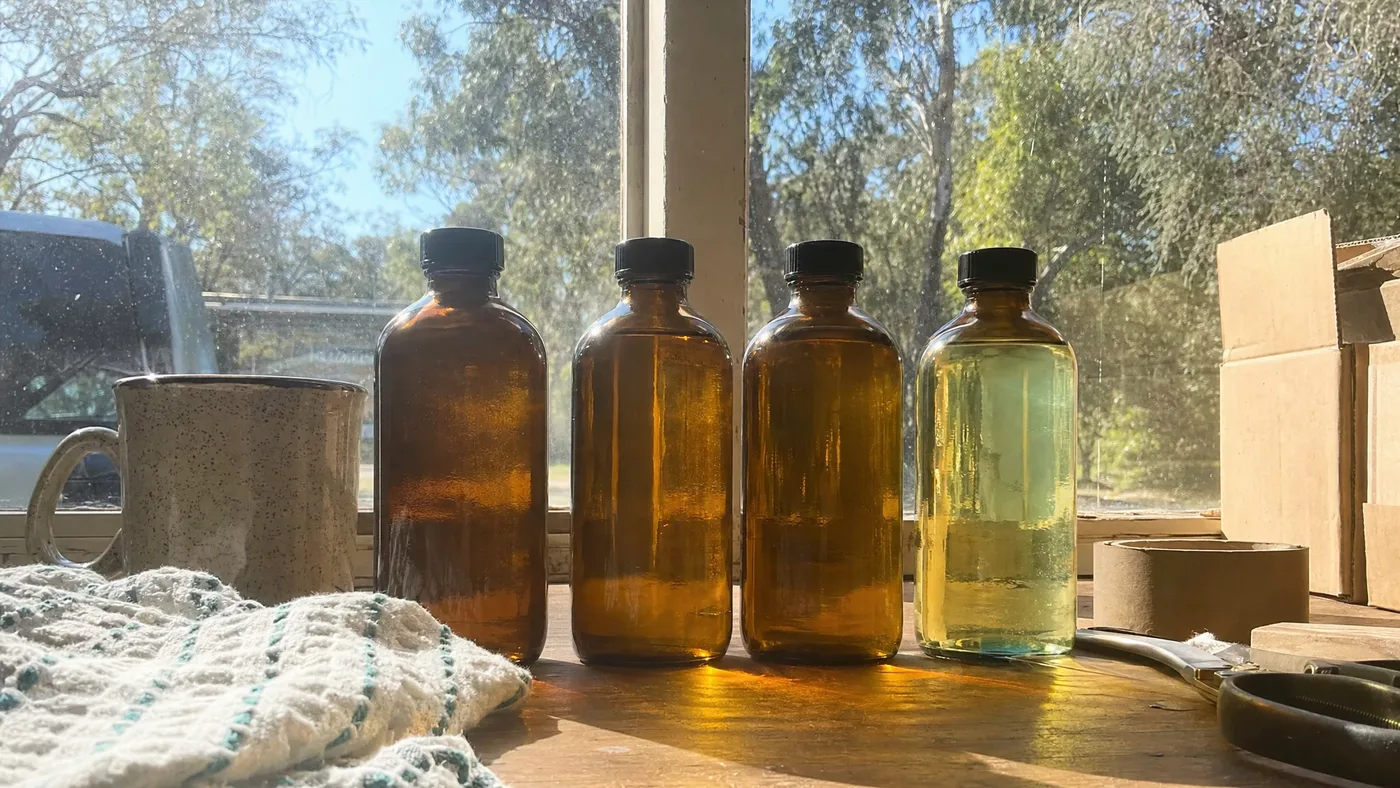
If you are new to blending, start with a small bottle of one carrier and make a small batch of blend. Using it up while it is fresh is more satisfying than a cupboard full of half-finished experiments. Once you know which texture suits you, you can buy a bigger bottle of that one. Label every blend with the oil, the percentage and the date, because three clear bottles with no labels are a puzzle nobody enjoys solving.
Matching the job
For a small facial blend that may sit on a shelf for a while, jojoba. For a roll-on or spray bottle, fractionated coconut. For a balm with warm character, virgin coconut. For a body oil you will use up within a few months, sweet almond. Where a blend will take months to finish, buy the carrier in a small size and keep it, like the tea tree, tightly capped in a cool, dark place; our storage guide shows how. Whichever you choose, mix in a clean glass bottle, label it, and run a patch test first.
Wondering how tea tree behaves outside the carrier? Neat use on skin explains why we recommend dilution every time.
One last practical tip: keep a single dedicated dropper or small spoon for measuring carrier, and wash it between uses. Cross-contaminating bottles is an easy way to cloud a fresh oil, and a clean tool is the cheapest insurance there is.
A good carrier makes tea tree feel like a finished product rather than a raw ingredient.
Tea Tree Essential Oil
Tea Tree Essential Oil from our own shop, in sizes from 0.5 oz to bulk.
From $10.99
Shop Now →Sources & Further Reading
- Oxidative Stability and Antioxidant Activity of Crude Jojoba Oil, BPB Reports, 2022
- Final report on the safety assessment of Cocos nucifera (coconut) oil and related ingredients, International Journal of Toxicology, 2011
- Food Allergies | FDA, U.S. Food and Drug Administration
- SCCS - Scientific Opinion on Tea Tree Oil (CAS/EC No. 68647-73-4 /285-377-1), European Commission, 2025