How to Use Tea Tree Oil at Home: Scent, Soap and More
Open a bottle of tea tree oil and the first thing you notice is the aroma: sharp, green and camphorous, with a faint earthy undertone in our Australian oil and a fresh, clean edge in our South African one. Nearly everything people do with it begins there, with a scent that makes a room, a bar of soap or a gym bag smell clean and bright. Here is how we think about putting it to work around the house.

Tea Tree Essential Oil
Our own Tea Tree Essential Oil, in sizes from 0.5 oz to bulk.
From $10.99
Shop Now →Start with how it behaves
Two facts shape every use. Tea tree oil does not mix with water; the standard review of the oil notes that its lipophilic nature causes miscibility problems in water-based products. So drops in a bowl or bottle of water float on top, and anything meant for the skin needs a carrier oil or a proper base to hold the oil evenly. And it is strong, so small amounts go a long way. Our dilution guidance for skin is 0.5% to 2% in a carrier oil with a patch test first. As arithmetic, at roughly 20 drops to a millilitre, that is about 3 drops in a 30 ml bottle of carrier at 0.5% and about 12 at 2%.
For anything beyond a scented room, we start at the low end. When the European Commission's scientific committee on consumer safety reviewed tea tree oil in 2025, it considered up to 2.0% acceptable in shampoo, 1.0% in shower gel and face wash, and 0.1% in a leave-on face cream, for adults, for oil that conforms to ISO 4730:2017, and not in sprays or aerosols. Those limits are for cosmetics, and they are a useful picture of how much room there is.
In the air
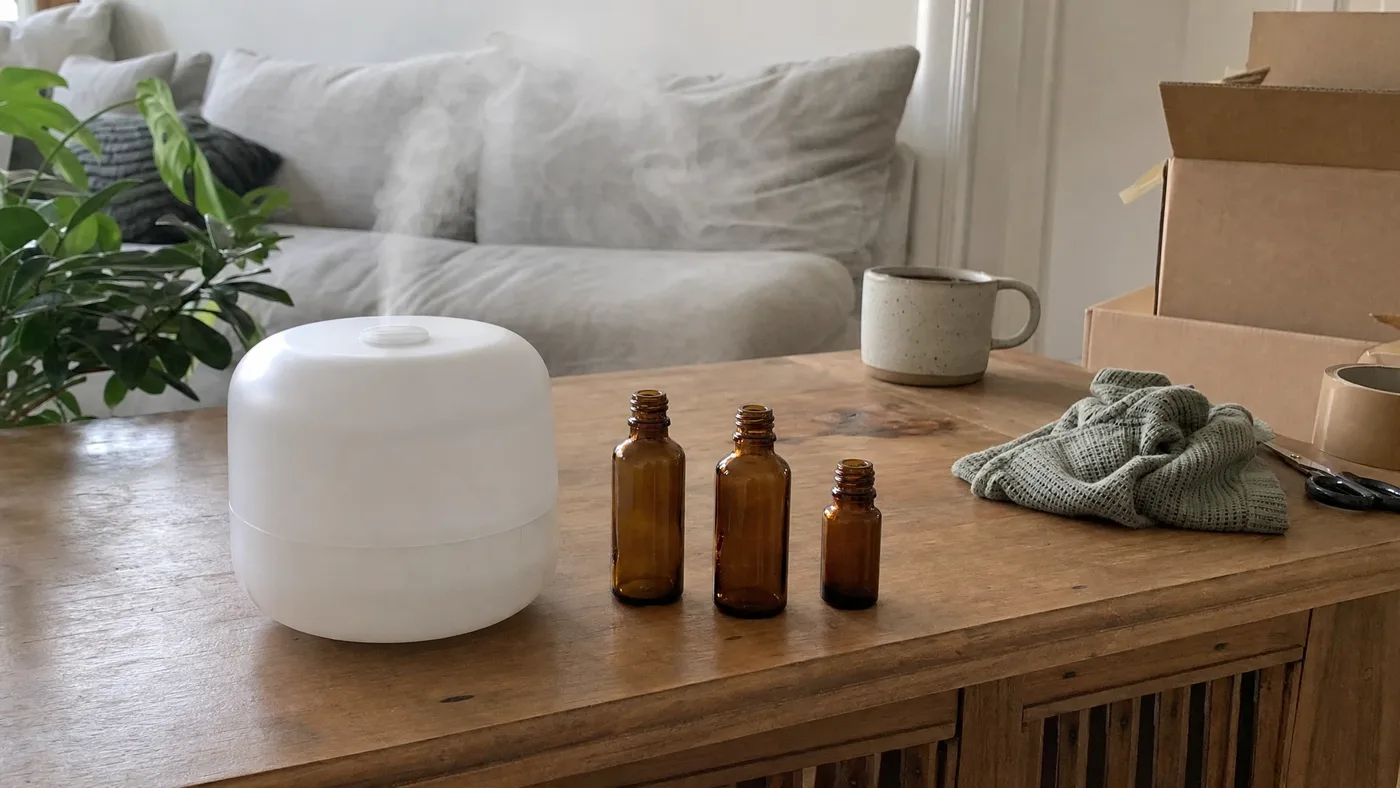
A diffuser is the simplest home for the scent, and the notes our pages list as good partners are lavender, lemon, rosemary, eucalyptus and peppermint, which you can find at a pharmacy or craft shop since we sell only tea tree. A few drops go a long way, and a well-aired room is better than a heavy one. Keep the oil, and the diffuser, where children and pets cannot get to them; our oils should be kept away from pets entirely, and a veterinarian is the right person for any pet question. A cotton ball with a drop or two in a small dish on a high shelf is a quieter alternative, offered here as a suggestion rather than a tested method.
On skin, diluted
Skin routines are where dilution matters most. Mixed into a carrier oil such as jojoba or sweet almond, tea tree oil becomes a body or massage oil with a crisp scent. Patch test first on a small area, keep it away from the eyes, and stop if irritation appears. A 2016 review of tea tree contact allergy reports that fresh oil sensitises only weakly to moderately, that oxidized oil is more likely to cause reactions, and that most reported cases came from using the undiluted oil. That is the case for diluting and for fresh oil. We make no claim that our oils do anything for skin; the point is an enjoyable aroma and a sensible mix. Our guides to dilution and carrier oils go deeper, and the neat-use question answers a common one.
In soap, cleaning and the laundry
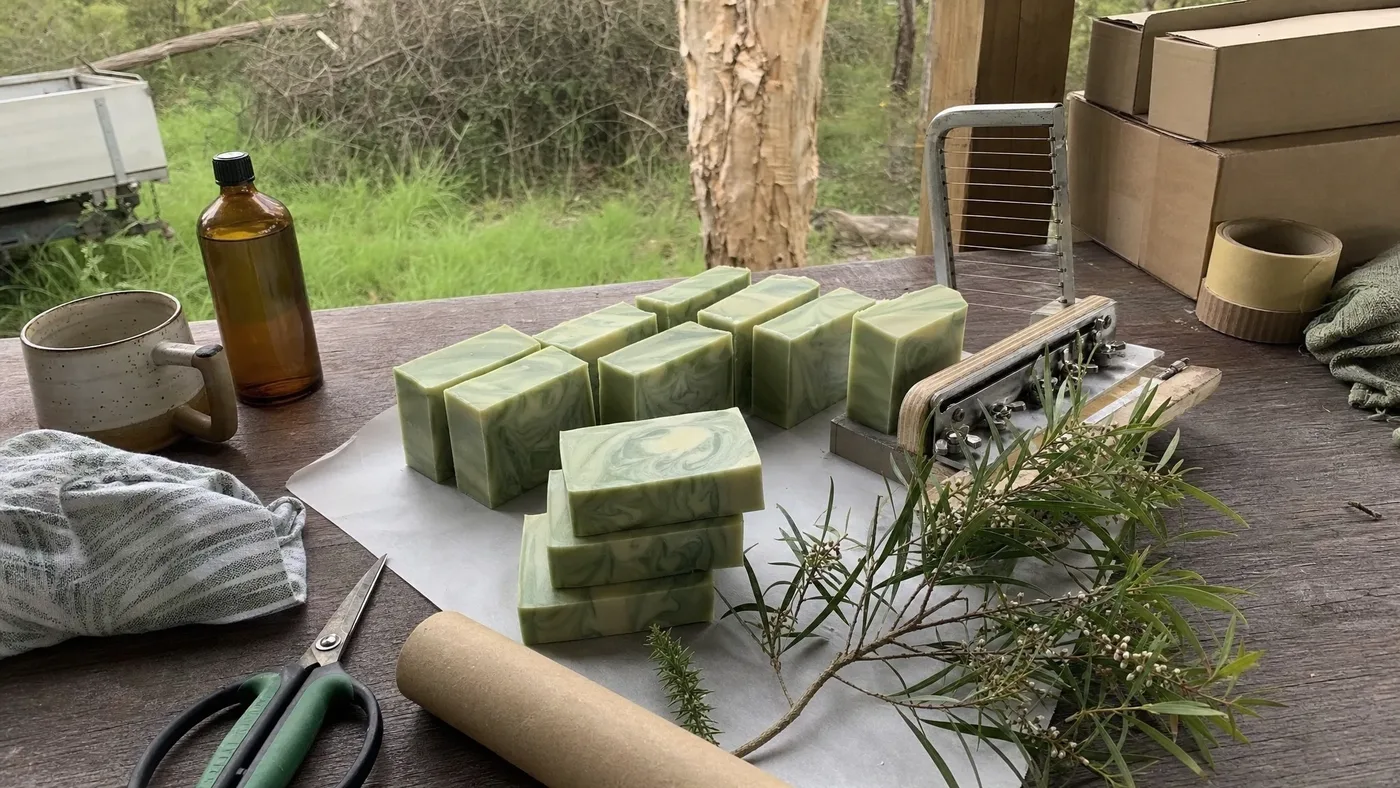
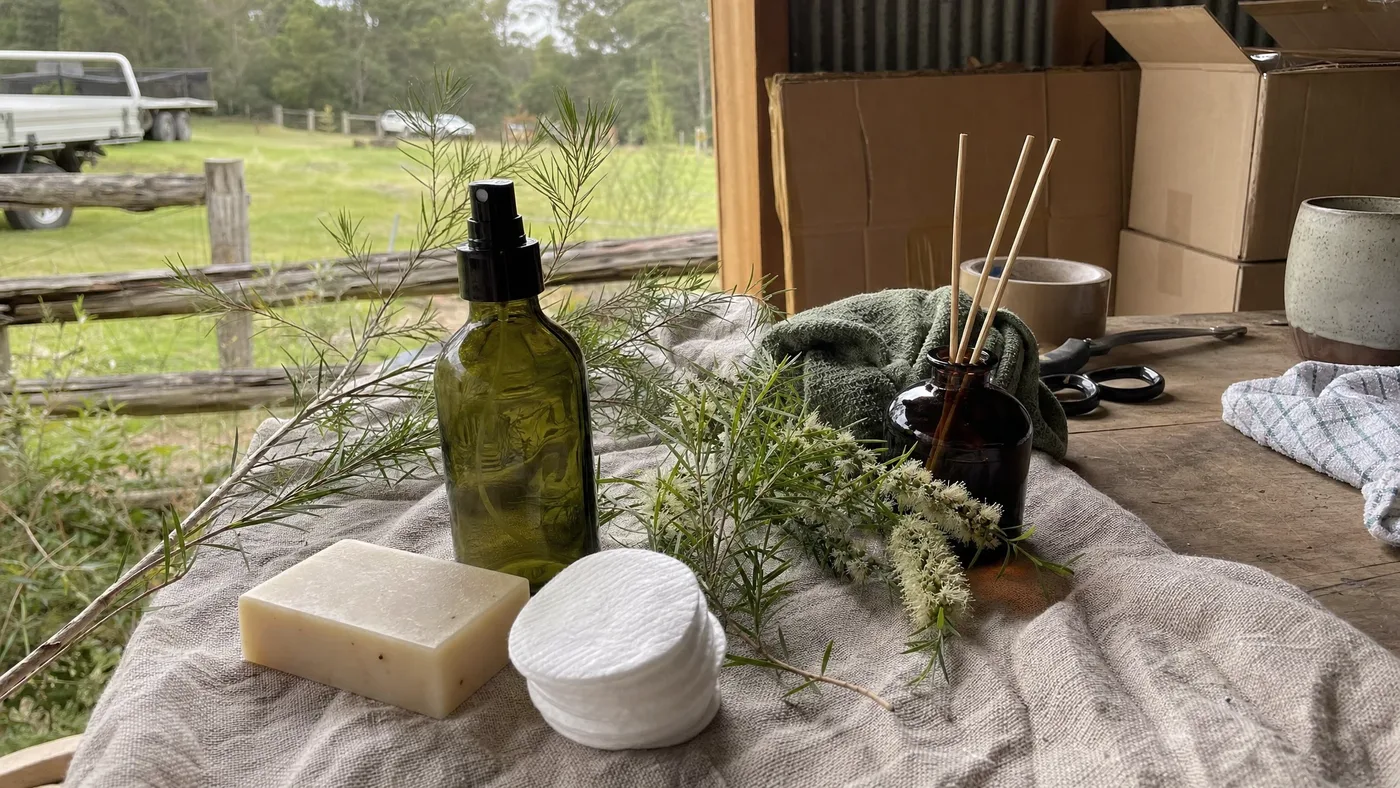
Hobbyists scent cold-process and melt-and-pour soap with it, add a little to homemade cleaning sprays, and tuck a scented cloth into a linen closet or gym bag. Soap bases, solubilizers and spray bottles come from a craft or hardware shop; we sell only the oil. In a spray, remember the point about water: it needs something to hold it, or it will float. We make no claims that it disinfects, sanitizes or removes anything, and we hold no EPA registration. Honestly, a cleaning job is done by the scrub brush; the oil adds fragrance. Walk through it room by room in our cleaning guide, and see the laundry piece for towels.
A few habits that make everything easier
- Measure with a clean dropper or a small scale rather than pouring from the bottle.
- Wipe the bottle neck after use, so the cap closes cleanly and the label stays readable.
- Work over a tray or a towel, so a spill lands somewhere easy to clean.
- Write the date and strength on anything you blend, and keep it in a dark, cool place.
- Start with one use you like before adding another, so you learn what the scent does in your space.
None of that is complicated, and all of it keeps the oil pleasant to use. A small habit at the start saves a lot of fuss later.
Where we say no
We keep tea tree oil out of the mouth and away from the eyes. Poison Control states that tea tree oil should not be taken by mouth for any reason, which is why our bottles are for external, cosmetic use. If you are pregnant or nursing, or have a medical condition, check with your doctor before using essential oils. Ask a pediatrician about children. And keep the bottle capped, cool and dark: Hausen's 1999 study found that oil stored in light and air developed degradation products that provoked reactions in sensitised patients, while fresh oil was a weak sensitiser.
That is the whole list: fragrance for the air, diluted use on skin, scenting soaps and sprays, and a hint of green in the linen closet. Start small, patch test, and let the aroma do the talking.
Tea Tree Essential Oil
Tea Tree Essential Oil from our own shop, in sizes from 0.5 oz to bulk.
From $10.99
Shop Now →Sources & Further Reading
- Carson CF, Hammer KA, Riley TV, "Melaleuca alternifolia (Tea Tree) Oil: a Review of Antimicrobial and Other Medicinal Properties." Clin Microbiol Rev, 2006
- Scientific Opinion on Tea Tree Oil (CAS/EC No. 68647-73-4 / 285-377-1), SCCS/1681/25, final version, Scientific Committee on Consumer Safety, European Commission, 2025
- de Groot AC, Schmidt E, "Tea tree oil: contact allergy and chemical composition." Contact Dermatitis, 2016
- "Tea tree oil: Remedy and poison," National Capital Poison Center (Poison Control)
- Hausen BM et al., "Degradation products of monoterpenes are the sensitizing agents in tea tree oil." Am J Contact Dermat, 1999