Premium Tea Tree Oil Labels: What the Claims Mean
A premium bottle of tea tree oil usually arrives with a short list of promises on the label: 100% Australian, GC/MS tested, low in cineole. Each phrase points at something real and worth caring about. They are easiest to appreciate once you know what sits behind them, and what kind of paperwork would back them up.

Tea Tree Essential Oil
Our own Tea Tree Essential Oil, in sizes from 0.5 oz to bulk.
From $10.99
Shop Now →Where it grew and what is in it are two questions
A country name tells you where the trees stood. It does not tell you what the oil contains. The international standard for tea tree oil, ISO 4730, is written about composition: as the 2006 Clinical Microbiology Reviews summary lays it out, terpinen-4-ol should make up at least 30 percent, 1,8-cineole no more than 15 percent, with ranges for the other main components. Australia's industry association, the ATTIA, takes the view that well-evidenced tea tree oil is distilled from Australian plantations of Melaleuca alternifolia, and that is a perspective worth knowing from the people who grow it.
We sell two tea tree oils, one listed as Australian and one as South African, both Melaleuca alternifolia. Origin is part of the story of each bottle, and the chemistry is the other part. If you want the longer version of that conversation, our origin comparison goes into it.
A label is a small piece of writing with a lot of work to do, so it pays to read it slowly. Try this: pick up the bottle and read it aloud, one phrase at a time, and after each phrase ask yourself, "What document would prove this?" You will find that some lines have an obvious answer and others leave you with nothing at all. That second group is where a polite question to the seller is worth asking.
Why "low in cineole" is the claim we like best
Most label phrases are adjectives. "Low in cineole" is a number, and numbers can be checked. The standard allows up to 15 percent. Seven batches analysed for a European feed-additive assessment averaged 2.40 percent, in a range of 1.55 to 3.16 percent, alongside an average of 39.43 percent terpinen-4-ol. That suggests a single-digit cineole figure is well within what to expect from oil that meets the standard. It is also why the figure only means something when it comes from a report for the batch in your hands.
What a GC/MS report actually gives you
Gas chromatography with mass spectrometry is the method that separates an oil into its components and measures them. "GC/MS tested" on a label tells you a test was run. A report tells you the rest: which batch, which date, which laboratory, and the percentages for terpinen-4-ol, 1,8-cineole and p-cymene. Our guide to reading a tea tree label walks through those lines.
Here is what we offer. The Certificate of Analysis we publish covers one batch of our Australian oil, with a code ending AU. It lists relative density (0.896), refractive index (1.478) and optical rotation. Those three measurements describe the oil as a whole mixture, which makes them handy for identity checks, though they do not give you a terpinen-4-ol percentage. If GC-MS data matters to you, or you want a document for the South African oil, ask us in writing through the contact page before you order, and get the answer in writing before you rely on it.
The trade body's code, and how to use it
The ATTIA runs a Code of Practice that it first implemented in 2005. Members who want certification pass two audits and then a yearly one, and the code names ISO 4730:2017 and AS 2782:2017 as the commercial standards used to identify fraudulent oil. If a brand you are considering shows the ATTIA mark, the association's site has a supplier finder, which is a sensible way to confirm the mark is real.
What the bottle itself tells you
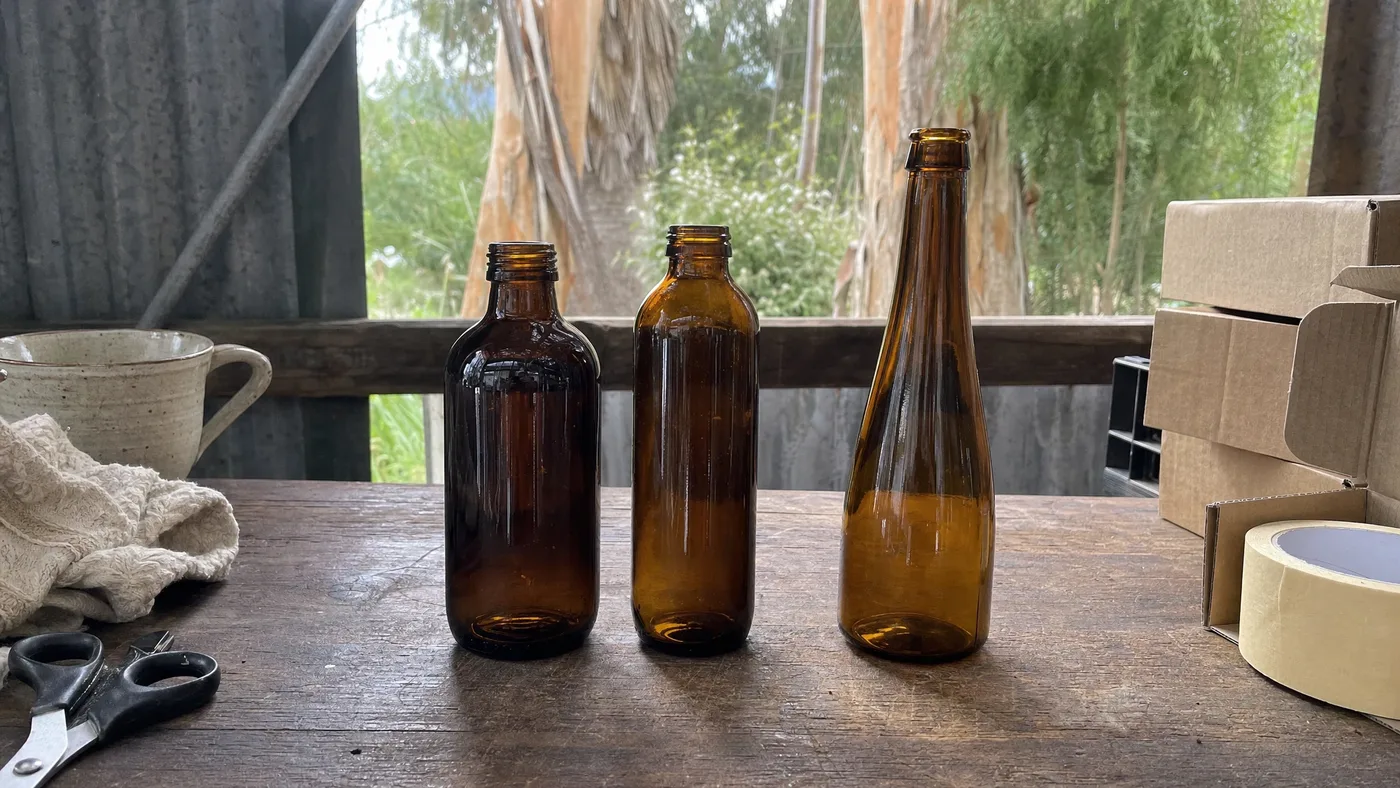
Beyond the words, look at the bottle. Tinted glass, a tight cap and a clean, readable label are all signs that someone thought about how the oil will be kept. A bottle with a loose or missing cap, a sticky neck or a faded label tells you something too. You will notice these small details quickly once you start looking, and they cost nothing to check.
When the bottle arrives, give it a slow sniff before you do anything else. A clean, crisp, green and camphorous aroma is what you are looking for, and anything that smells very different from what you expected is worth a question to the seller.
Freshness is the part you control
Tea tree oil changes with light, air and warmth. In a 1999 study, researchers stored oil on a window sill and found that its p-cymene content climbed from 2 to 11.5 percent, and that the aged oil was about three times stronger as a skin sensitiser than fresh oil in guinea pigs. Europe's consumer-safety committee makes the same point in its 2025 opinion: the oil's composition can shift with light, heat, air and moisture, so stability has to be maintained. In practice, the best premium bottle is the one you keep capped, cool and dark. We list the Australian oil at typically 2 to 3 years unopened and the South African oil at 1 to 2 years sealed, which is one more reason to match your bottle size to how quickly you use it. Our storage guide covers the habits that keep an oil in good shape.
When you next stand in front of a shelf of premium tea tree oils, let the phrases with a document behind them carry the most weight, and feel free to ask any seller for the document. It is a fair question, and a good seller will be glad you asked.
Tea Tree Essential Oil
Tea Tree Essential Oil from our own shop, in sizes from 0.5 oz to bulk.
From $10.99
Shop Now →Sources & Further Reading
- Melaleuca alternifolia (Tea Tree) Oil: a Review of Antimicrobial and Other Medicinal Properties, Clinical Microbiology Reviews, 2006.
- Safety and efficacy of a feed additive consisting of an essential oil derived from leaves and terminal branchlets of Melaleuca alternifolia (Maiden & Betche) Cheel (tea tree oil) for use in all animal species (FEFANA asbl), EFSA Journal, 2024.
- Degradation products of monoterpenes are the sensitizing agents in tea tree oil, Hausen, Reichling and Harkenthal, American Journal of Contact Dermatitis, 1999.
- SCCS - Scientific Opinion on Tea Tree Oil (CAS/EC No. 68647-73-4 /285-377-1), European Commission, SCCS/1681/25.
- Code of Practice, Australian Tea Tree Industry Association (ATTIA).
- Provenance, Australian Tea Tree Industry Association (ATTIA).