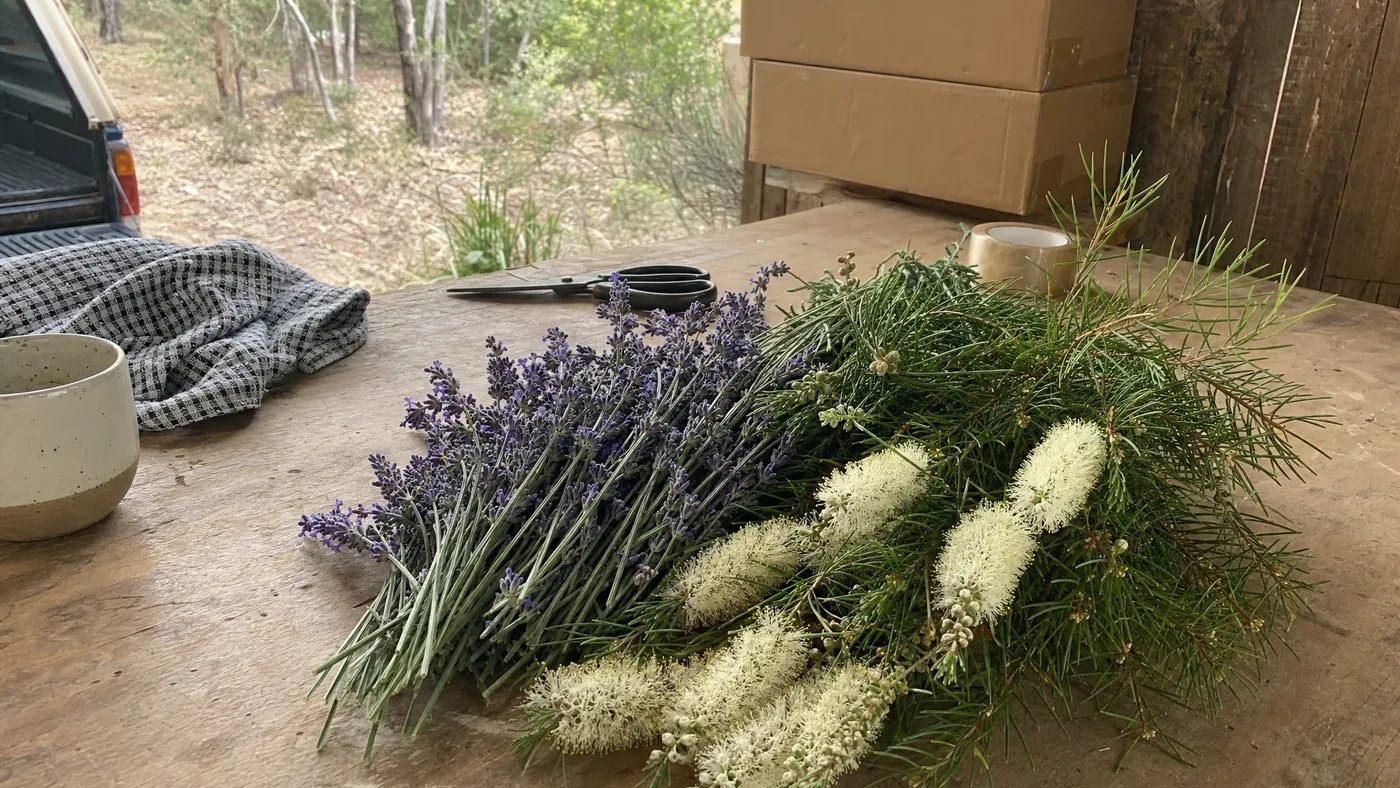
Tea Tree vs Lavender: Crisp Meets Soft
Put a bottle of tea tree oil next to a bottle of lavender oil and you have two of the most familiar names in the cupboard, and two very different personalities. One is sharp, green and camphorous. The other is soft and floral. They are often pitched as rivals, but they do different jobs.

Tea Tree Essential Oil
Our own Tea Tree Essential Oil, in sizes from 0.5 oz to bulk.
From $10.99
Shop Now →What gives each its character
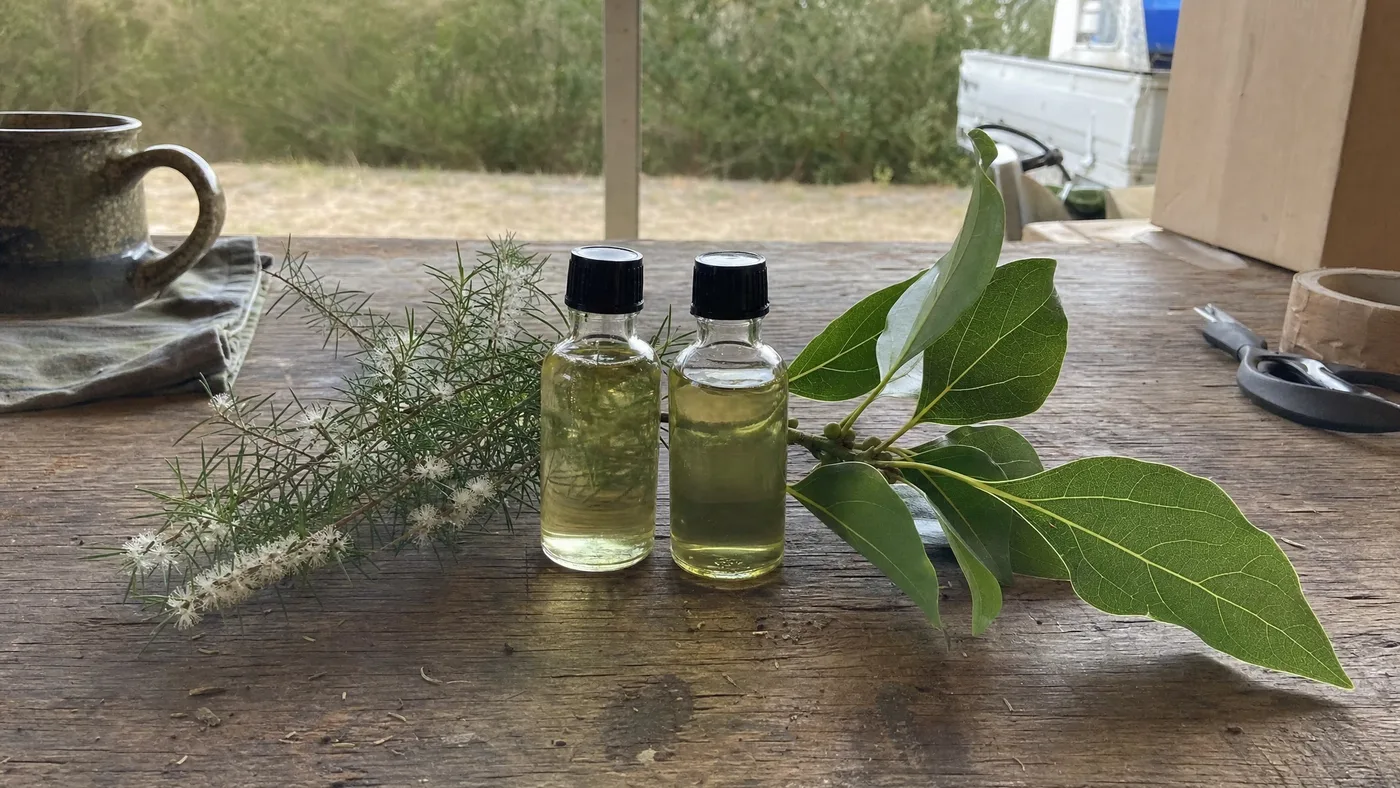
Tea tree oil is dominated by terpinen-4-ol, with γ-terpinene, 1,8-cineole and a handful of other components in support, according to a 2016 review of the oil's chemistry. That mix is what gives it a fresh, medicinal-herbal brightness; our South African oil is described as closer to herbal freshness than sweetness, and our Australian oil as crisp, green and camphorous with a faint earthy undertone. Both of our tea tree oils are listed as top notes, the scent that greets you first.
Lavender is built differently. Robert Tisserand notes that lavender oil has two major constituents in about equal amounts, linalool and linalyl acetate, and in one sample he cites they made up roughly 35% and 51% of the oil. Those two smoother, sweeter molecules help explain why lavender sits at the soft end of the aroma spectrum. We sell only tea tree oil, so for lavender you will be looking at a craft or supply shop.
Different jobs for the nose
Think of tea tree as the clean, bright note and lavender as the calm, rounded one. Tea tree suits places where you want a fresh, brisk edge, such as a bathroom, a gym bag or a hallway. Lavender suits places where you want warmth: a linen cupboard, a bedroom shelf or a bath. Our pages list lavender among the oils tea tree blends well with, along with lemon, rosemary, eucalyptus and peppermint, and the pairing makes sense on paper, since a little tea tree should brighten lavender's sweetness and lavender should round off tea tree's sharp edge. A sensible way in is more lavender than tea tree, adjusted drop by drop; that is a suggestion, not a tested ratio. For more pairings see scent pairings for tea tree oil, and for the full scent profile what tea tree oil smells like.
A smell test worth doing
If you have a bottle of each, try them on two paper strips, one in each hand. Tea tree hits first, with a sharp green edge, and as a top note it starts to fade sooner. Lavender usually feels rounder and sweeter. Give it a minute, then smell both again: the contrast you noticed first tends to soften, and the supporting notes come forward. Write down a word or two for each, such as "sharp, green" or "soft, sweet", and you will have a vocabulary ready for the next time you choose.
What they share: care in storage
Both oils change with air. Lavender's main components can react with oxygen and form sensitizing hydroperoxides; in one study of patients with suspected allergic contact dermatitis, about 2.8% reacted to oxidized lavender oil, among the highest rates of the essential oils tested. For tea tree, a review of contact allergy reports positive patch tests of 0.1% to 3.5% in routine testing and notes that oxidation makes allergy more likely. These come from different studies and different groups of patients, so they are not a scoreboard. The shared lesson is practical: tight cap, cool dark cupboard, and try not to keep either oil for years. Tisserand points out that oxidation is a very slow process, so this is routine care, not alarm.
Where each one earns its shelf
Think about the spots in your home. A hallway cupboard, a gym bag or a bathroom shelf suits the brisk character of tea tree. A linen cupboard, a reading corner or a guest room suits something softer. You do not have to pick a winner, and it is perfectly reasonable to keep a bottle of each and reach for whichever suits the room. We sell only the tea tree, so lavender comes from a craft or supply shop, and the Latin name on its label is worth checking, just as it is on ours.
How we suggest using ours
Our dilution guidance for skin is 0.5% to 2% in a carrier oil with a patch test first, and it applies to our tea tree oils only. We cannot give you dilution figures for lavender oil, so follow the label and a reliable safety source for it. If you mix the two in a blend, work out the total oil, not just each oil by itself. Keep both away from the eyes, children and pets, and do not swallow either. We make no medical claims for tea tree oil, and a pediatrician or your doctor is the person to ask about children, pregnancy or any health condition.
If you only want one: choose tea tree when you want bright, clean and herbal, and lavender when you want soft and floral. If you want both, they get along nicely. The comparison of tea tree with other oils and our guide to diffusing tea tree oil are good next steps.
Tea Tree Essential Oil
Tea Tree Essential Oil from our own shop, in sizes from 0.5 oz to bulk.
From $10.99
Shop Now →Sources & Further Reading
- de Groot AC, Schmidt E, "Tea tree oil: contact allergy and chemical composition." Contact Dermatitis, 2016
- Robert Tisserand, "Lavender oil - skin savior or skin irritant?" 2011
- "Patch Testing with Main Sensitizers Does Not Detect All Cases of Contact Allergy to Oxidized Lavender Oil." Acta Dermato-Venereologica, 2016