Tea Tree Oil and Mosquitoes: What the Research Found
Mosquitoes have a very good sense of smell, and tea tree oil has a very distinctive one. Researchers have wondered for years whether the two interact, and the answer so far is a fascinating yes in the laboratory and a more modest one on skin. Here is what the studies found, in plain terms, and what we make of it.
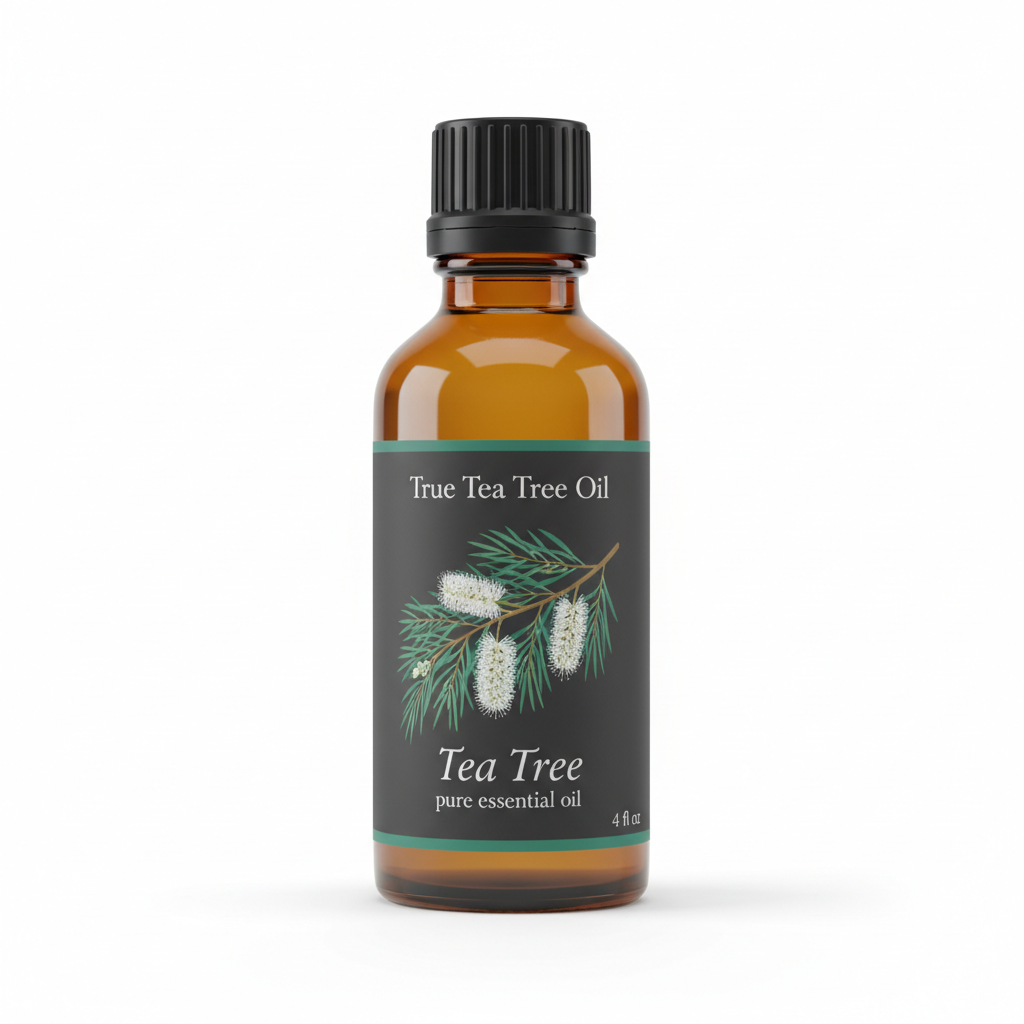
Tea Tree Essential Oil
Our own Tea Tree Essential Oil, in sizes from 0.5 oz to bulk.
From $10.99
Shop Now →The science of a mosquito noticing tea tree
The most interesting work looks at how a mosquito perceives the oil. A 2025 study on the yellow fever mosquito, Aedes aegypti, identified an odorant receptor on its antenna, called AaOr96, that responds to terpinen-4-ol, the main component of tea tree oil. The researchers also looked at behaviour, including avoidance of the oil and where females chose to lay eggs. In short, the insect can detect the compound and tends to steer away from it. That is a mechanism, which is different from a measured protection time on human skin, but it is a lovely piece of insect biology, and it explains why tea tree keeps appearing in repellent research.
Why a strong smell is not the same as protection
It is easy to assume that a sharp, vivid scent must be doing something protective, and it is a natural thought. Plenty of oils smell vivid to us, and a vivid smell is simply a vivid smell. Protection is a separate question, answered by tests on skin, which is why the research is worth reading even when it is less exciting than the headline.
What happens on skin
The study closest to skin is a 2022 paper that tested tea tree oil against Aedes aegypti in a modified arm-in-cage assay. Tea tree oil gave a complete protection time of 60 minutes. The DEET control gave 480. So the effect was real and short-lived, in a cage, against one species. The abstract does not state the concentration applied, which means we cannot turn that result into a recipe, and we would not want to.
Broader screens tell a similar story. A 2005 screen of 38 essential oils on volunteers' forearms found that, at 10 percent and 50 percent, none of the oils prevented bites for as long as two hours. Only undiluted citronella, patchouli, clove and makaen reached it. A 2006 study of 41 plant extracts and 11 oil mixtures on volunteers' skin put litsea, cajeput, niaouli, violet and catnip at the top; cajeput and niaouli are other Melaleuca species and not tea tree. A 2026 systematic review of 33 experimental studies found plenty of promise among essential oils generally, and noted that the evidence comes from controlled laboratory conditions and not from field trials.
What registered repellents offer
This is where a clear head helps. The US Environmental Protection Agency says that registering a skin-applied repellent means it has been evaluated and approved for human safety and effectiveness when used as labelled. Its list of active ingredients in registered repellents includes catnip oil, citronella, DEET, IR3535, p-menthane-3,8-diol, oil of lemon eucalyptus, picaridin and 2-undecanone. Tea tree oil is not on it. The EPA adds that some products made from minimal-risk ingredients need no registration and have not been evaluated for effectiveness.
The CDC recommends EPA-registered repellents for travel, says they are safe and effective when used as directed, including in pregnancy and breastfeeding, and advises against using oil of lemon eucalyptus or PMD products on children under 3. If you live in or are travelling to a region with mosquito-borne illness, that registered route is the one to pick, and a doctor or travel clinic can help you choose among the options.
Where tea tree fits in a mosquito season
We sell tea tree essential oil as an aroma oil for external use, and we make no repellent claim for either of our two oils, the Australian or the South African. What we are glad to offer is the aroma itself: crisp, green and camphorous, a good companion for a summer evening when the windows are open. If you diffuse it, our diffuser guide covers pets, ventilation and short sessions.
A homemade spray is the format we would steer you away from. The European safety opinion on tea tree oil, issued in October 2025, covers adult skin products and expressly leaves out sprayable formats that could put mist into the air you breathe. If you do use the oil on skin, always dilute it first. Our guidance is 0.5% to 2% in a carrier oil with a patch test, and our dilution guide shows the arithmetic. For anyone with pets in the house, our post on cats and tea tree oil is worth reading before the season starts.
A summer evening, aroma only
If you like the scent for its own sake, a cotton ball with a single drop in a small dish on a high shelf, well away from children and pets, is a quiet way to have it in the room. You will notice how quickly it fades, because tea tree is a top note, so there is no need to keep topping it up.
The plan we would suggest for a mosquito season is a layered one. Let the screens, long sleeves and a registered repellent do the protecting, and let the oil be what it is best at: a crisp, green, camphorous aroma that makes an open window feel like summer.
So the honest summary is a good one: tea tree oil is an interesting subject for entomologists and a pleasant scent for summer, and a registered repellent is what to wear when you need protection.
Tea Tree Essential Oil
Tea Tree Essential Oil from our own shop, in sizes from 0.5 oz to bulk.
From $10.99
Shop Now →Sources & Further Reading
- Functional Characterization of an Antenna-Biased Odorant Receptor AaOr96 Involved in Tea Tree Oil Repellency Against Aedes aegypti, Journal of Agricultural and Food Chemistry, 2025.
- Repellent activity of trans-anethole and tea tree oil against Aedes aegypti and their interaction with OBP1, a protein involved in olfaction, Entomologia Experimentalis et Applicata, 2022.
- Comparative repellency of 38 essential oils against mosquito bites, Phytotherapy Research, 2005.
- Repellency effect of forty-one essential oils against Aedes, Anopheles, and Culex mosquitoes, Parasitology Research, 2006.
- The potential of essential oils as mosquito (Diptera: Culicidae) bio-repellents: a systematic review, Revista do Instituto de Medicina Tropical de Sao Paulo, 2026.
- Regulation of Skin-Applied Repellents, US EPA.
- Skin-Applied Repellent Ingredients, US EPA.
- Avoid Bug Bites, CDC Travelers' Health.
- SCCS - Scientific Opinion on Tea Tree Oil (CAS/EC No. 68647-73-4 /285-377-1), European Commission, SCCS/1681/25.