Tea Tree on a Shampoo Label: Does Order Mean Amount?
Turn a tea tree shampoo around and the label tells a small story, if you know how to read it. Most shoppers have heard the shortcut: ingredients are listed from most to least, so the closer tea tree is to the top, the more of it is in the bottle. It is a tidy rule, and for the first half of the list it holds. The interesting part is where it stops.

Tea Tree Essential Oil
Our own Tea Tree Essential Oil, in sizes from 0.5 oz to bulk.
From $10.99
Shop Now →The rule, and the one-percent line
U.S. cosmetic labeling rules (21 CFR 701.3) require ingredients to be declared in descending order of predominance. The same regulation also allows an alternative: ingredients present at more than 1% are listed in descending order, followed by those present at 1% or less, which may appear in any order. Dyes can go last, and fragrance or flavor may simply be listed as "fragrance" or "flavor."
Here is what that means in practice. Tea tree oil in a shampoo is almost always a small-percentage ingredient, so it sits in the tail of the list, where order tells you nothing about quantity. Third from the end could be 1% or a tiny trace, and the label alone cannot say which. Being listed first among the minor ingredients is not a sign of strength, and being listed last is not a sign of weakness.
What a good label can tell you
The label cannot tell you the concentration, but it can still tell you plenty:
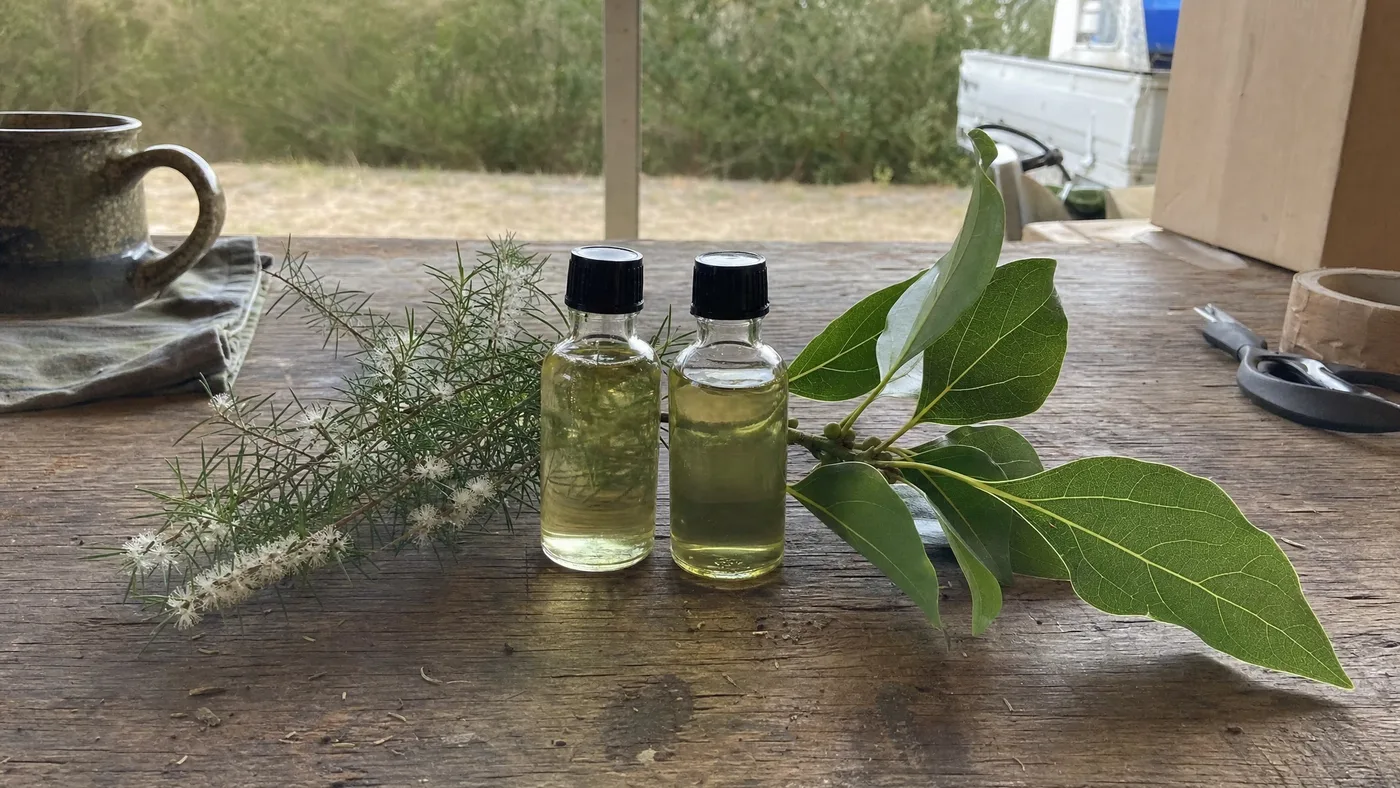
- Is it named? The ingredient name for the oil is Melaleuca Alternifolia (Tea Tree) Leaf Oil. If you see that, the oil is on the list in its own right. If all you find is "fragrance," the aroma may come from many sources.
- Is the product built around it? A product named for tea tree that lists the oil at the very end alongside the colors and preservatives is worth a second look.
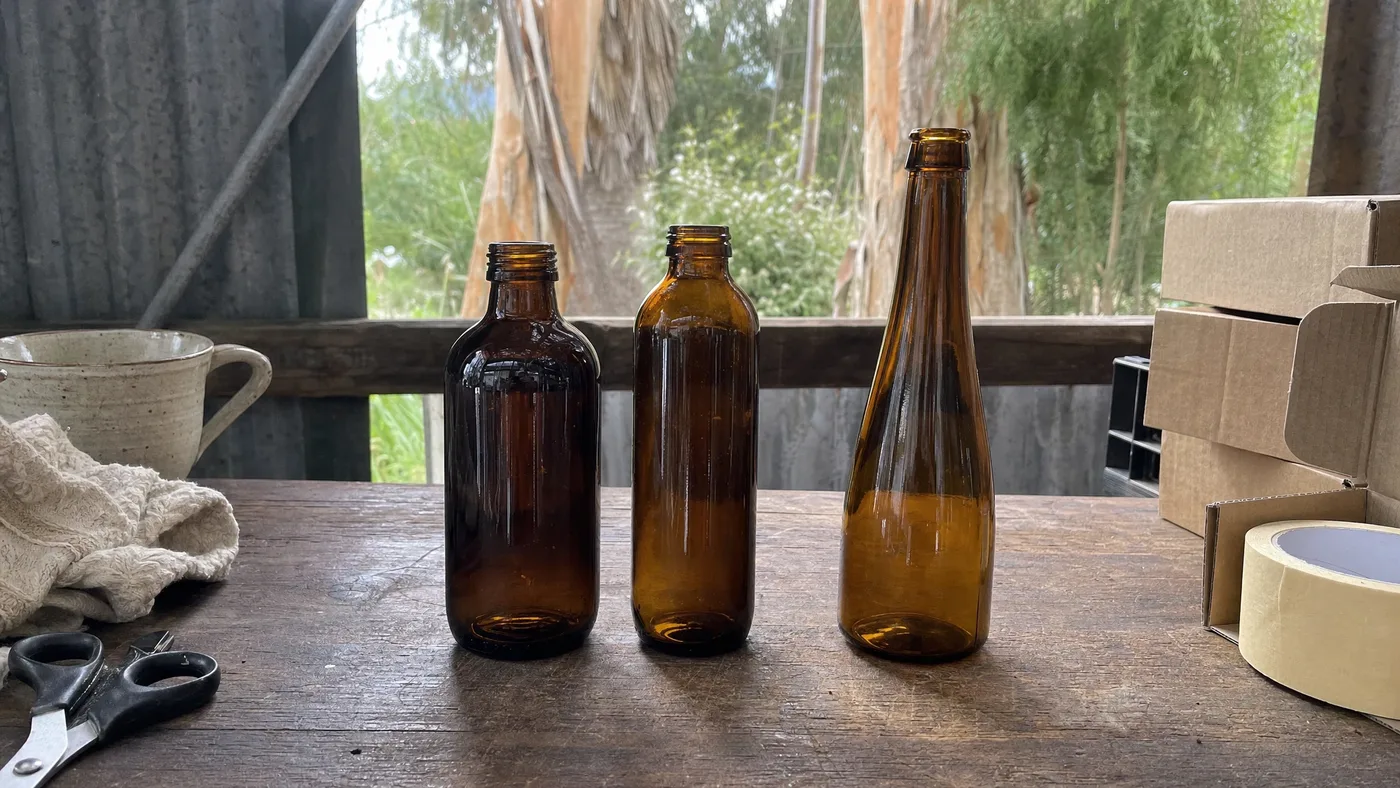
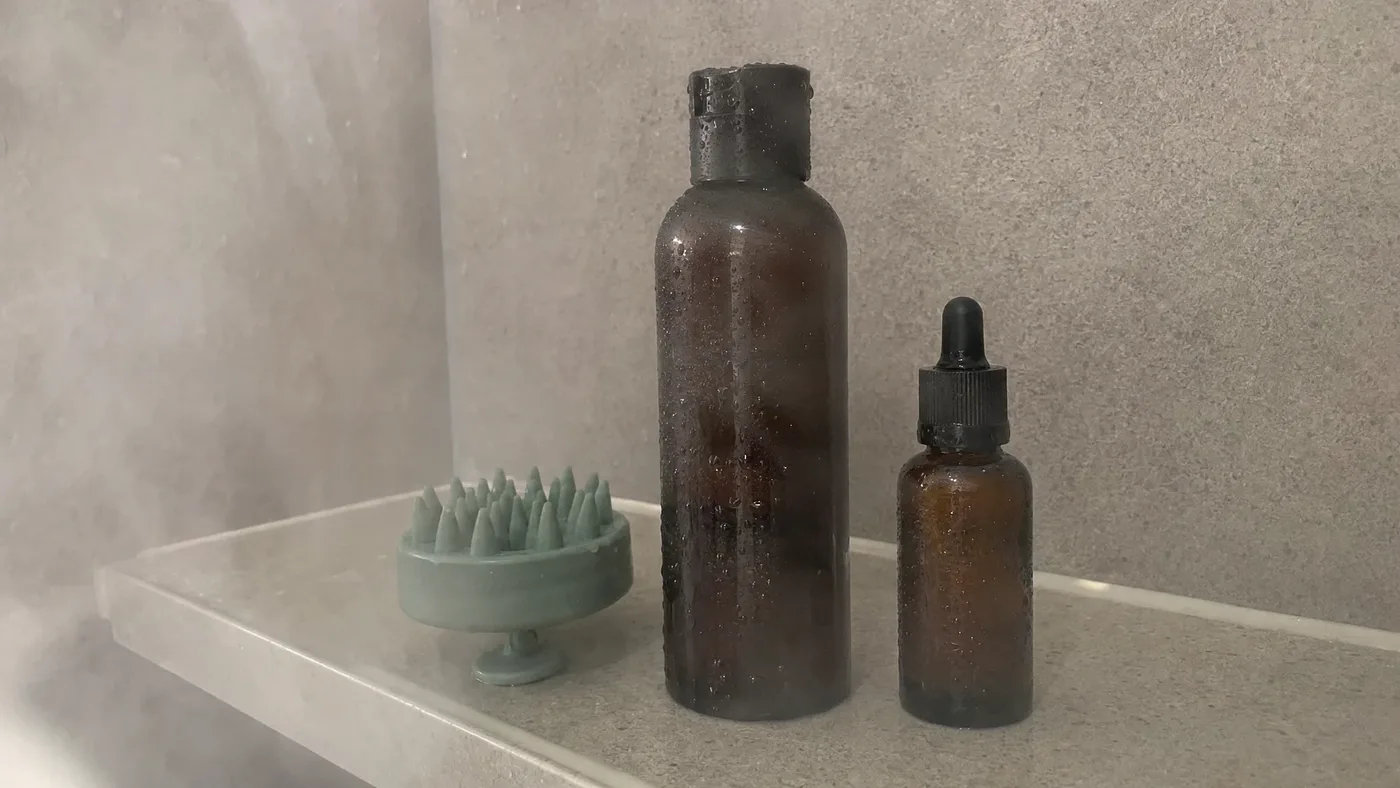
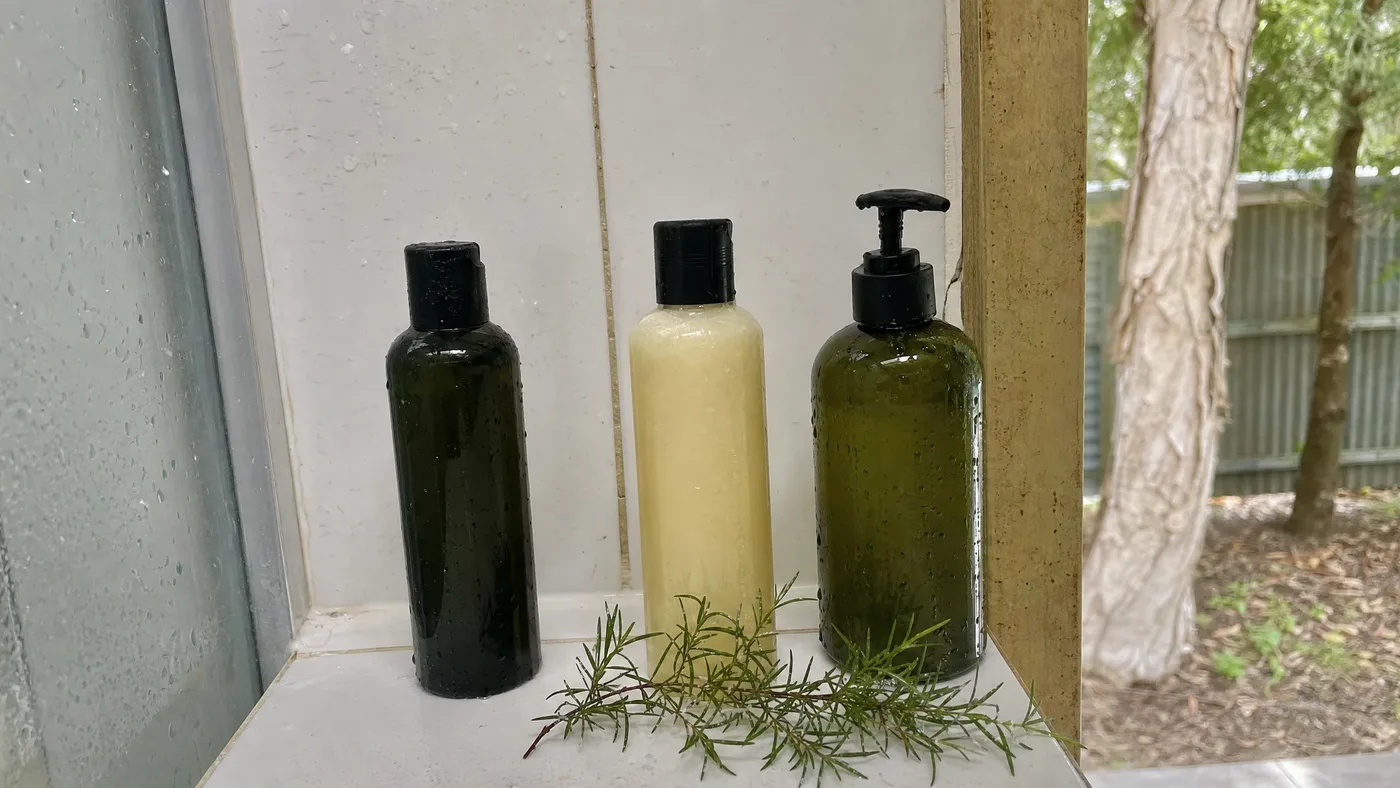
- Where is the packaging? Carson, Hammer and Riley note that tea tree oil is volatile and readily absorbed into plastics, so containers need to be a good barrier. An opaque, well-sealed bottle suits it.
- Is there a date or batch code? The age of the product matters, and we say why below.
A thirty-second shelf test
Next time you are in the aisle, try reading the list from the bottom up. Start with the last few entries, find the tea tree name if it is there, and notice what sits beside it. Then read from the top and see how far the water and cleansing ingredients run. The picture you build in half a minute, mostly water and cleanser with a handful of scent ingredients near the end, is a more honest guide than the leaf on the front.
Why age matters in a shampoo
The oil itself changes with air, light and warmth. In a classic experiment, Hausen and colleagues left tea tree oil on a window sill and watched its peroxide content rise from under 50 parts per million to more than 500 in four days. Oxidized oil proved about three times stronger as a sensitizer in guinea pigs than fresh oil, and the compounds that formed, including ascaridole, are the ones identified in the dermatology literature. De Groot and Schmidt's review of contact allergy to the oil confirms that fresh tea tree oil is a weak to moderate sensitizer and that oxidation increases its allergenic potency.
A shampoo is a rinse-off product, which is a gentler format than a leave-on one. Oxidation is simply a reason to prefer a product that is kept sealed, kept cool and used within a sensible window, and a reason to stop using one that smells noticeably different from when it was new. If you ever notice irritation, stop using it and see a doctor if it persists.
Five quick checks at the shelf
Put it all together and a short routine appears:
- Find the INCI name, Melaleuca Alternifolia (Tea Tree) Leaf Oil, and see where it sits.
- Treat the lower end of the list, where the small-percentage ingredients sit, as unranked: the order there may be arbitrary.
- Look at the container: opaque and tightly closed is better than clear and loose.
- Smell it. Tea tree should smell crisp, green and camphorous, not stale or sharp in a way that bothers you.
- Do a small patch test before using a new product regularly.
If you like to keep notes, a photo of an ingredient list on your phone is a handy thing to carry. Comparing two bottles side by side at home is far easier than squinting at tiny print in a shop.
Where our oil fits
We sell tea tree oil, not shampoo. If you would like to scent your own shampoo base, our drop-by-drop ratios for shampoo bottles do the arithmetic, and our guide to reading a tea tree oil label covers the bottle itself. For a longer view of the market, our look at drugstore tea tree shampoos goes into what the products contain. Our guidance for any skin use of the undiluted oil is 0.5% to 2% in a carrier oil with a patch test, and we recommend checking with your physician first if you are pregnant, nursing or have a medical condition.
A good label will not give you every number, but it will tell you whether the product is built around the ingredient or merely named after it, and that is usually enough to choose well.
Tea Tree Essential Oil
Tea Tree Essential Oil from our own shop, in sizes from 0.5 oz to bulk.
From $10.99
Shop Now →Sources & Further Reading
- eCFR. 21 CFR 701.3 Designation of ingredients
- Hausen BM, Reichling J, Harkenthal M. Degradation products of monoterpenes are the sensitizing agents in tea tree oil. American Journal of Contact Dermatitis, 1999
- de Groot AC, Schmidt E. Tea tree oil: contact allergy and chemical composition. Contact Dermatitis, 2016
- Carson CF, Hammer KA, Riley TV. Melaleuca alternifolia (Tea Tree) oil: a review of antimicrobial and other medicinal properties. Clinical Microbiology Reviews, 2006