Southern Cross: A Tea Tree, Lemon and Eucalyptus Blend
The Southern Cross is the constellation you steer by below the equator, and both of our tea tree oils are listed from the Southern Hemisphere, one Australian and one South African. It seemed a fitting name for a diffuser blend that puts tea tree between a bright lemon top and a cool eucalyptus finish. Think of it as a formulation built from composition data and a little arithmetic, a starting point to adjust by nose.

Tea Tree Essential Oil
Our own Tea Tree Essential Oil, in sizes from 0.5 oz to bulk.
From $10.99
Shop Now →Why these three
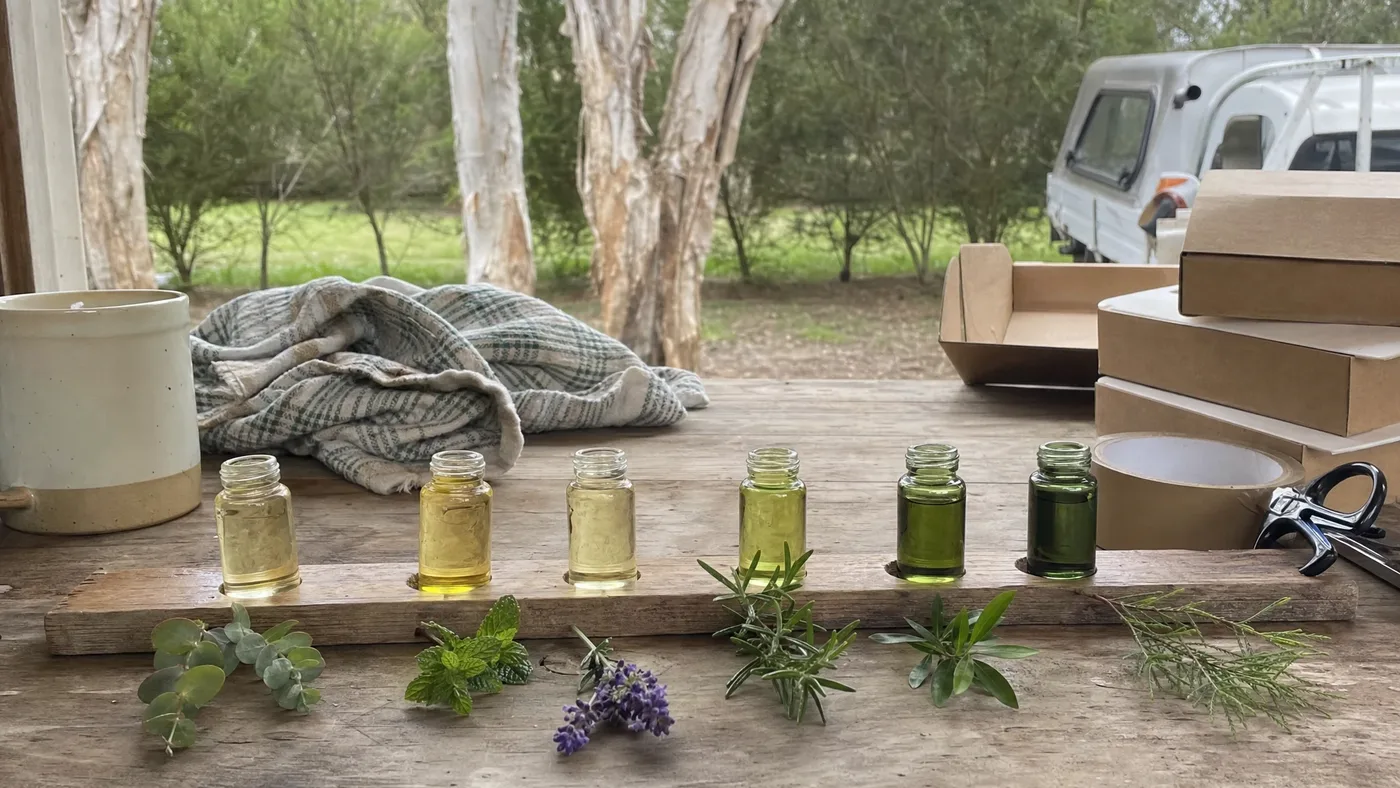
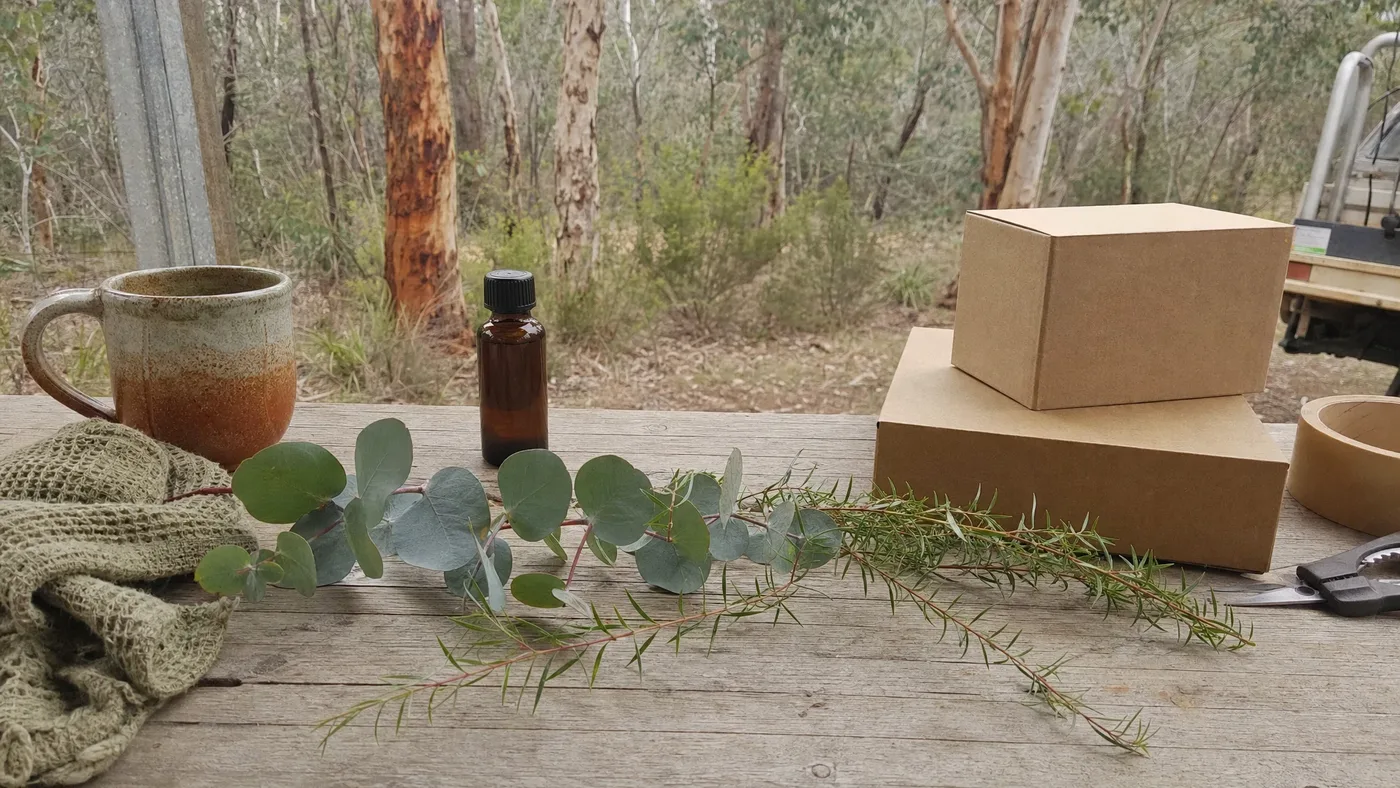
Each oil brings a different lead molecule, and the combination works because they do not overlap much. Expressed lemon oil is about 65 percent limonene in the European Food Safety Authority's ten batches, and PubChem's odor entry for limonene is "citrus." Tea tree oil is led by terpinen-4-ol, around 40 percent, described as "pine," with gamma-terpinene and alpha-terpinene behind it. Eucalyptus oil is about 80 percent 1,8-cineole, which PubChem calls "camphor-like." That is a bright top, a resinous middle and an open, cool finish. We list lemon and eucalyptus among the oils that blend well with our Australian tea tree, and our scent pairing guide explains the logic further.
The starting ratio
Because eucalyptus is so concentrated in one loud compound, it can dominate even in a small share, so we suggest making it the smallest part. As a starting suggestion, not a measured result: 3 parts lemon, 2 parts tea tree and 1 part eucalyptus. By drops that is 6 in total, about what a small ultrasonic diffuser takes; your machine's manual sets the real amount, so scale the three parts together to match it. If the eucalyptus announces itself, give it every other session. If the blend reads as lemon cleaner, nudge the tea tree up.
Two variations follow from the same reasoning. For more pine-resin body, try 2 lemon, 3 tea tree and 1 eucalyptus. For a brighter room, try 4 lemon, 1 tea tree and 1 eucalyptus, and remember the citrus note is the first to fade, leaving the camphor and pine behind. Smell it fresh, from the doorway of a room you have just entered, since noses tire within minutes. Our guide to the diffuser starter kit covers equipment.
Setting up your nose
A blend is easier to judge when your nose is fresh. Smell each oil separately first, one at a time on a clean tissue, with a pause between them, so you know the lemon, the tea tree and the eucalyptus on their own. Then smell the blend. You will notice how each one changes when it sits beside the others, which is half the fun of making your own.
Keep a pen and a scrap of paper nearby. Write the parts you used next to a short note, such as "too sharp" or "lovely at the start". When you find a version you like, you will be able to make it again.
Diffusing sensibly
Two chamber studies give useful boundaries. A 2021 study of an ultrasonic diffuser run with lemon, lavender, eucalyptus and grapeseed oils found each had its own particle profile, and filling the diffuser with tap water instead of deionised water raised fine particle emission fivefold with eucalyptus. A 2025 household simulation with tea tree oil found terpene levels from an ultrasonic diffuser below applicable exposure limits, while a heat diffuser produced levels about ten times higher, some above long-term guidance values. Neither study tested this blend or measured health outcomes. The practical reading is straightforward: use an ultrasonic diffuser, fill it with the water the manual specifies, ventilate the room, and run it in shorter sessions rather than all day.
Households with pets, babies and breathing conditions
The ASPCA notes that short diffuser use in a space a dog or cat cannot enter is unlikely to be a problem, that a pet with a history of breathing problems may be better off without one, and that diffusers are best avoided in a home with birds. Keep the bottle itself out of reach of children and pets, and set the diffuser where nothing can knock it over. We would also skip this blend around anyone with asthma or another breathing condition unless their doctor agrees, and around babies. The European Medicines Agency's assessment on eucalyptus advises against applying eucalyptus preparations near the face of babies and very young children. Pregnant or nursing readers should check with a physician. Our guide on tea tree oil and kids is a good next read for homes with children.
Keeping it off skin
This is a diffuser blend. Expressed lemon oil contains furocoumarins, which EFSA notes may cause phototoxicity, and we do not suggest wearing this mix on skin. If you want tea tree on skin, use it on its own at 0.5 to 2 percent in a carrier, starting at the low end; Europe's Scientific Committee on Consumer Safety set its limits for finished products at 0.1 percent in face cream, 1 percent in face wash and 2 percent in shampoo.
Rest between sessions
Noses tire, so do not judge the blend after twenty minutes. Turn the diffuser off, leave the room for a while and come back. A fresh nose often tells you more than a tired one. Tea tree and eucalyptus carry a lot of presence, so it is easy to over-run the machine without noticing. Short sessions and a ventilated room keep the aroma pleasant.
The first sniff will tell you what to nudge, and the next batch is yours to refine.
Tea Tree Essential Oil
Tea Tree Essential Oil from our own shop, in sizes from 0.5 oz to bulk.
From $10.99
Shop Now →Sources & Further Reading
- Safety and efficacy of a feed additive consisting of an essential oil derived from leaves and terminal branchlets of Melaleuca alternifolia (Maiden & Betche) Cheel (tea tree oil) for use in all animal species (FEFANA asbl), EFSA Journal, 2024
- Safety and efficacy of a feed additive consisting of an essential oil derived from Eucalyptus globulus Labill. (eucalyptus oil) for all animal species (FEFANA asbl), EFSA Journal, 2023
- Safety and efficacy of feed additives consisting of expressed lemon oil and its fractions from Citrus limon (L.) Osbeck and of lime oil from Citrus aurantiifolia (Christm.) Swingle for use in all animal species (FEFANA asbl), EFSA Journal, 2021
- Volatile organic compound and particulate matter emissions from an ultrasonic essential oil diffuser, Indoor Air, 2021
- Volatile organic compound and particle emissions from the use of tea tree oil in essential oil diffusers, Journal of Occupational and Environmental Hygiene, 2025
- Is the Latest Home Trend Harmful to Your Pets? What You Need to Know!, ASPCA
- Assessment report on Eucalytus globulus Labill., Eucalyptus polybractea R.T. Baker and/or Eucalyptus smithii R.T. Baker, aetheroleum, European Medicines Agency
- (+)-Limonene (PubChem compound record, Odor section), National Library of Medicine
- Terpinen-4-ol (PubChem compound record, Odor section), National Library of Medicine
- 1,8-Cineole (PubChem compound record, Odor section), National Library of Medicine
- SCCS - Scientific Opinion on Tea Tree Oil (CAS/EC No. 68647-73-4 /285-377-1), European Commission, 2025