The History of Tea Tree Oil: From Bundjalung Country
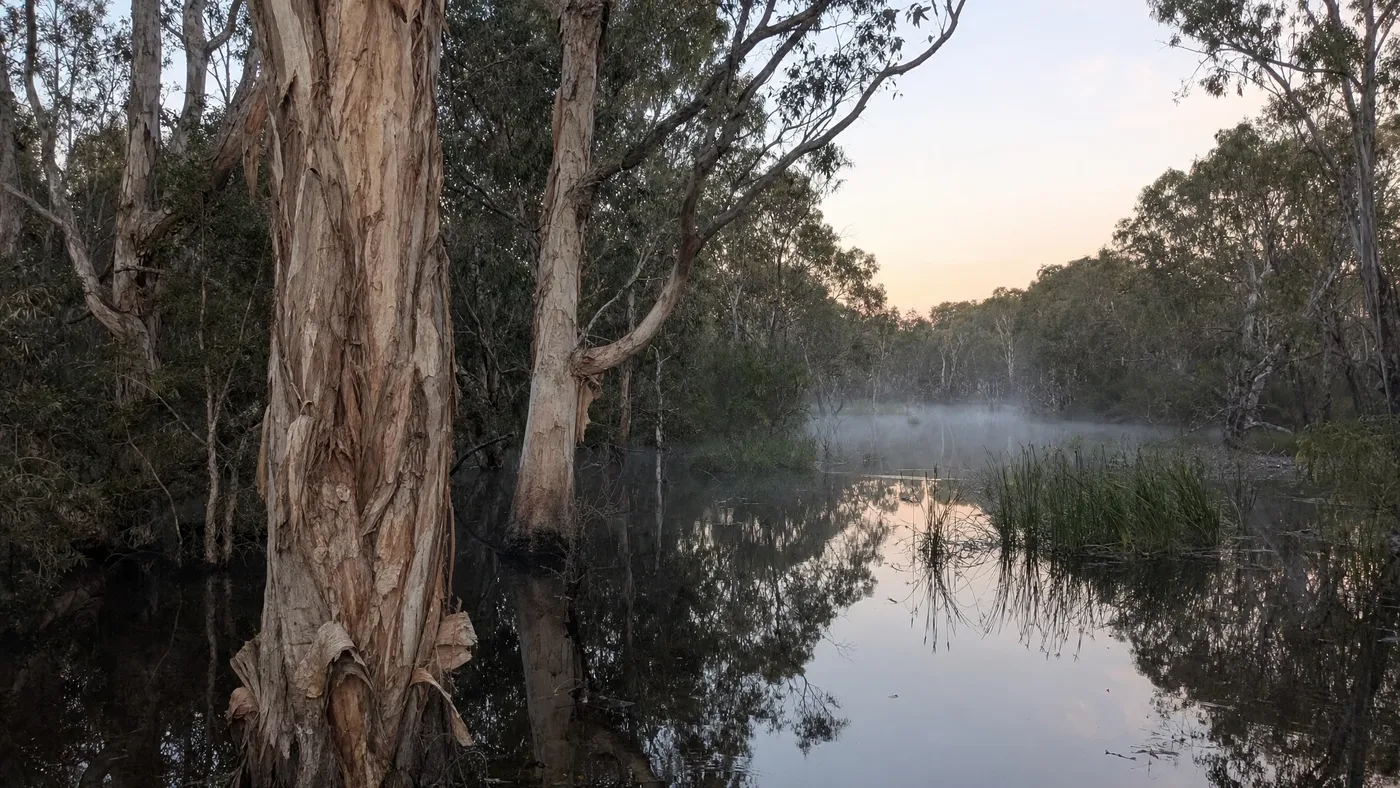
The tea tree plant grows in low, swampy ground along the creeks and rivers of northern New South Wales, a paperbark with a fluffy crown of white flower spikes. For most of its history, that was all it was: a local plant, known to the people who lived beside it, long before anyone put its oil in a bottle. The story of how that plant became a shelf staple is shorter than people assume, and a few of its best-known chapters turn out to be legend.

Tea Tree Essential Oil
Our own Tea Tree Essential Oil, in sizes from 0.5 oz to bulk.
From $10.99
Shop Now →The plant came first
The native range of Melaleuca alternifolia is surprisingly small, and unlike several other Melaleuca species it does not occur naturally outside Australia. Carson, Hammer and Riley describe the habitat as low-lying, swampy, subtropical coastal ground around the Clarence and Richmond Rivers in northeastern New South Wales and southern Queensland. This is the home country of the Bundjalung people, and their relationship with the plant is the oldest chapter in the story. The same review records that the Bundjalung of northern New South Wales used the leaves of "tea trees" in traditional ways, crushing them or soaking them into infusions, and that oral history tells of healing lakes, lagoons into which the leaves had fallen and steeped over time. That is use of the plant itself, and it is worth remembering that the leaf and the distilled oil are different things.
The 1920s: when the oil took center stage
The oil only became a topic of interest in the 1920s, when Penfold surveyed Australian essential oils for economic potential. Carson and colleagues report that his papers, published through the 1920s and 1930s, are what moved the distilled oil into common use, and the commercial industry grew from that work. In those early decades the oil came from natural bush stands. The plant material was hand cut and often distilled on the spot in makeshift, mobile, wood-fired bush stills, and the oil depended on whichever chemotype happened to be growing nearby.
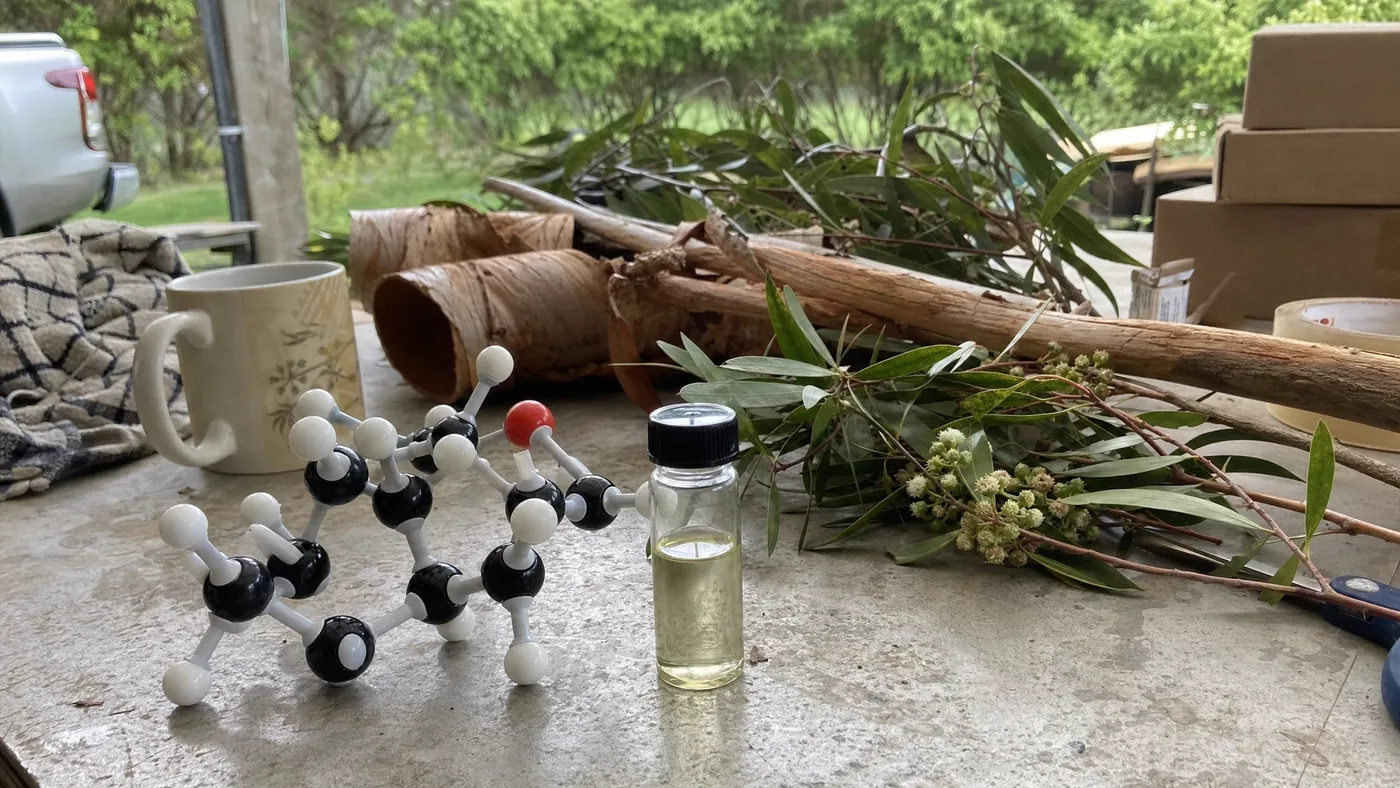
That detail matters more than it sounds. The review describes six chemotypes of the species, one rich in terpinen-4-ol, one in terpinolene, and four dominated by 1,8-cineole. The terpinen-4-ol type, typically 30 to 40% terpinen-4-ol, is the one used in commercial production, and it is the crisp, green, camphorous profile that most of us picture when we think of the oil.
A legend that did not check out
You may have heard that Australian soldiers were issued tea tree oil in World War II kits, or that bush cutters were exempted from national service because the oil was so important. Carson and colleagues tracked this down. They report that the Australian War Memorial could find no evidence to support either story. It is a good example of how a tale can get repeated until it feels like fact, and one we would rather leave out than pass along.
What the record does show is that production slowed after the war, as demand fell, then recovered in the 1970s as interest in botanical ingredients returned.
Plantations and a standard
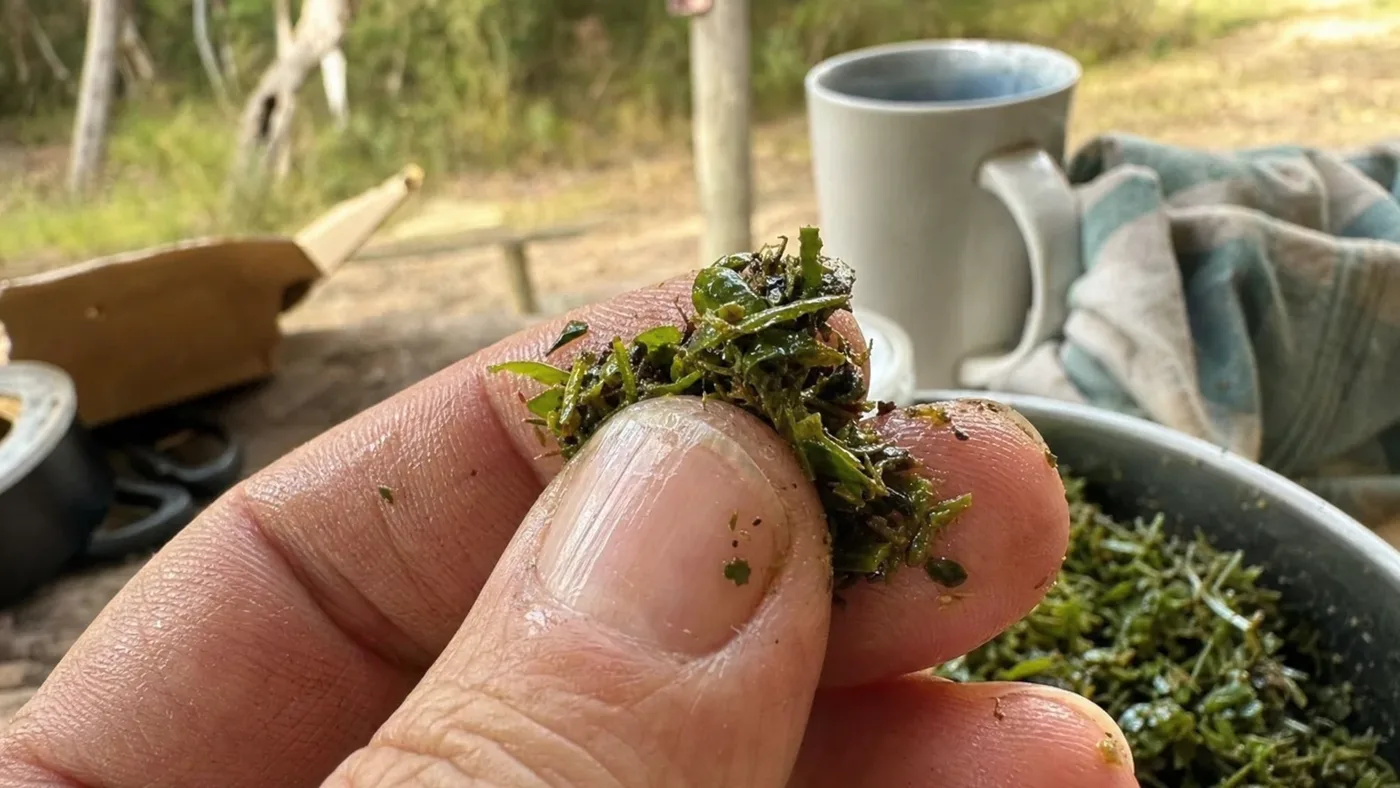
From the 1970s and 1980s, commercial plantations were established, which let the industry mechanize and produce consistent oil in volume. As of the 2006 review, most plantations were around Lismore in New South Wales, with others in Queensland and Western Australia. Trees are raised from seedlings, planted densely, and harvested by coppicing, cutting the whole plant close to the ground, chipping it and steam-distilling the leaves and terminal branches.
The numbers behind the modern industry are striking. AgriFutures Australia, the rural research body, reports that breeding programs lifted yields from early figures of 100 to 150 kilograms of oil per hectare to 350 to 450 for newer cultivars. The same piece notes that product substitution and misrepresentation have been on the rise, and points to the international standard that sets out what genuine tea tree oil should contain. Behind the scent in the bottle sit decades of breeding, chemistry and agreement about what the oil should be.
Why the story stays with us
Reading about the history changes the way you smell the oil. A crisp, green, camphorous scent that you might have taken for a plain product turns out to belong to a particular plant, from a particular stretch of country, with a long line of people who knew it before anyone thought of bottling it. We find that a good reason to open the bottle slowly and pay attention.
It is also a good reminder to keep stories and facts apart. The legends that did not hold up are fun to tell, and it is worth saying that they did not check out. The parts that did, the plant, the survey, the plantations, are interesting enough on their own.
Where that leaves your shelf
We sell two tea tree oils, one listed as Australian and one as South African, both Melaleuca alternifolia. The species has traveled a long way from its creeks in New South Wales, and knowing the history makes the bottle more interesting: a plant with deep local roots, a survey of Australian oils, an industry built on selecting the right chemotype, and a scent that still stops people mid-sentence.
If you want to keep exploring, our introduction to the oil covers the basics, how it is made follows the leaf to the still, and our look at where the oil comes from today picks up the story where this one leaves off.
It is a young industry with a very old plant at the center of it, and that combination is a big part of why we enjoy talking about tea tree.
Tea Tree Essential Oil
Tea Tree Essential Oil from our own shop, in sizes from 0.5 oz to bulk.
From $10.99
Shop Now →